Things You Need to Know When Buying fibresales Fibre Optic Cable
Choosing the right Fibre Optic Cable is a critical decision that directly impacts the performance and efficiency of your application. Fibre Optic Cables are widely used across various industries, including LANs, data centres, wind farms, and telecommunications. Making an informed choice ensures optimal data transmission, durability, and cost-effectiveness.
Key Factors to Consider When Selecting Fibre Optic Cables
1. Multimode vs. Singlemode Fibre: Which One Do You Need?
The first and most crucial decision is selecting between Multimode and Singlemode fibre. These two types are not interchangeable unless a media converter is used, which can add unnecessary expenses.
- Singlemode Fibre: Ideal for long-distance transmissions, Singlemode fibre offers higher bandwidth and reduced signal attenuation. If you choose Singlemode, the only remaining decision is whether the cable is for indoor or outdoor use.
- Multimode Fibre: Available in several varieties—OM1, OM3, OM4, and OM5—Multimode fibre is suitable for shorter distances. Your choice should align with the speed, bandwidth, and distance requirements of your hardware.
Once you select the appropriate Multimode cable, you must also determine whether you need an indoor or outdoor version.
2. Indoor vs. Outdoor Fibre Optic Cable
- Indoor/Outdoor Fibre Optic Cables feature dry-block technology and a tight-buffered design, making them versatile and easy to install in multiple environments.
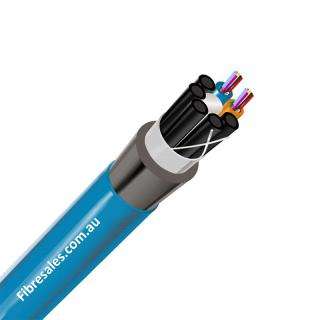
- Outdoor Fibre Optic Cables incorporate internal dry water-blocking technology to prevent water migration in case of sheath damage, ensuring long-term reliability in harsh environments.
3. Choosing the Right Jacket Type
Selecting the correct jacket type is essential for the cable’s durability and suitability for specific environments. Some of the common options include:
- Polyvinyl Chloride (PVC) Cable: Cost-effective and widely used for general indoor applications.
- Low Smoke Zero Halogen (LSZH) Cable: Ideal for enclosed spaces where fire safety is a concern, as it emits minimal smoke and toxic fumes.
- Nylon Jacket Cable: Provides termite protection, and you can opt for a sacrificial sheath to shield the cable during installation.
- Armored Cable: Offers rodent protection, making it ideal for areas prone to pest damage.
- Glass Reinforced Plastic (GRP) Cable: Enhances mechanical strength and durability.
- All-Dielectric Self-Supporting (ADSS) Cable: Designed for aerial installations without requiring external support structures.
4. Selecting the Right Fibre Core Count
The number of fibres within your cable depends on your application needs. Typical configurations include:
- 6-core, 12-core, and 24-core: Commonly used in commercial and industrial networks.
- High-Density Fibre: The highest density fibre count globally is 1728 fibres, which has been deployed in Australia for large-scale infrastructure projects.
5. Determining the Required Cable Length
Calculating the exact length needed for your installation is crucial to avoid unnecessary splicing and excess material waste. Always measure carefully and consider factors such as cable routing and future scalability.
Final Thoughts
Selecting the right fibresales Fibre Optic Cable involves assessing several key factors, including fibre type, jacket material, core count, and application environment. By making informed decisions, you can ensure optimal performance, reliability, and cost efficiency for your networking needs.
Whether you require a simple indoor installation or a high-density outdoor deployment, choosing the right fibre optic cable will directly impact the success of your project.
 Fibresales