
$52.90
998 in stock
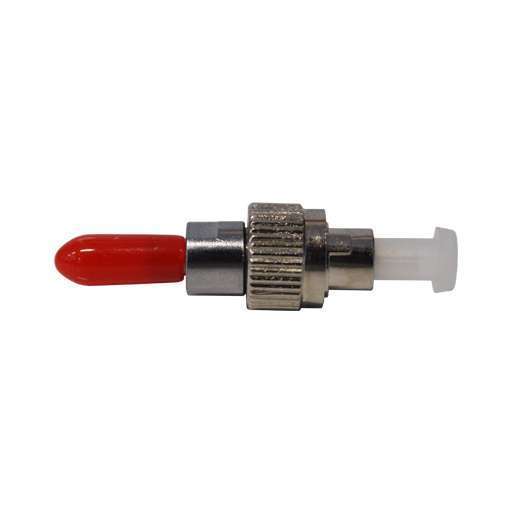
The Hybrid Fibre Adaptor provides an interface between compatible 1.25 mm LC and 2.5 mm SC, FC or ST fibre connections. Its universal design offers a practical solution when fibre equipment, test instruments or existing infrastructure use different connector formats.
Rather than changing the existing connector simply to accommodate a different interface size, the adaptor provides a compact transition between the two formats.
Sold individually.
Fibre optic connector families use different ferrule sizes.
LC connectors use a 1.25 mm ferrule, while SC, FC and ST connectors use a 2.5 mm ferrule. Consequently, the two formats cannot connect directly when equipment or cabling presents incompatible interfaces.
A hybrid adaptor provides the mechanical interface required to connect the different formats.
Choose this adaptor when you need to connect a compatible 1.25 mm LC fibre interface to a 2.5 mm SC, FC or ST interface without changing the existing connector configuration.
| Interface | Ferrule Size | Compatibility |
|---|---|---|
| LC | 1.25 mm | Yes |
| SC | 2.5 mm | Yes |
| FC | 2.5 mm | Yes |
| ST | 2.5 mm | Yes |
The adaptor changes the physical interface between compatible connector formats. It does not convert optical wavelengths, fibre types or network protocols.
The universal configuration makes this adaptor useful where technicians encounter several common fibre connector types.
Instead of carrying separate solutions for every connection scenario, installers and fibre technicians can use the adaptor where a compatible LC-to-SC, LC-to-FC or LC-to-ST transition is required.
However, always confirm the complete connector and polish configuration before making an optical connection.
The 1.25 mm to 2.5 mm hybrid adaptor can support:
Hybrid adaptors can prove particularly useful when the connector fitted to a fibre link differs from the interface available on a test instrument or accessory.
For example, an installation may use LC connectivity while a particular testing arrangement requires access to a compatible 2.5 mm interface. The hybrid adaptor provides the required physical transition without changing the installed connector.
| Specification | Details |
|---|---|
| Product Type | Hybrid Fibre Optic Adaptor |
| Interface Sizes | 1.25 mm to 2.5 mm |
| 1.25 mm Interface | LC |
| 2.5 mm Interfaces | SC / FC / ST |
| Configuration | Universal |
| Operation | Passive |
| Application | Fibre connection and testing |
| Pack Quantity | 1 |
| Sold | Individually |
Alignment sleeve material: Not specified.
Insertion loss: Not specified.
I would leave those two specifications exactly this way rather than assigning a ceramic or phosphor-bronze sleeve and a typical loss figure from your other adaptors.
The principal advantage is straightforward: the adaptor allows compatible fibre interfaces with different ferrule sizes to connect.
Where the existing fibre connector is suitable, changing the connector solely to accommodate another interface may be unnecessary.
Testing and maintenance frequently involve equipment with different connector arrangements. A hybrid adaptor adds flexibility to a technician’s fibre toolkit.
No electronic conversion occurs inside the adaptor. Instead, it provides the mechanical interface and alignment required for the compatible fibre connection.
A standard fibre adaptor normally connects matching connector formats, such as LC-to-LC or SC-to-SC.
By comparison, this hybrid adaptor bridges different interface sizes:
| Adaptor Type | Typical Connection |
|---|---|
| Standard LC adaptor | LC to LC |
| Standard SC adaptor | SC to SC |
| 1.25–2.5 mm Hybrid Adaptor | LC to SC/FC/ST |
Therefore, the hybrid version becomes useful when the two sides of the required connection do not use the same connector family.
Inspect and clean fibre connector end faces before making the connection. Contamination can introduce optical loss and may transfer between mating surfaces.
fibreSales supplies Fibre Cleaning Products for fibre installation, testing and maintenance.
After cleaning, insert the compatible connectors carefully and avoid forcing an incompatible interface into the adaptor.
Before using the adaptor, check:
Although the adaptor provides the physical transition, it does not make otherwise incompatible optical systems compatible.
For fibre installation, testing and maintenance, also see:
fibreSales supplies fibre optic connectivity, installation, cleaning and testing products for Australian fibre networks.
The universal 1.25 mm to 2.5 mm Hybrid Fibre Adaptor provides a convenient addition to installation and testing kits where technicians need to work between compatible LC and SC, FC or ST interfaces.
The measurements refer to the different ferrule sizes associated with the compatible fibre connector families.
The adaptor supports LC on the 1.25 mm side.
The 2.5 mm side supports compatible SC, FC and ST interfaces.
Yes. LC-to-SC is one of the supported configurations.
Yes. The universal adaptor supports a compatible LC-to-FC connection.
Yes. LC-to-ST is also supported.
No. It provides a physical interface between compatible connector formats. It does not convert wavelength, signal protocol or fibre type.
Yes. Fibre testing and maintenance are useful applications for a hybrid adaptor, particularly when the available connector interfaces differ.
The alignment material has not been specified, so fibreSales should not advertise a particular sleeve material for this product.
The adaptor is sold individually.
Add greater connector flexibility to fibre installation, maintenance and testing equipment with a universal adaptor supporting LC to SC, FC and ST interface requirements.
Sold individually by fibreSales.
The 1.25 mm to 2.5 mm Hybrid Fibre Adaptor provides a convenient transition between compatible LC and SC, FC or ST fibre interfaces.
Its universal configuration makes it particularly useful for fibre testing, installation and maintenance where different connector formats need to interface without unnecessary re-termination.
For more fibre optic solutions, technical resources, and installation products, visit www.fibresales.com.au.