How Does Fibre Optic Cable Work and Its Impact on Communication
Have you ever wondered how you receive Instagram notifications, Twitter updates, Facebook messages, or emails from across the globe in just seconds? Fibre optic cables make this rapid data transfer possible, forming an unseen yet essential backbone of global communication.



The Backbone of Global Communication
The fibre link stretch across the ocean floor and underground, enabling 99% of international data transmission. These cables create a seamless flow of information between continents, making modern communication nearly instantaneous. Without fibre optics, global data traffic would slow dramatically.
Communication – How Fibre Optic Technology Works
Fibre optic Infrastructure relies on light to transmit data. To understand this process, we must explore the fundamental properties of light.
When light moves through different materials, its speed changes, a phenomenon measured by the index of refraction. The equation for the index of refraction is:
The index of refraction is mathematically expressed as
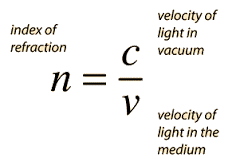
Since the speed of light in a vacuum remains constant, we can calculate the refractive index by measuring its speed in a specific medium.
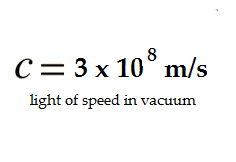
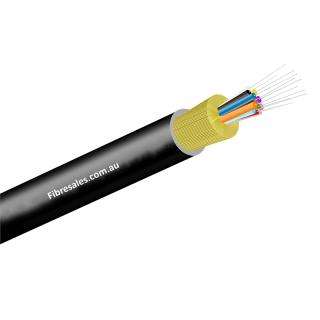
Refraction occurs as light transitions between materials with different refractive indices. Optical fibres use total internal reflection to guide light signals effectively.
For the cable to function properly, the core must have a slightly higher refractive index than the surrounding cladding. Both core and cladding consist of silica (glass), but manufacturers add different dopants to alter their refractive indices.

Achieving Long-Distance Transmission
Optic cables typically transmit signals up to 100 km before signal loss, or attenuation, weakens the transmission. Two primary causes of signal loss include:
Absorption – Impurities in the fibre material absorb some of the light energy.
Scattering – Tiny irregularities in the glass structure cause light to scatter.
To maintain signal strength over long distances, engineers place optical amplifiers along the cable to boost the signal.
How Fibre Optics Transmit Information
Fibre cables transmit data using binary code, a system of 0s and 1s that represent instructions and characters. First, the system converts binary data into electromagnetic waves and sends them to a telecommunications tower. The tower then converts these waves into light pulses, which travel through the global fibre optic network at nearly the speed of light until they reach their destination.
Benefits of Fibre Optic Cables
Optical network cables have revolutionized communication, offering significant advantages over traditional copper cables:
Immunity to Interference – Optical network line resist electromagnetic (EMI) and radio frequency interference (RFI).
Minimal Signal Loss – Data travels long distances with minimal degradation.
High Bandwidth – a Fibre link can transmit up to 350 billion bits per second over 100 km.
Lightweight and Compact – About 15% lighter than copper cables.
Enhanced Security – Difficult to tap into, ensuring safe data transmission.
Temperature Resistance – Operates efficiently between -40°C and +80°C.
Cost-Effective – Offers lower production and maintenance costs.
Eco-Friendly – Made from silica, an abundant and sustainable material.
Resistant to Lightning Strikes – Since fibre optics do not conduct electricity, they remain unaffected by lightning.
Conclusion
As internet demand surges with more connected devices, the need for high-speed, reliable communication grows. Fibre optic technology continues evolving, enhancing efficiency and global accessibility.
Using light for data transmission, fibre optic cables outperform satellite-based communication, remain unaffected by weather, and provide a cost-effective solution for worldwide connectivity. Given their many advantages, fibre optic networks will continue shaping the future of communication.
The future of fibre optics looks brighter than ever!
Want to learn more? Visit our blog for more fascinating articles on communication technology!