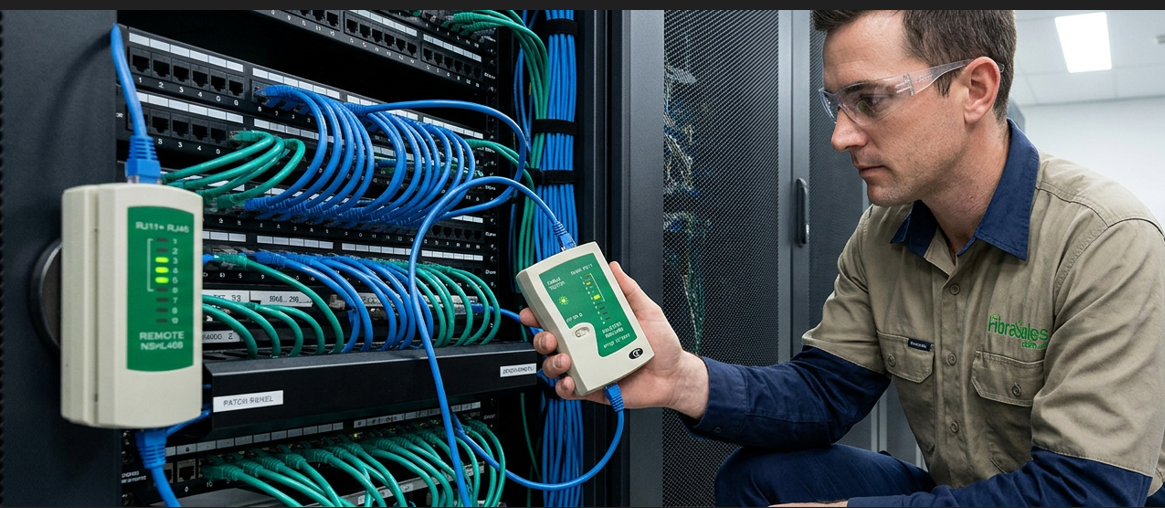
Ethernet Cable Testing Guide
Testing Ethernet Cables the Right Way
Testing an Ethernet cable is one of the most important steps in any network installation. Even when a cable appears to be terminated correctly, hidden faults such as incorrect pin assignments, split pairs or poor terminations can cause slow network speeds, intermittent connections or complete communication failures.
Whether you’re installing a single workstation, commissioning a structured cabling system or troubleshooting an existing network, testing every cable before it enters service helps identify problems early and reduces costly fault-finding later.
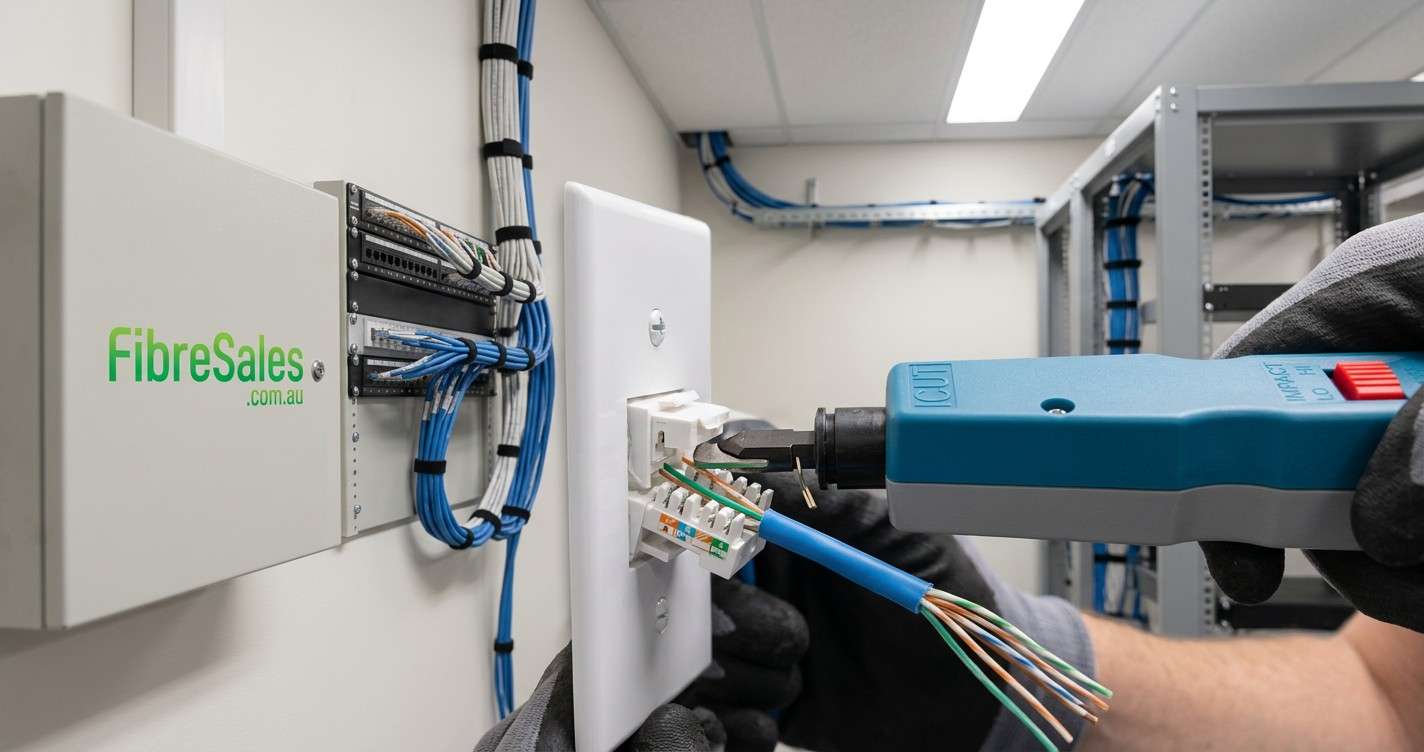
For switch-to-switch connections, workstations and communications cabinets, professionally manufactured Cat6 Patch Cables arrive factory tested and ready for installation. However, whenever you terminate custom Ethernet cables or permanent structured cabling, verifying every connection with the appropriate test equipment is considered industry best practice.
This guide explains the different types of Ethernet cable testing, the equipment used by installers and the faults that cable testers can detect. It complements our RJ45 Pinout: How to Wire Ethernet Cables Step-by-Step guide by focusing on cable verification rather than connector wiring.
What Is Ethernet Cable Testing?
Ethernet cable testing is the process of verifying that a network cable has been installed correctly and is capable of supporting reliable data communication.
Depending on the test equipment being used, testing may confirm:
- Correct pin-to-pin continuity.
- Wire map accuracy.
- Open or short circuits.
- Reversed conductors.
- Split pairs.
- Cable length.
- Signal quality.
- Network certification compliance.
Testing is recommended for both newly installed cabling and existing infrastructure during troubleshooting or maintenance.
Professional installers routinely test every completed cable before connecting active network equipment, helping ensure the network performs as intended from the outset.
Why Testing Every Cable Matters
Network faults are often difficult to identify once an installation has been completed. A single incorrectly terminated connector or damaged cable can affect multiple devices, leading to reduced productivity and lengthy troubleshooting.
Testing cables immediately after installation provides several important benefits:
- Confirms correct termination.
- Detects wiring faults before commissioning.
- Reduces return visits.
- Improves installation quality.
- Simplifies fault diagnosis.
- Supports structured cabling best practice.
For organisations installing structured cabling systems, testing also provides confidence that every cable meets the required installation standard before the network goes live.
Types of Ethernet Cable Testing
Not every test measures the same thing. Different testers are designed for different stages of an installation, from basic continuity checks through to comprehensive cable certification.
The most common testing methods include:
Wire Map Testing
A wire map test verifies that each conductor connects to the correct pin at the opposite end of the cable.
It identifies faults including:
- Open circuits.
- Short circuits.
- Crossed wires.
- Reversed pairs.
- Split pairs.
This is the most common test performed after terminating Ethernet cables.
Continuity Testing
Continuity testing confirms that each conductor forms a complete electrical path from one end of the cable to the other.
Although continuity testing quickly identifies broken conductors, it does not verify whether the cable will support high-speed Ethernet performance.
Length Testing
Many professional Cable Testers estimate cable length by measuring signal reflections within the cable.
This feature helps installers:
- Locate damaged sections.
- Confirm installed cable lengths.
- Identify unexpected cable joins.
- Troubleshoot existing infrastructure.
Certification Testing
Certification testing goes beyond basic continuity and wire mapping.
Professional certification equipment measures whether installed cabling complies with recognised performance standards such as the ANSI/TIA-568 Structured Cabling Standard and the ISO/IEC 11801 Generic Cabling Standard.
Certification typically measures:
- Attenuation.
- Near-End Crosstalk (NEXT).
- Return Loss.
- Propagation Delay.
- Signal performance.
Certification is generally required for commercial structured cabling projects where documented compliance forms part of the project handover.
Engineering Decision
Testing should never be treated as an optional final step. It forms an essential part of every professional Ethernet installation and helps confirm that the completed cabling will support reliable network communication.
Factory-tested Cat6 Patch Cables minimise installation time and reduce the likelihood of connector faults. When custom cable assemblies or permanent structured cabling are installed, professional Cable Testers provide confidence that every connection has been completed correctly before the network is commissioned.