RJ45 Punch-down Tools Explained | Complete Installation Guide
RJ45 punch-down tools are essential for terminating Ethernet cables onto Keystone Jacks and other IDC (Insulation Displacement Contact) termination points used in structured cabling systems. Rather than crimping an RJ45 connector onto the end of a cable, a punch-down tool securely seats each conductor into the IDC terminals, creating a reliable and standards-compliant electrical connection.
Whether you’re installing a new office network, adding data outlets, terminating patch panels or upgrading existing Ethernet infrastructure, using the correct punch-down tool helps produce consistent, professional results while reducing the risk of wiring faults.
This guide explains how RJ45 punch-down tools work, when you need one, how to choose the right tool and the best practices for terminating Cat6 Ethernet cabling. You’ll also learn how punch-down tools differ from RJ45 crimping tools and why both have an important role in professional network installations.
If you’re new to Ethernet networking, our Copper Networking Explained | The Complete Guide to Ethernet Networks article provides an excellent overview before moving into cable termination.
What Is an RJ45 Punch-down Tool?
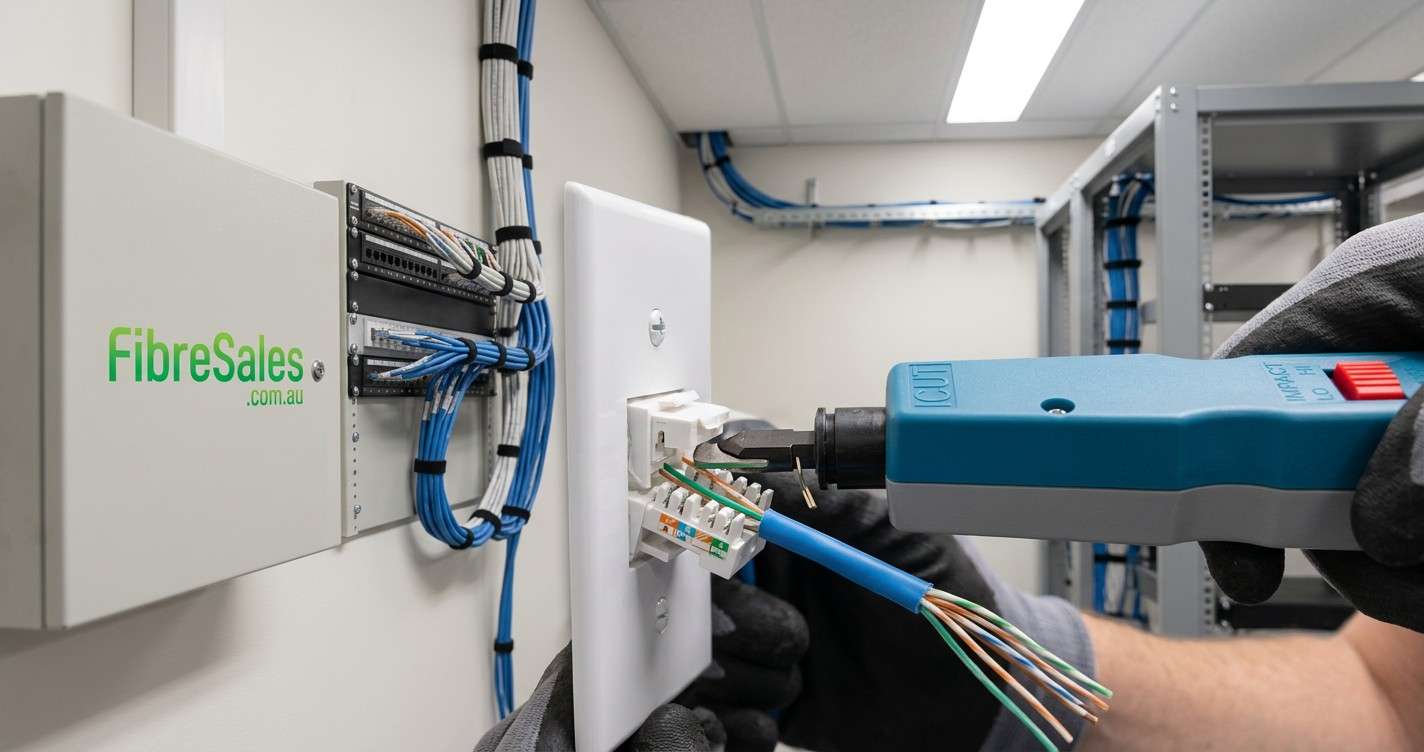
An RJ45 punch-down tool, often called an impact punch-down tool, is a hand tool designed to terminate individual Ethernet cable conductors into IDC terminals found on keystone jacks, wall outlets and structured cabling modules.
Unlike an RJ45 Connector, which terminates a cable using a crimping tool, an IDC termination uses spring-loaded contacts that cut through the cable insulation and make direct electrical contact with each conductor.
A quality punch-down tool applies the correct amount of force to:
- Seat each conductor securely into the IDC terminal.
- Trim excess wire automatically using the cutting blade.
- Produce consistent, reliable terminations.
- Minimise the risk of loose or intermittent connections.
- Improve long-term network reliability.
For commercial installations, using a purpose-built RJ45 Punch-down Tool is significantly faster and more reliable than attempting to terminate conductors using improvised tools.
When Do You Need a Punch-down Tool?
A punch-down tool is required whenever you’re terminating Ethernet cable onto an IDC-based connection rather than fitting an RJ45 plug.
Typical applications include:
- Installing Keystone Jacks for wall outlets.
- Terminating structured cabling systems.
- Installing commercial office data outlets.
- Wiring communications cabinets.
- Repairing damaged keystone jacks.
- Completing structured Ethernet installations in homes, schools and commercial buildings.
If you’re terminating an RJ45 plug onto the end of a patch lead instead, you’ll need an RJ45 Crimping Tool rather than a punch-down tool because the termination method is completely different.
Punch-down Tool vs RJ45 Crimping Tool
Although both tools are used during Ethernet installations, they perform different tasks.
| RJ45 Punch-down Tool | RJ45 Crimping Tool |
|---|---|
| Terminates cable into IDC terminals | Terminates RJ45 plugs onto Ethernet cable |
| Used with keystone jacks and wall outlets | Used with RJ45 connectors |
| Seats conductors into insulation displacement contacts | Compresses connector pins into the cable conductors |
| Trims excess conductor automatically | Secures the RJ45 connector to the cable |
| Essential for structured cabling installations | Essential for manufacturing or repairing Ethernet patch leads |
Understanding the difference between these tools helps ensure you purchase the correct equipment for your installation and achieve reliable, standards-compliant network connections.
Why Proper Termination Matters
Correct cable termination is one of the most important factors affecting Ethernet network reliability.
Poorly seated conductors, incorrect wiring sequences or damaged IDC terminals can lead to:
- Intermittent network connections.
- Reduced Ethernet speeds.
- Failed Gigabit or 10 Gigabit negotiation.
- Packet loss.
- Power over Ethernet (PoE) faults.
- Cable test failures.
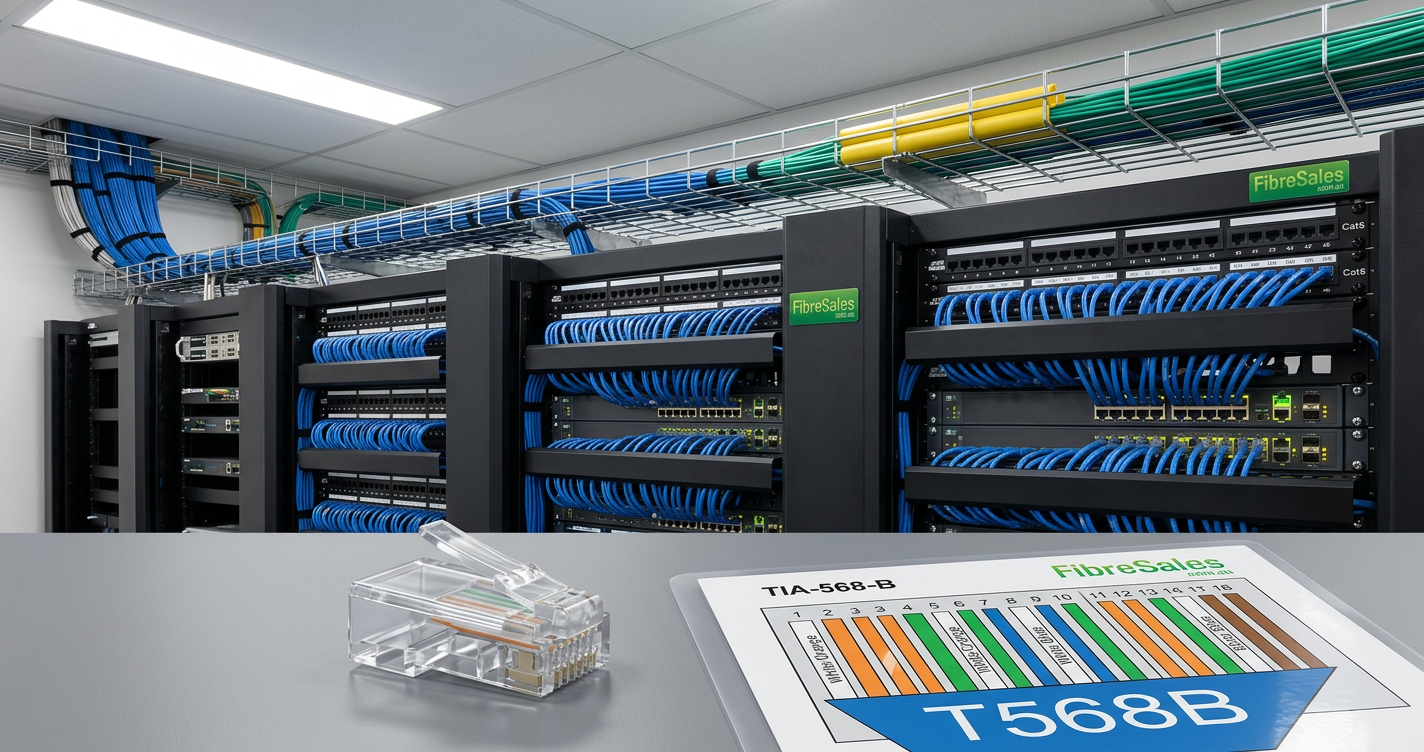
Before terminating any keystone jack, it’s important to understand the correct wiring sequence. Our RJ45 Pinout guide explains both the T568A and T568B wiring standards, while Why Most Ethernet Networks Use T568B explains why T568B has become the preferred standard for most Australian commercial installations.
Engineering Decision
A quality RJ45 Punch-down Tool is an investment in reliable network performance rather than simply another installation tool.
Using the correct tool ensures consistent IDC terminations, reduces installation time and minimises costly troubleshooting caused by poor connections. When combined with quality Keystone Jacks and verified using a Cable Tester, professional punch-down tools help produce Ethernet installations that meet industry standards and deliver dependable long-term performance.
How Does an RJ45 Punch-down Tool Work?
An RJ45 punch-down tool uses a spring-loaded impact mechanism to seat each conductor into the Insulation Displacement Contact (IDC) terminals of a Keystone Jack.
As pressure is applied, the tool performs two actions simultaneously:
- Forces the conductor fully into the IDC contact.
- Trims the excess conductor flush with the terminal using the integrated cutting blade.
This creates a secure mechanical and electrical connection without stripping the insulation from the individual conductors.
Because the IDC terminal cuts through the insulation rather than relying on exposed copper, correctly terminated connections provide excellent long-term reliability and resistance to vibration.
The Components of an RJ45 Punch-down Tool
Although designs vary slightly, most professional punch-down tools include:
Impact Mechanism
The spring-loaded impact mechanism delivers consistent pressure every time a conductor is terminated.
This consistency reduces installation errors and produces repeatable results across multiple terminations.
Interchangeable Blade
Most professional tools use replaceable blades.
The cutting side trims excess conductor after termination, while the opposite side allows the installer to seat conductors without cutting where required.
Correct blade orientation is essential before each termination.
Adjustable Impact Force
Many professional punch-down tools allow the impact force to be adjusted.
Lower settings are often suitable for smaller installations, while higher settings provide additional seating force for larger commercial projects and repeated terminations.
Comfortable Handle
Ergonomic handles reduce installer fatigue, particularly when terminating large numbers of keystone jacks during commercial installations.
Step-by-Step: Using an RJ45 Punch-down Tool
Professional cable termination follows a consistent process.
1. Prepare the Cable
Using a quality Wire Stripper, carefully remove the outer cable jacket without damaging the insulated conductors.
Maintain the cable twists as close as possible to the termination point to preserve Cat6 performance.
2. Identify the Wiring Standard
Determine whether the installation requires T568A or T568B.
In Australia, T568B is the most commonly used wiring arrangement for commercial Ethernet installations.
If you’re unsure which sequence to use, refer to our RJ45 Pinout guide before terminating the cable.
3. Position Each Conductor
Lay each conductor into the correctly coloured IDC slot on the Keystone Jack.
Ensure every conductor sits fully within its designated channel before using the punch-down tool.
Avoid untwisting the cable pairs more than necessary, as excessive untwisting can reduce network performance.
4. Punch Down Each Conductor
Position the cutting edge of the blade on the waste side of the conductor.
Apply firm downward pressure until the impact mechanism activates.
The tool seats the conductor fully into the IDC terminal while trimming the excess wire in a single operation.
Repeat the process for all eight conductors.
5. Test the Finished Termination
After completing the termination, verify the installation using a Cable Tester.
Testing confirms:
- Correct wire mapping.
- No open circuits.
- No short circuits.
- No crossed pairs.
- Reliable network continuity.
Our Ethernet Cable Testing Guide explains how to verify a completed installation before placing it into service.
Common Punch-down Mistakes
Even experienced installers occasionally make mistakes during cable termination.
The most common issues include:
Excessive Pair Untwisting
Untwisting the conductors too far before termination increases crosstalk and reduces Cat6 performance.
Always maintain the twists as close to the IDC terminals as practical.
Incorrect Blade Orientation
If the cutting edge faces the wrong direction, the tool may cut the active conductor instead of trimming the excess wire.
Always check blade orientation before punching down each conductor.
Using the Wrong Wiring Pattern
Mixing T568A and T568B wiring patterns on the same permanent link can create wiring faults and communication problems.
Follow a consistent wiring standard throughout the installation.
Skipping Cable Testing
Even when a termination appears correct, hidden faults can still exist.
Testing every completed termination with a Cable Tester helps identify wiring issues before equipment is connected.
Engineering Decision
Professional Ethernet installations rely on precision, consistency and verification.
Using a quality RJ45 Punch-down Tool together with Keystone Jacks, a Wire Stripper and a Cable Tester creates a complete installation workflow that improves reliability, reduces installation time and helps ensure every Ethernet termination meets professional standards.
Choosing the Right RJ45 Punch-down Tool
Not all punch-down tools offer the same level of performance. Selecting the right tool depends on the type of installation, the number of terminations and how frequently the tool will be used.
For occasional home or small office installations, a standard impact punch-down tool provides an economical and reliable solution. Professional installers working on commercial structured cabling projects generally benefit from higher-quality tools that offer improved ergonomics, replaceable blades and adjustable impact settings.
When selecting an RJ45 Punch-down Tool, consider:
- Build quality and durability.
- Replaceable impact blades.
- Adjustable impact force.
- Comfortable ergonomic grip.
- Compatibility with standard IDC terminals.
- Ease of blade replacement.
Investing in a quality tool reduces installation time and helps produce more consistent Ethernet terminations over the life of the tool.
RJ45 Punch-down Tool vs Toolless Keystone Jack
Some modern keystone jacks are designed to be terminated without a punch-down tool.
While these products offer faster installation, traditional IDC keystone jacks terminated with an impact tool remain the preferred choice for many professional installers because they provide consistent terminations and long-term reliability.
| RJ45 Punch-down Tool | Toolless Keystone Jack |
|---|---|
| Uses an impact mechanism | No specialised tool required |
| Ideal for high-volume installations | Best suited to occasional installations |
| Consistent termination force | Dependent on correct manual assembly |
| Faster for experienced installers | Faster for first-time users |
| Widely used in commercial structured cabling | Often used in smaller installations |
Both methods can produce reliable Ethernet connections when installed correctly. The best option depends on the project requirements and the type of keystone jack being used.
Real-World Installation Example
An electrical contractor is fitting out a new office with multiple network outlets for computers, printers and wireless access points.
Each outlet requires a Cat6 cable to be terminated onto a Keystone Jack using the T568B wiring standard. Rather than manually forcing conductors into the IDC terminals, the installer uses an RJ45 Punch-down Tool to achieve fast, consistent terminations across every outlet.
After each outlet is completed, the installer verifies the wiring using a Cable Tester to confirm:
- Correct conductor sequence.
- No open or short circuits.
- Reliable continuity.
- Standards-compliant Ethernet performance.
Using the correct installation tools reduces rework, speeds up commissioning and helps ensure the finished network performs as expected.
Best Practices for Professional Ethernet Termination
Following recognised installation practices improves reliability and simplifies future maintenance.
Best practices include:
- Use quality RJ45 Punch-down Tools designed for professional Ethernet installations.
- Match the keystone jack to the cable category being installed.
- Follow the same wiring standard throughout the installation. In most Australian commercial networks, this will be T568B.
- Keep conductor pairs twisted until they reach the IDC terminals.
- Avoid excessive bending or stretching of the cable during termination.
- Inspect every termination before testing.
- Verify every completed outlet using a Cable Tester before connecting active network equipment.
These practices improve long-term network reliability and reduce the likelihood of intermittent faults that are difficult to diagnose after installation.
Common Questions Before Purchasing a Punch-down Tool
Many customers ask similar questions before purchasing their first punch-down tool.
Do I need a punch-down tool to install a keystone jack?
Yes. Standard IDC keystone jacks require a punch-down tool to seat each conductor securely into the termination contacts.
Can I use a screwdriver instead?
Although some people attempt this, it is not recommended.
A screwdriver cannot apply consistent impact force and may damage the IDC contacts or fail to seat the conductors correctly. A purpose-built RJ45 Punch-down Tool produces faster, safer and more reliable results.
Can the same tool be used for Cat5e and Cat6?
Yes.
The punch-down tool itself is not specific to the Ethernet category. It is designed to terminate conductors into compatible IDC terminals used by both Cat5e and Cat6 keystone jacks.
Engineering Decision
Choosing the correct punch-down tool is about achieving consistent, repeatable Ethernet terminations rather than simply completing the installation.
A quality RJ45 Punch-down Tool, combined with compatible Keystone Jacks, a Wire Stripper and a Cable Tester, forms the foundation of a professional Ethernet installation. Following recognised termination practices helps deliver reliable network performance while reducing installation errors, troubleshooting time and long-term maintenance costs.
Frequently Asked Questions
What is an RJ45 punch-down tool used for?
An RJ45 punch-down tool is used to terminate Ethernet cable conductors into the IDC terminals of Keystone Jacks and other structured cabling components. The tool seats each conductor securely while trimming the excess wire, producing a reliable and standards-compliant connection.
Do I need a punch-down tool for RJ45 connectors?
No.
RJ45 plugs require an RJ45 crimping tool, not a punch-down tool.
Designed specifically for IDC terminations such as keystone jacks and wall outlets, whereas a crimping tool secures an RJ45 connector onto the end of an Ethernet cable.
If you’re unsure of the difference, our RJ45 Connectors Explained guide explains when each termination method should be used.
Can I terminate Cat6 cable without a punch-down tool?
Standard IDC keystone jacks should always be terminated using a purpose-built RJ45 Punch-down Tool.
Although some installers attempt to use screwdrivers or improvised tools, doing so can damage the IDC contacts, create unreliable terminations and reduce network performance.
Does a punch-down tool work with Cat5e and Cat6?
Yes.
A quality punch-down tool is compatible with both Cat5e and Cat6 IDC terminations.
The important factor is ensuring the Keystone Jack matches the cable category being installed.
Which wiring standard should I use?
For almost all Australian commercial Ethernet installations, T568B is the preferred wiring arrangement.
If you’re unfamiliar with Ethernet wiring sequences, refer to:
before terminating any cables.
Should I test every termination?
Absolutely.
Every completed keystone jack should be verified using a Cable Tester.
Testing confirms:
- Correct wire map.
- No shorts.
- No open circuits.
- Correct conductor sequence.
- Reliable Ethernet connectivity.
Our Ethernet Cable Testing Guide explains the testing process in detail.
Can poor punch-down terminations affect network speed?
Yes.
Incorrectly seated conductors, damaged IDC contacts or excessive untwisting of cable pairs can reduce Ethernet performance and create intermittent faults.
Using a quality RJ45 Punch-down Tool together with recognised installation practices helps maintain reliable Gigabit and 10 Gigabit Ethernet performance.
Why fibreSales?
Reliable Ethernet installations begin with quality components and the correct installation tools.
fibreSales supplies professional RJ45 Punch-down Tools together with Keystone Jacks, RJ45 Connectors, Cable Testers, Wire Strippers and Cat6 Patch Cables to help installers complete professional Ethernet projects with confidence.
Whether you’re installing a single network outlet or completing a large structured cabling project, fibreSales provides the products, technical guidance and networking expertise to help you achieve reliable, standards-compliant results.
Conclusion
An RJ45 punch-down tool is an essential tool for anyone installing or maintaining structured Ethernet cabling. By providing consistent IDC terminations, it improves installation quality, reduces troubleshooting time and helps maintain long-term network reliability.
When combined with quality Keystone Jacks, a Wire Stripper and a Cable Tester, a professional RJ45 Punch-down Tool helps ensure every Ethernet termination is completed to a high standard.
For professional networking tools, technical resources and quality Ethernet connectivity products, visit www.fibresales.com.au.
Continue Learning
Expand your Ethernet installation knowledge with these related fibreSales resources:
- Copper Networking Explained | The Complete Guide to Ethernet Networks – Understand the fundamentals of modern Ethernet networking and structured cabling.
- RJ45 Connectors Explained – Learn how RJ45 connectors work and how they differ from IDC terminations.
- RJ45 Pinout – Understand the T568A and T568B wiring standards before terminating Ethernet cables.
- Why Most Ethernet Networks Use T568B – Discover why T568B is the preferred wiring standard for most Australian commercial installations.
- Ethernet Cable Testing Guide – Learn how to verify every Ethernet termination before placing it into service.
- What Does RJ45 Mean? – Explore the history and meaning behind the RJ45 designation.
References
- IEEE 802.3 Ethernet Standards – Defines Ethernet physical-layer specifications and performance requirements used throughout modern Ethernet networks.
- ANSI/TIA-568 Structured Cabling Standard – Provides recognised structured cabling practices, including balanced twisted-pair termination methods and wiring standards.
- ISO/IEC 11801 Generic Cabling Standard – Specifies international requirements for customer-premises telecommunications cabling systems.
- BICSI Telecommunications Distribution Methods Manual (TDMM) – Industry reference covering structured cabling design, installation and best practices.
- ACMA Australian Cabling Standards – Explains Australian regulatory requirements and cabling practices for telecommunications installations.