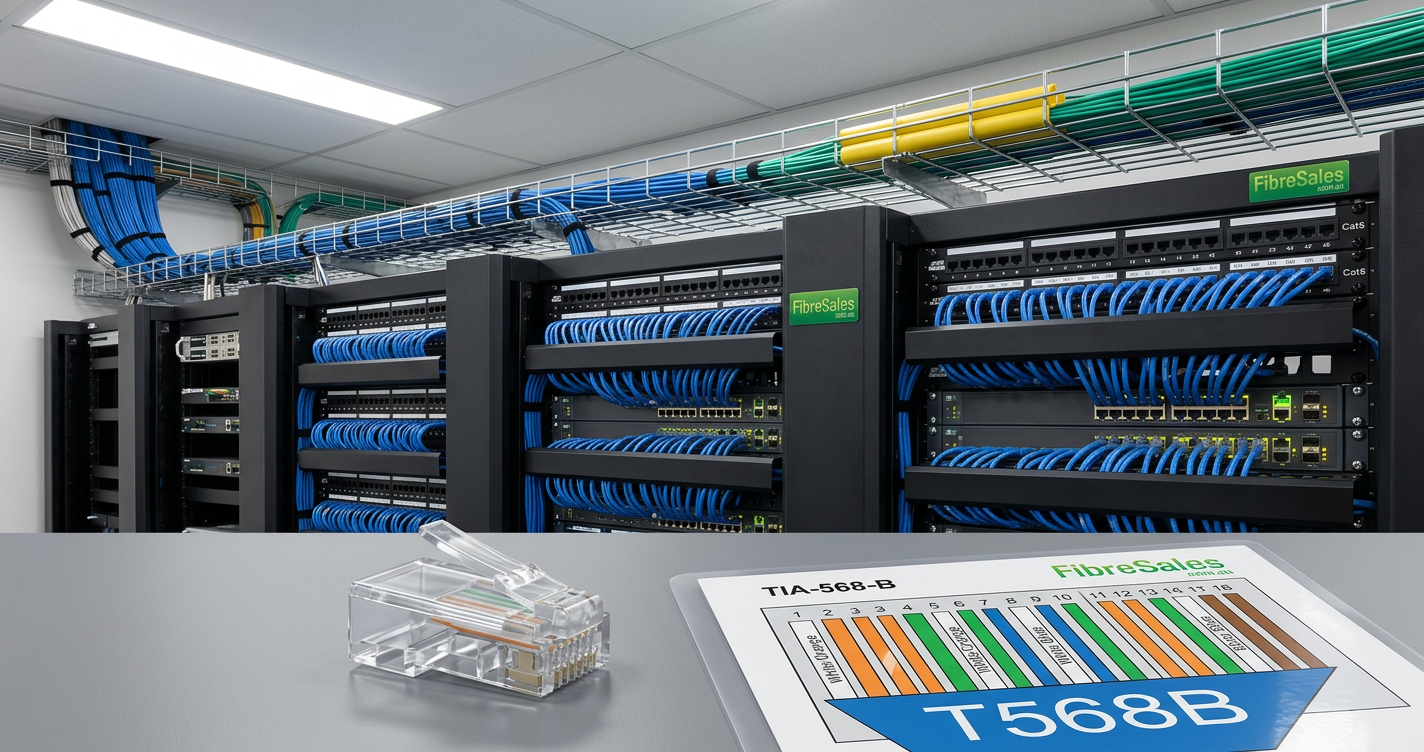

Fibre Patch Panels Explained: Types, Benefits, and Installation Tips
Introduction
In today’s high-speed fibre optic networks, structured cabling is more important than ever. Contractors, integrators, and IT teams need ways to manage increasing fibre counts without creating messy racks or risking performance issues. That’s where a fibre patch panel comes in.
A fibre patch panel is more than just a box that holds connectors — it’s the backbone of an organised, scalable, and serviceable fibre installation. In this guide, we’ll explain what patch panels are, the different types available, their benefits, and practical tips for installation. By the end, you’ll know exactly which fibre patch panel is right for your project.
What Is a Fibre Patch Panel?
At its core, a fibre patch panel is a cable management device that allows you to terminate incoming fibre optic cables, organise them neatly, and connect them to outgoing cables or active equipment.
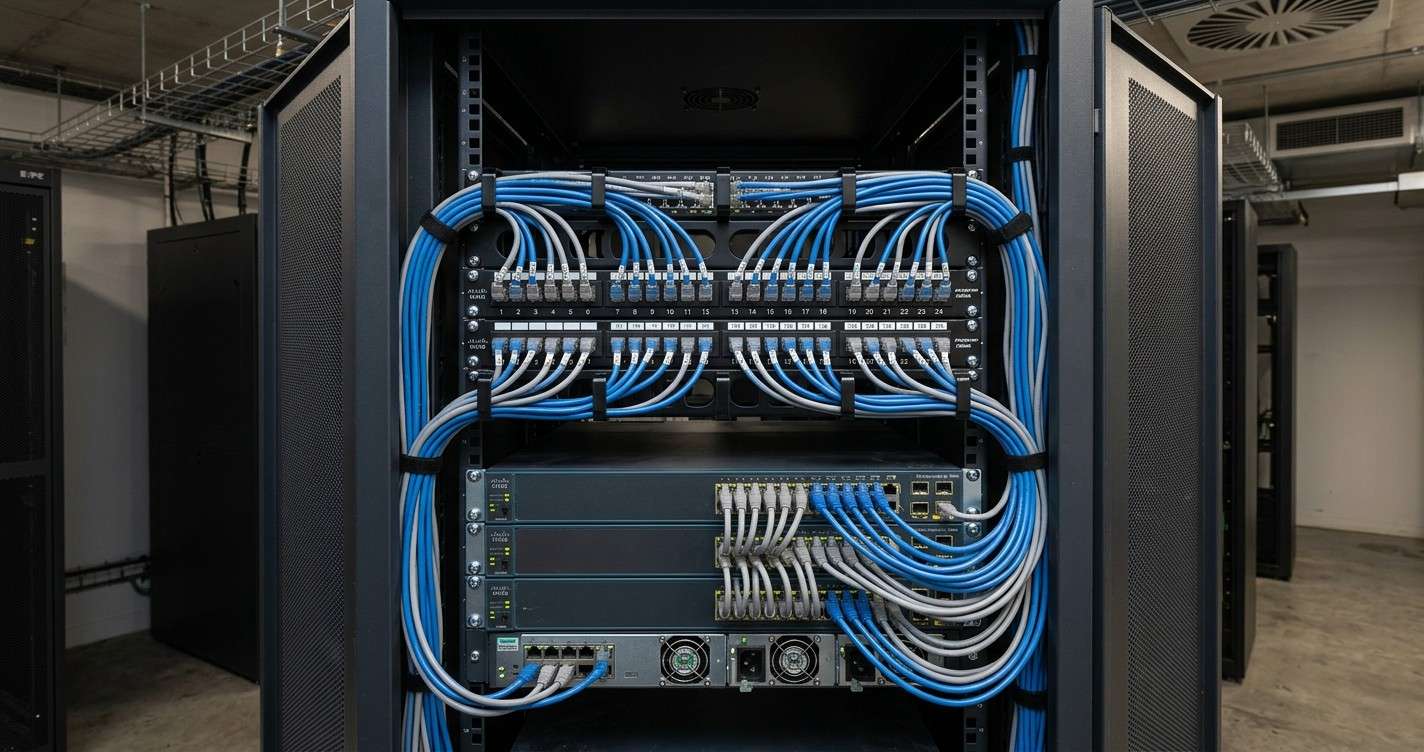
Think of it as a central hub: on one side, backbone or trunk cables are terminated. On the other, short patch leads connect to switches, servers, or routers. This makes it easy to manage large fibre counts while maintaining flexibility for adds, moves, and changes.
Without patch panels, installations often turn into tangled messes, which makes troubleshooting and expansion much more difficult. As a result, patch panels are essential in any structured cabling system.
Types of Fibre Patch Panels
Rack Mount Patch Panels
Rack mount patch panels are the most common choice for data centres and telecom racks. They’re designed to fit into standard 19-inch racks and typically come in sizes such as 1U, 2U, or 4U.
Advantages: High density, professional look, scalable with expansion.
Use case: Medium-to-large networks with multiple racks of equipment.
Wall Mount Patch Panels
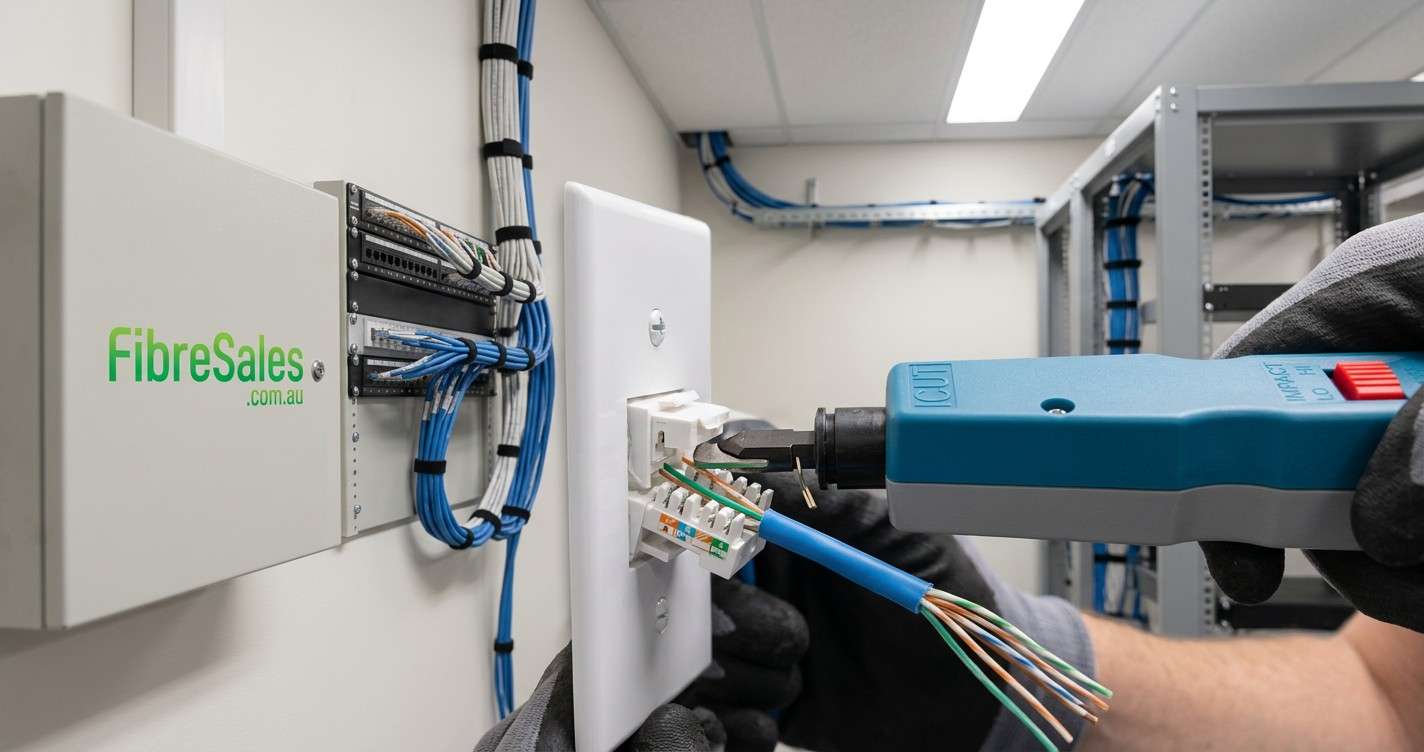
Wall mount panels are designed for smaller spaces where rack systems aren’t available. They’re compact enclosures that can be mounted on walls, inside cabinets, or in service closets.
Advantages: Space-saving, secure, and easy to install.
Use case: Office buildings, small businesses, or remote telecom rooms.
Sliding vs Fixed Patch Panels
Sliding patch panels allow trays to slide out, giving technicians easy access to connectors during maintenance.
Fixed patch panels stay in place and are more affordable, but they are less convenient for frequent servicing.
Therefore, sliding panels are best for high-maintenance environments, while fixed options are ideal for budget-conscious or low-touch installs.
MPO/MTP High-Density Fibre Patch Panels
Modern networks demand higher fibre counts, especially for 40G and 100G applications. MPO/MTP patch panels are designed to handle multifibre connectors, packing 12, 24, or even 72 fibres into a single interface.
Advantages: Extremely high density and fast deployment.
Use case: Large-scale data centres where every RU of rack space counts.
Connector Options: LC, SC, ST, MPO
Patch panels can be fitted with different adapter plates or cassettes, depending on the connector type.
LC patch panels: Small form factor, high density.
SC patch panels: Popular in older installs, easy handling.
ST patch panels: Twist-lock style, less common today.
MPO/MTP patch panels: For multifibre backbones and parallel optics.
Benefits of Using a Fibre Patch Panel
1. Organised Cabling
Patch panels prevent spaghetti-style cabling by keeping everything routed, labelled, and secure. As a result, the risk of accidental disconnections or fibre damage is significantly reduced.
2. Easier Troubleshooting
With centralised patching, technicians can test, swap, or replace connections without disturbing backbone cables. Consequently, downtime is minimised and repairs become faster.
3. Scalability for Future Growth
As networks expand, patch panels make it easy to add new connections without tearing apart existing runs. Instead of replacing entire cables, you simply plug in new patch cords. This flexibility saves both time and money.
4. Protection for Fibre Investment
Fibre cables are fragile, especially at the connectors. Patch panels provide strain relief and physical protection, which extends the life of your cabling. In addition, they help maintain low insertion loss, which is crucial for performance.
5. Professional Presentation
Beyond function, patch panels give your racks a professional look. Well-organised cabling improves not only reliability but also customer confidence when they see the installation.
Fibre Patch Panel Installation Tips
Cable Routing & Bend Radius
Always respect the minimum bend radius of fibre cables. Sharp bends increase insertion loss and can cause permanent damage. To prevent this, use cable guides and routing clips that maintain smooth paths. In addition, avoid over-tightening cable ties, as this can crush fibres.
Labelling & Documentation
Every port should be labelled clearly, with documentation stored digitally and on-site. Therefore, when issues occur, technicians save countless hours during troubleshooting. Furthermore, accurate documentation ensures that future upgrades or changes are completed without confusion.
Cleaning Before Connecting
Even a speck of dust can ruin a fibre connection. Always follow the “Clean Before You Connect” principle. Use LC/SC/MPO pen cleaners or wipes to ensure optimal performance. In fact, regular cleaning not only prevents signal loss but also extends equipment life.
FibreSales Fibre Patch Panel Solutions
At FibreSales, we stock a wide range of rack mount and wall mount patch panels, available with LC, SC, ST, and MPO/MTP configurations. Whether you need a compact wall-mount box for a small office or a high-density sliding panel for a data centre, we’ve got you covered.
Rack Mount Patch Panels: Ideal for scalable, professional installations.
Wall Mount Patch Panels: Compact and secure for smaller spaces.
MPO/MTP High-Density Panels: Ready for 40G/100G upgrades.
In addition, our panels are designed to work with a variety of connector options and face plates, giving you the flexibility to build exactly what your network requires.
Explore our full range of patch panels here and choose the right fit for your next project.
Explore TIA Standards for Structured Cabling
Final Verdict – Fibre Patch Panel
Fibre patch panels are the unsung heroes of structured cabling. They provide organisation, simplify troubleshooting, protect your investment, and allow seamless growth as your network expands.
Whether you’re building a small office network or scaling a multi-rack data centre, choosing the right patch panel will save time, money, and headaches.
FibreSales offers a complete range of patch panels — rack mount, wall mount, and MPO/MTP solutions — ready to ship locally. Explore our catalogue today and make your next fibre install clean, professional, and future-proof.
FAQ Section
1. Do I need a patch panel or can I connect directly?
While direct connections are possible, patch panels make management easier and reduce wear on expensive backbone cables. Therefore, most professional installations use patch panels for long-term reliability.
2. How many fibres can a patch panel hold?
It depends on size and type. Rack mount panels may hold 24 to 288 fibres, while wall mounts are typically smaller. As a result, the right choice depends on your project scale.
3. What’s the difference between MPO and LC patch panels?
LC panels handle individual connections, while MPO panels group multiple fibres into a single connector for high-density networks. In practice, LC is best for distribution, while MPO is designed for backbone links.
4. Can patch panels support both singlemode and multimode?
Yes. Patch panels are connector housings, so with the correct adapters installed, they work with either fibre type. This flexibility makes them future-proof.
5. Are fibre patch panels universal?
Most are designed to standard rack/wall dimensions. However, it’s important to always check connector compatibility and fibre type to avoid mismatches.