
What Is Dynamic Range in OTDR Testing? (And Why It’s So Important)
When it comes to fibre optic testing, few specifications are more misunderstood — yet more important — than dynamic range.
It appears on every OTDR datasheet.
It dramatically affects performance.
And it plays a major role in why one OTDR might cost $2,000 and another $25,000+.
If you work in fibre installation, commissioning, or network maintenance, understanding dynamic range isn’t optional — it’s essential.
This guide explains:
What dynamic range actually means
How it affects OTDR testing accuracy
Why it determines how far and how clearly you can test
Why higher dynamic range costs more
How to choose the right level for your network
What Is Dynamic Range?
In simple terms:
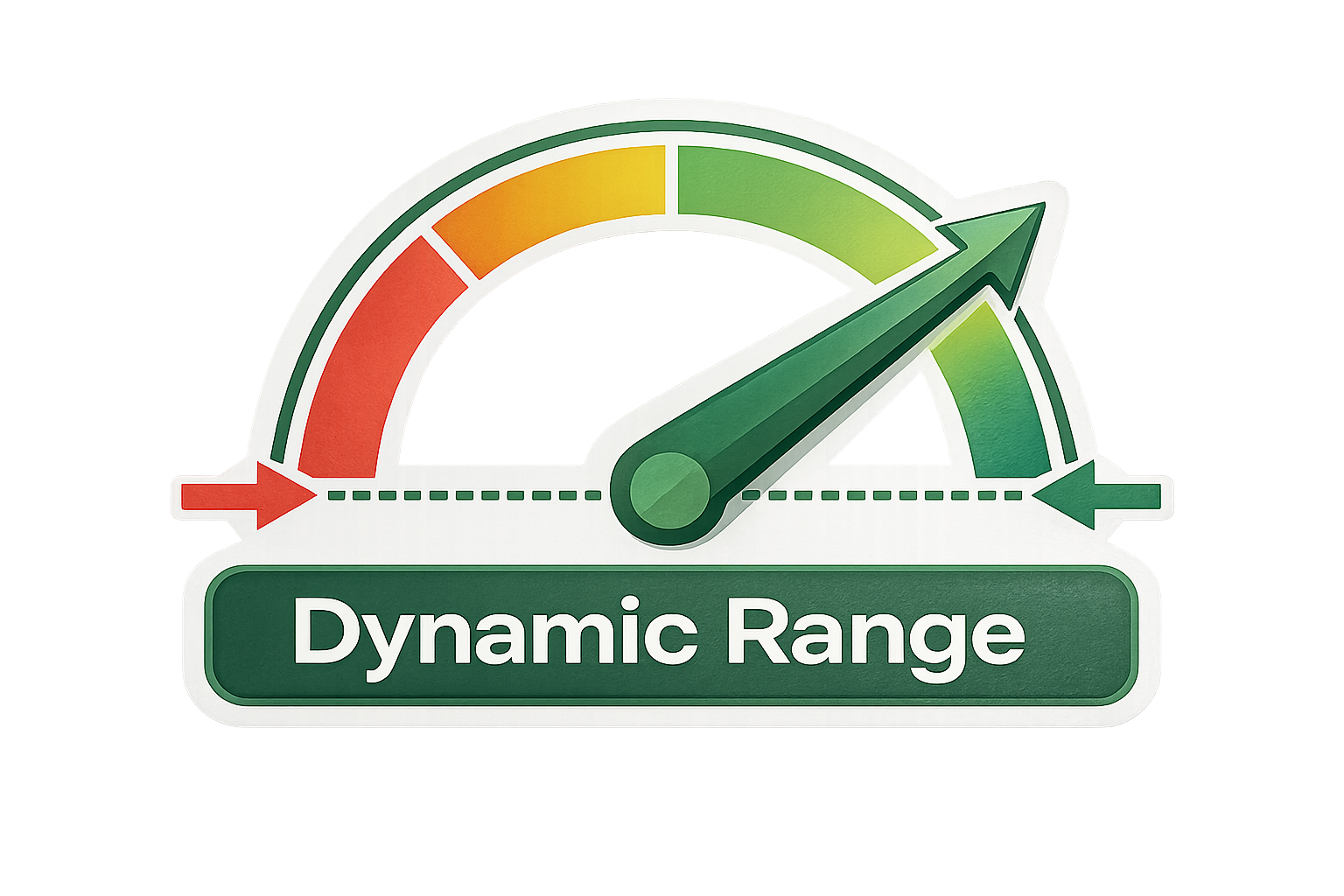
Dynamic range is the maximum loss an OTDR can measure while still detecting usable backscatter signal.
It is measured in decibels (dB).
Think of it like this:
If fibre optic testing were photography, dynamic range would be how well your camera sees both:
Very bright light
Very dark shadows
The better the dynamic range, the more detail you can see across long distances.
How an OTDR Actually Works
An Optical Time-Domain Reflectometer (OTDR) sends a short pulse of laser light into a fibre.
As that light travels:
A small amount scatters back naturally (Rayleigh backscatter)
Reflections occur at connectors and breaks
Loss happens gradually along the fibre
The OTDR measures the returning light and builds a trace that shows:
Total fibre length
Splice losses
Connector reflections
Break locations
But here’s the key:
As the pulse travels further down the fibre, it gets weaker.
Eventually, the returning signal becomes too weak to distinguish from noise.
That limit is determined by dynamic range.
The Technical Definition of Dynamic Range
Dynamic range is calculated as:
The difference between the backscattered signal level at the beginning of the fibre and the noise floor of the OTDR receiver.
In practical terms:
High dynamic range = can see further
Low dynamic range = limited testing distance
For example:
28 dB dynamic range → suitable for shorter enterprise runs
38 dB dynamic range → suitable for long backbone networks
The Link Between DR and dB
Here’s the key:
Dynamic Range is measured in decibels (dB).
It is not something separate from dB.
Think of it like this:
dB = the unit
DR = the value expressed in that unit
Just like:
Distance is measured in metres
Temperature is measured in degrees
Dynamic range is measured in decibels.
When an Optical Time-Domain Reflectometer (OTDR) sends light into fibre:
At the beginning → strong backscatter signal
As distance increases → signal weakens
Eventually → signal hits the noise floor
Dynamic range is the difference between:
The strong signal at the start
The weakest detectable signal before noise
That difference is measured in dB.
Why dB Works for This
Decibels are logarithmic.
That means:
Every 3 dB ≈ signal halves
Every 10 dB = 10× change in power
Every 20 dB = 100× change
Every 30 dB = 1,000× change
So when we say:
OTDR dynamic range = 40 dB
We mean it can detect signals that are:
10,000 times weaker than the starting signal.
That’s huge sensitivity.
Why Dynamic Range Matters So Much
Dynamic range affects:
Maximum testable distance
Accuracy at the far end
Ability to see small splice losses
Testing through splitters (FTTx networks)
Measurement reliability
Let’s break each down.
1️⃣ Maximum Test Distance
The higher the dynamic range, the longer the fibre you can test.
A rough rule of thumb:
| DR | Approximate Test Distance |
|---|---|
| 26–28 dB | 40–60 km |
| 30–32 dB | 80–100 km |
| 35+ dB | 150 km+ |
(Actual distance depends on fibre type and pulse width.)
If you’re testing:
Data centre fibre → lower dynamic range may be fine
Long-haul carrier fibre → high dynamic range required
Fibre typically loses:
~0.35 dB per km at 1310 nm
~0.20 dB per km at 1550 nm
If you have 100 km of fibre:
Loss might be 20 dB.
If your OTDR dynamic range is 25 dB:
You barely have margin.
If it’s 40 dB: You have lots of usable range.
2️⃣ Accuracy at Long Distances
Low DR OTDRs often:
Struggle to measure the final splice accurately
Show noisy traces at long distances
Miss small losses near the end
High dynamic range units maintain cleaner traces deeper into the fibre.
That clarity matters when certifying critical infrastructure.
3️⃣ Detecting Small Splice Losses
A good fusion splice might only be:
0.05 dB to 0.1 dB loss
If your OTDR has poor dynamic range:
That small loss may disappear into noise
You may falsely pass a bad splice
High DR improves:
Signal-to-noise ratio
Event detection precision
Trace stability
4️⃣ Testing Through Splitters (FTTx)
Passive optical networks (PON) use splitters such as:
1:8
1:16
1:32
Each splitter introduces major loss.
For example:
1:32 splitter ≈ 17 dB loss
If your OTDR only has 28 dB dynamic range:
After splitter loss + fibre loss, signal may be gone
High dynamic range is essential for FTTx deployment.
5️⃣ Better Dead Zones Performance
DR influences:
Event dead zone
Attenuation dead zone
Higher dynamic range units typically offer:
Better event resolution
Clearer reflection separation
What Happens If Dynamic Range Is Too Low?
You may experience:
No end-of-fibre detection
Missing events
Inconsistent measurements
Excessive noise
Failed certification
In worst cases:
You assume fibre is good — but faults remain hidden.
Why Does Dynamic Range Increase Cost?
This is where pricing differences make sense.
Higher DR requires:
1️⃣ More Powerful Laser Sources
Stronger pulses:
Travel further
Return stronger backscatter
Require more advanced design
Stronger lasers cost more.
2️⃣ Better Receiver Sensitivity
To detect faint returning signals, OTDRs need:
High-sensitivity photodetectors
Advanced amplification
Precision noise filtering
These components significantly raise manufacturing cost.
3️⃣ Advanced Signal Processing
Premium OTDRs use:
Sophisticated averaging algorithms
Digital filtering
Improved trace smoothing
This requires better hardware and firmware.
4️⃣ Larger Dynamic Sampling Range
High-end units:
Support multiple pulse widths
Offer extended acquisition times
Deliver cleaner traces
More performance = more engineering.
Why Two OTDRs With “Similar Specs” Can Perform Very Differently
Not all DR ratings are equal.
Some manufacturers quote:
Typical dynamic range
Maximum theoretical range
At specific pulse widths
Always check:
At what wavelength was the rating measured?
Under what pulse width?
At what SNR threshold?
Spec sheet marketing can be misleading.
Real-World Example
Let’s compare two hypothetical OTDRs:
OTDR A:
28 dB DR
Entry-level
Suitable for short LAN fibre
OTDR B:
38 dB DR
Carrier-grade
Suitable for long-haul backbone
Difference in price?
Often 5–10x more.
Because:
Stronger optics
Higher-grade electronics
Better filtering
More robust calibration
Dynamic Range vs Pulse Width
Here’s something important:
DR increases with longer pulse widths.
But longer pulses:
Reduce event resolution
Increase dead zones
So you trade:
Clarity vs distance.
High-end OTDRs manage this balance better.
Why Every Fibre Technician Should Understand This
Even if you don’t buy the OTDR yourself, you should understand:
What your equipment can and cannot do
Whether it’s suitable for the job
When to rent or upgrade
Too many technicians assume:
“An OTDR is an OTDR.”
It isn’t.
Using insufficient dynamic range can:
Fail certification
Miss faults
Waste labour
Damage reputation
Why This Matters in Australia
Given Australia’s long-distance infrastructure:
Mining sites
Rural backbones
Regional FTTP rollouts
DR is especially important.
Short metro runs may not require high specs.
But long regional fibre absolutely does.
Choosing the Right Dynamic Range
Ask yourself:
What is the longest link you test?
Do you test through splitters?
Are you certifying for carrier networks?
Is this for maintenance or installation?
Basic Enterprise Work:
28–30 dB
FTTx / PON Work:
32–36 dB
Long Haul / Carrier:
38 dB+
Is Higher Always Better?
Not necessarily.
High DR OTDRs:
Cost more
Can be overkill for short links
May be unnecessary for data centre work
The goal is:
Right tool for the job.
Final Thoughts
Dynamic range is not just a number on a datasheet.
It determines:
How far you can test
How clearly you see
How accurate your measurements are
Whether you pass certification
It directly impacts:
Performance
Reliability
Reputation
Budget
If you work with fibre, you should understand DR — even if you’re not the one purchasing the OTDR.
Because knowing the limits of your equipment makes you a better technician.
And in fibre networks, precision matters.