
Best Cat6 Cable for PoE | Complete Buying Guide
Best Cat6 PoE installations require more than simply selecting an Ethernet cable that fits your equipment. The quality of the patch cable influences network reliability, power delivery, cable management and the long-term performance of connected devices. Consequently, choosing the correct Cat6 patch cable helps reduce installation issues while supporting dependable Power over Ethernet performance.
Whether you are deploying IP security cameras, wireless access points, VoIP telephones or access control systems, selecting a professionally manufactured Cat6 Patch Cables solution ensures your network infrastructure is designed for reliable operation.
Choose the Best Cat6 Cable for Your PoE Installation
Not every Power over Ethernet installation has the same requirements. Therefore, the best Cat6 cable depends on the environment, cable routing, cabinet density and the devices being connected.
For most office, education and commercial networks, standard Cat6 Patch Cables provide an excellent balance of performance, flexibility and durability.
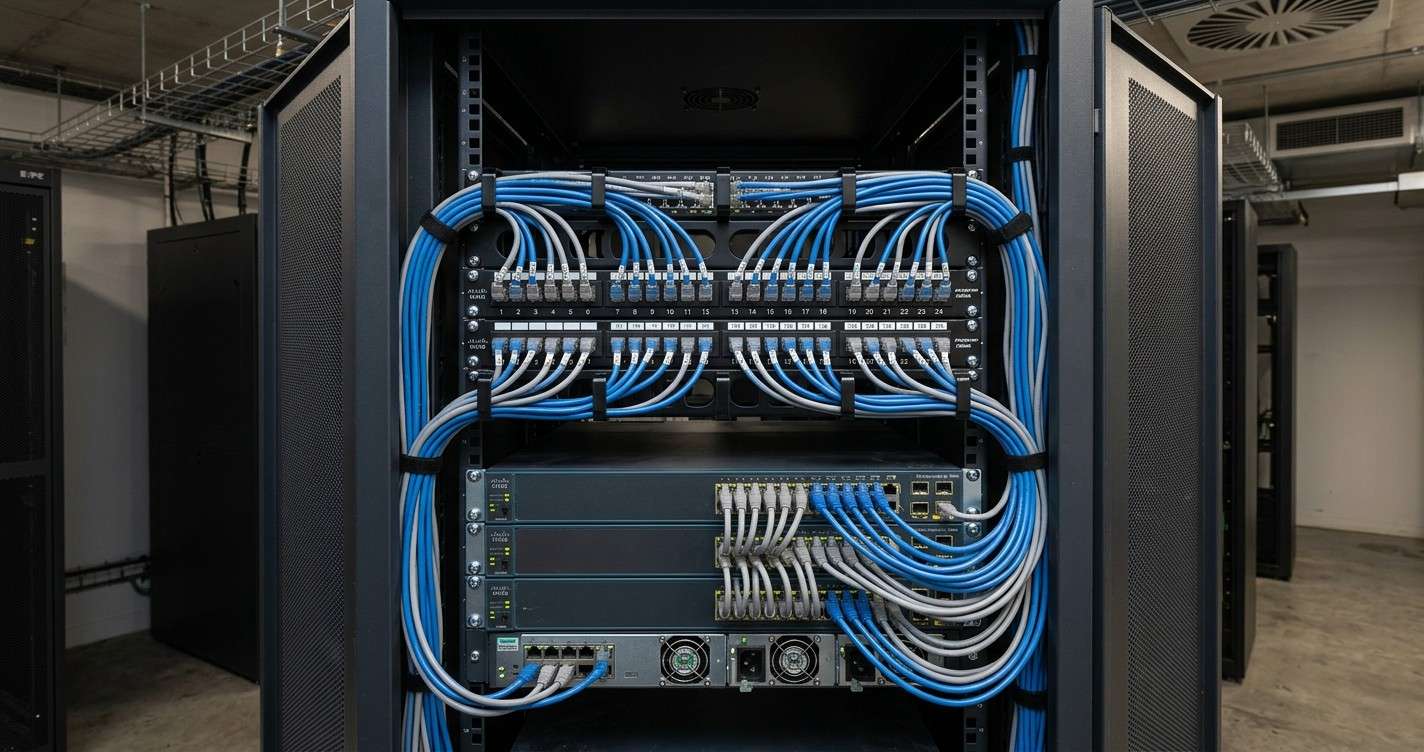
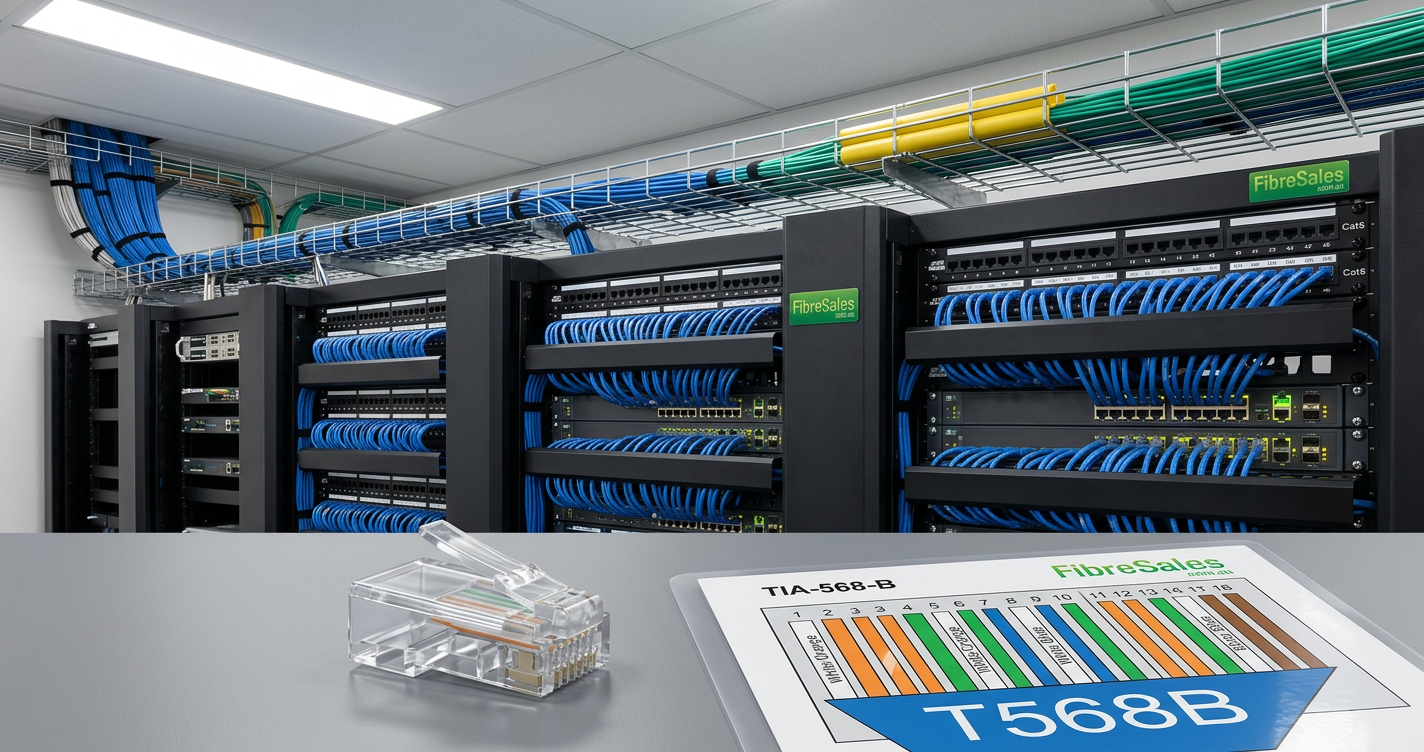
However, where switch cabinets contain large numbers of Ethernet connections, Cat6AU Ultra Thin Patch Cables can improve cable management by reducing congestion and increasing airflow around network equipment. Their smaller diameter makes them particularly suitable for high-density racks and modern data centre environments.
Understanding the installation environment before purchasing allows you to choose a cable that supports both current network requirements and future expansion.
What Is Power over Ethernet (PoE)?
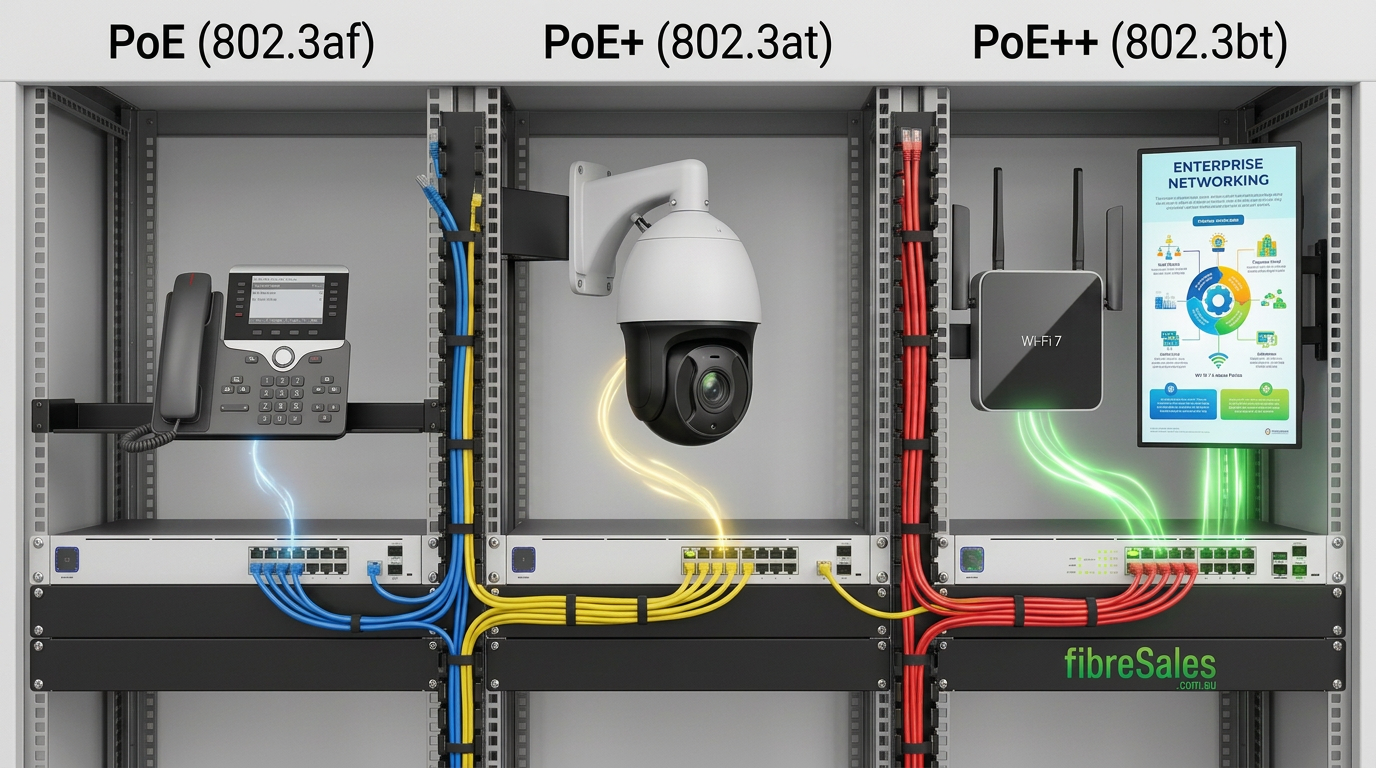
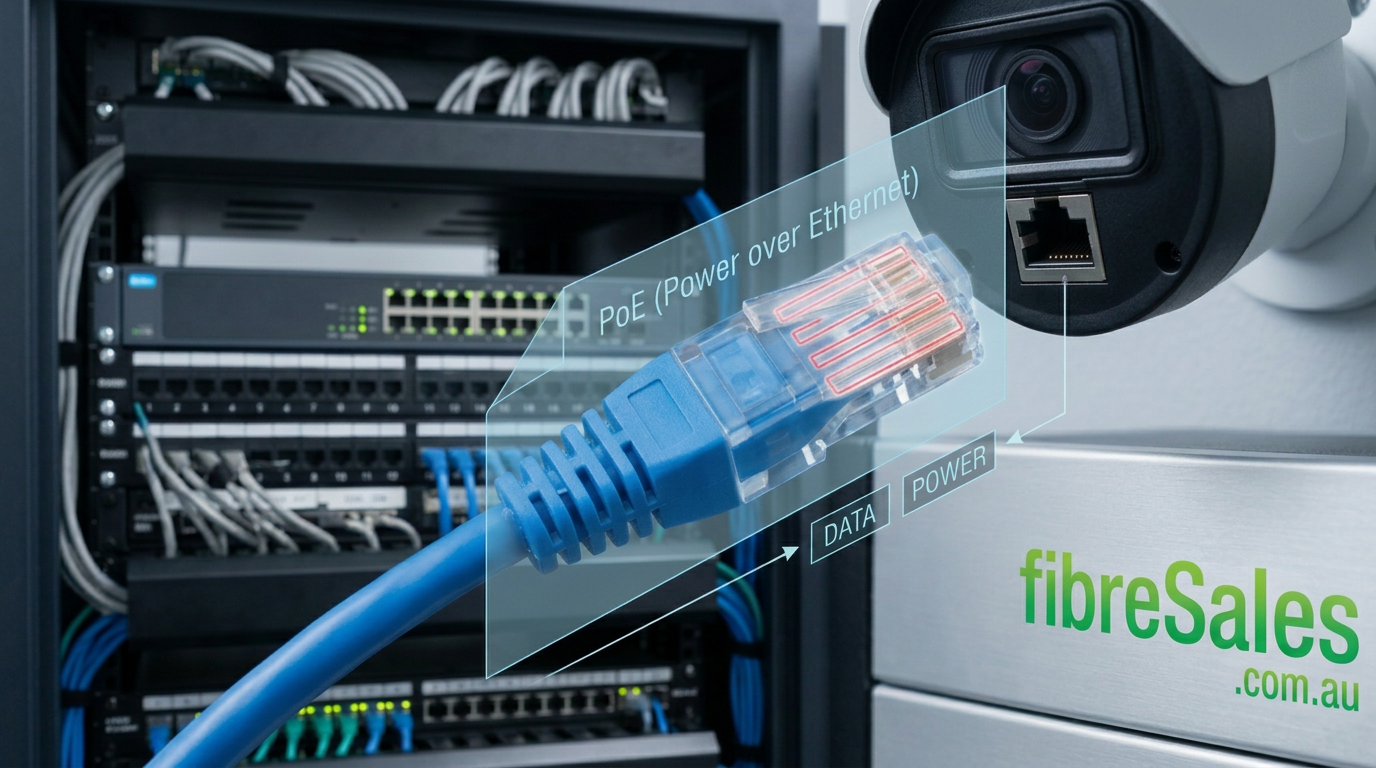
Power over Ethernet (PoE) is an IEEE networking technology that enables both electrical power and network data to be transmitted through a single Ethernet cable. As a result, compatible devices no longer require separate local power supplies, simplifying installation and reducing infrastructure costs.
PoE is commonly used throughout commercial and industrial networks because it allows equipment to be installed wherever network connectivity is available, rather than where electrical outlets are located.
Typical applications include:
- IP security cameras
- Wireless access points
- VoIP telephones
- Access control systems
- Building automation devices
- Network intercoms
- Digital signage
- Industrial network equipment
For a broader understanding of Ethernet infrastructure, see Network Cables Explained.
Why Choose Cat6 for Power over Ethernet?
Cat6 has become the preferred Ethernet cabling solution for many modern Power over Ethernet deployments because it provides reliable network performance while supporting the bandwidth requirements of today’s connected devices. When combined with quality networking hardware, Cat6 patch cables help create stable, high-performance networks suitable for business, education, healthcare and industrial environments.
Compared with older Ethernet standards, Cat6 offers improved electrical performance and reduced crosstalk, making it well suited to Gigabit Ethernet applications where consistent network connectivity is essential.
Key benefits include:
- Supports Gigabit Ethernet networks.
- Suitable for many IEEE Power over Ethernet applications.
- Reduces electromagnetic interference compared with lower-category cabling.
- Available in a wide range of lengths and colours for professional installations.
- Factory-terminated RJ45 connectors provide consistent performance.
- Compatible with switches, routers, patch panels and structured cabling systems.
For readers comparing cable categories, see CAT6 vs CAT6A vs CAT6AU | Which Ethernet Patch Cable Should You Choose?.
Features and Benefits of Cat6 Patch Cables for PoE
Choosing a professionally manufactured Cat6 patch cable delivers more than reliable connectivity. It also helps simplify installation, improve cable management and support long-term network reliability.
Reliable Data and Power Delivery
Power over Ethernet combines data and electrical power within a single cable. Consequently, using quality Cat6 patch cables helps maintain dependable performance for devices operating continuously throughout the day.
Professional Cable Construction
Professionally manufactured Cat6 patch cables are factory tested to help ensure consistent performance and dependable connectivity. High-quality connectors and durable cable jackets also improve reliability in demanding commercial environments.
Flexible Installation Options
Cat6 patch cables are available in multiple lengths, allowing installers to choose a cable that suits each cabinet or workstation without leaving excessive slack that can restrict airflow or complicate cable management.
Improved Cable Management
Where high port densities exist, selecting Cat6AU Ultra Thin Patch Cables can reduce cable congestion while improving airflow within communications cabinets. This makes them an excellent choice for enterprise networks and data centres where efficient cable management is critical.
Choosing the Right Cat6 Cable for Your PoE Environment
The best Cat6 cable depends on the equipment being powered and the environment in which it will operate.
| Installation Environment | Recommended Solution |
|---|---|
| Office networks | Cat6 Patch Cables |
| IP camera installations | Cat6 Patch Cables |
| Wireless access points | Cat6 Patch Cables |
| Communications cabinets | Cat6AU Ultra Thin Patch Cables |
| High-density data centres | Cat6AU Ultra Thin Patch Cables |
Before selecting a cable, consider the available cabinet space, cable routing, future expansion requirements and the number of connected devices. Matching the cable to the installation environment helps create a network that is easier to manage and maintain while supporting reliable Power over Ethernet performance.
Applications for Cat6 Power over Ethernet
Cat6 patch cables are used in a wide range of Power over Ethernet installations because they provide dependable network connectivity while simplifying infrastructure by carrying both data and electrical power through a single cable. Consequently, they are suitable for organisations that require reliable performance and straightforward installation.
IP Security Cameras
Power over Ethernet has become the preferred method for connecting IP surveillance systems. A single Cat6 patch cable supplies both network connectivity and power, reducing installation time and eliminating the need for separate electrical outlets at each camera location.
For surveillance installations, read Cat6 for IP Cameras.
Wireless Access Points
Modern Wi-Fi access points are commonly powered using PoE because ceiling-mounted devices are often located away from convenient power sources. Using quality Cat6 Patch Cables helps create clean, professional installations while supporting reliable wireless connectivity throughout the building.
VoIP Telephone Systems
Business telephone systems frequently rely on PoE to power desk phones without individual power adapters. This simplifies office deployments, reduces cable clutter and allows phones to continue operating through centrally managed backup power systems where installed.
Access Control and Building Security
Electronic door controllers, card readers and intercom systems often use Power over Ethernet to simplify installation across commercial buildings. Installing a single Cat6 cable reduces infrastructure complexity while making future maintenance easier.
Digital Signage
Retail stores, schools, hospitals and corporate offices increasingly use PoE-powered digital displays for information and advertising. Cat6 cabling provides a reliable connection while supporting centralised management of connected devices.
Smart Building and IoT Devices
Building automation systems continue to expand with connected sensors, controllers and monitoring equipment. Cat6 patch cables provide a dependable network connection for many of these devices while helping simplify structured cabling installations.
Engineering Decision
Selecting the best Cat6 cable for PoE should be based on the installation environment rather than simply purchasing the lowest-cost option.
For standard office, education and commercial installations, Cat6 Patch Cables provide an excellent combination of performance, durability and value.
Where communications cabinets contain a high density of patch leads, Cat6AU Ultra Thin Patch Cables can improve airflow, reduce cable congestion and simplify ongoing cable management.
Choosing the appropriate cable at the beginning of a project helps improve installation quality, simplify future maintenance and support reliable long-term network performance.
Technical Comparison
| Feature | Cat6 Patch Cables | Cat6AU Ultra Thin Patch Cables |
|---|---|---|
| Typical application | General commercial networks | High-density cabinets and data centres |
| Cable diameter | Standard | Reduced diameter (28AWG) |
| Cable management | Very good | Excellent |
| Cabinet airflow | Good | Excellent |
| Installation flexibility | Excellent | Excellent |
| Recommended for PoE | Yes | Yes, particularly where cabinet density is high |
Standards and Best Practices for PoE Installations
Selecting the right Cat6 patch cable is only one part of building a reliable Power over Ethernet network. Following recognised industry standards and installation best practices helps maximise network performance, simplify future maintenance and reduce the likelihood of faults developing over time.
When planning a PoE installation, consider the following recommendations:
- Use quality factory-terminated patch cables from a reputable supplier.
- Select the correct cable length to avoid unnecessary cable congestion.
- Maintain organised cable management within communications cabinets.
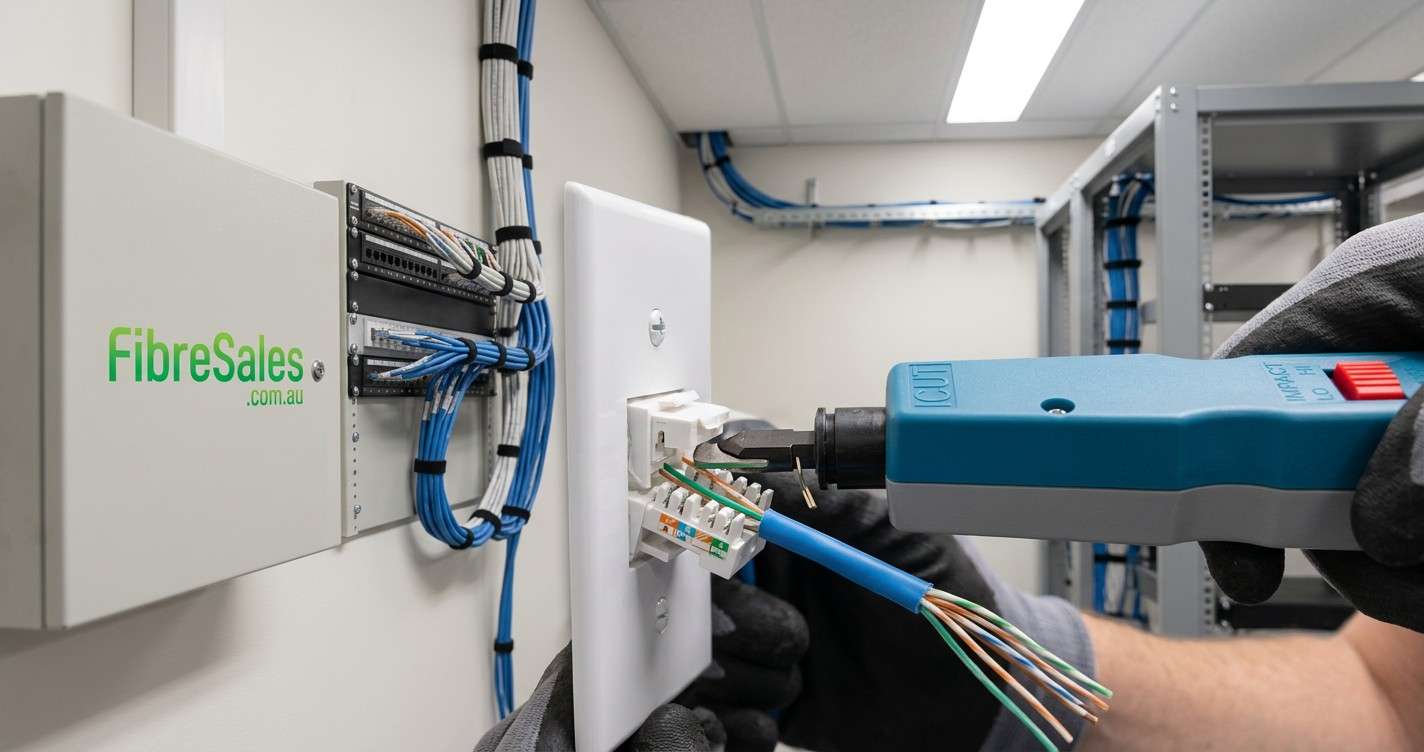
- Avoid excessive cable tension, sharp bends and cable crushing during installation.
- Clearly label patch panels and patch leads to simplify future maintenance.
- Follow the structured cabling requirements defined by recognised industry standards.
For structured cabling guidance, refer to:
- IEEE 802.3 Ethernet Standards
- ANSI/TIA-568 Telecommunications Cabling Standard
- ISO/IEC 11801 Generic Cabling for Customer Premises
- Australian Communications and Media Authority (ACMA)
Following recognised standards helps ensure network infrastructure remains reliable, easier to maintain and capable of supporting future upgrades.
Real-World Installation Example
A national retail organisation was upgrading more than 250 stores with new IP security cameras, wireless access points and VoIP telephones. The objective was to simplify installation while reducing the amount of electrical work required at each location.
The deployment used Power over Ethernet switches together with professionally manufactured Cat6 Patch Cables throughout each communications cabinet.
Stores with larger communications racks adopted Cat6AU Ultra Thin Patch Cables to improve cable management and increase airflow around switching equipment.
As a result, the installer achieved:
- Faster deployment across multiple locations.
- Reduced cable congestion inside communications cabinets.
- Simplified future maintenance.
- Consistent network performance across connected PoE devices.
Although every installation has different requirements, selecting the appropriate patch cable for the environment contributed to a cleaner, more maintainable network infrastructure.
Common Mistakes When Choosing Cat6 Cable for PoE
Many Power over Ethernet issues originate from poor cable selection or installation practices rather than the networking equipment itself. Avoiding these common mistakes can improve long-term network reliability.
Choosing Cables on Price Alone
Low-cost patch cables may appear attractive initially, but inconsistent manufacturing quality can affect long-term reliability. Selecting professionally manufactured patch cables helps reduce the likelihood of installation problems.
Using the Wrong Cable Length
Patch cables that are longer than necessary create unnecessary cable congestion and make communications cabinets more difficult to manage. Selecting the appropriate length helps maintain an organised installation.
Ignoring Cabinet Density
Large network cabinets containing dozens or hundreds of patch leads benefit from improved airflow and cable management. In these environments, Cat6AU Ultra Thin Patch Cables may provide a more practical solution than standard-diameter cables.
Poor Cable Management
Untidy patching makes fault finding more difficult and restricts airflow around active networking equipment. Good cable management improves both appearance and ongoing maintenance.
Purchasing from Unknown Suppliers
Professionally manufactured network cables that have been factory tested provide greater confidence in long-term performance than products with unknown manufacturing standards. Selecting a trusted supplier helps reduce installation risks and improves network reliability.
Frequently Asked Questions
Is Cat6 suitable for Power over Ethernet?
Yes. Cat6 is widely used for Power over Ethernet installations and supports many IEEE PoE applications. It is commonly deployed for IP cameras, wireless access points, VoIP telephones, access control systems and other network-connected devices.
Does PoE require a special Cat6 cable?
No. PoE does not require a special Ethernet cable. However, selecting professionally manufactured Cat6 Patch Cables helps provide reliable network connectivity and dependable long-term performance.
Is Cat6 better than Cat5e for PoE?
Both Cat5e and Cat6 can be used for many PoE applications. However, Cat6 offers improved electrical performance and is often the preferred choice for new commercial network installations where long-term infrastructure planning is important.
For a detailed comparison, read CAT6 vs CAT6A vs CAT6AU | Which Ethernet Patch Cable Should You Choose?
Can Cat6 support PoE security cameras?
Yes. Cat6 is an excellent choice for IP surveillance systems because it carries both network data and electrical power through a single cable, simplifying installation.
For more information, see Cat6 for IP Cameras
Are ultra-thin Cat6AU patch cables suitable for PoE?
Yes. Cat6AU Ultra Thin Patch Cables are well suited to high-density communications cabinets where improved airflow and cable management are priorities.
What is the maximum recommended cable length for Cat6 PoE?
Industry structured cabling standards specify a permanent Ethernet channel length of up to 100 metres. Network designers should follow recognised cabling standards when planning installations.
Can I use Cat6 patch cables outdoors?
Standard Cat6 patch cables are intended for indoor use unless specifically manufactured for outdoor environments. Outdoor installations should use products designed for exposure to weather and environmental conditions.
Does cable colour affect PoE performance?
No. Cable colour is used for identification and cable management only. Performance depends on the cable’s construction and manufacturing quality rather than its colour.
Should I use stranded or solid Cat6 cable for PoE?
Factory-terminated patch leads are typically manufactured using stranded conductors for flexibility, while permanent building cabling commonly uses solid conductors. Each serves a different purpose within a structured cabling system.
Where can I buy professional Cat6 patch cables for PoE?
fibresales supplies a comprehensive range of Cat6 Patch Cables and Cat6AU Ultra Thin Patch Cables suitable for commercial networking, structured cabling and Power over Ethernet installations.
Why fibresales
fibresales supplies professional networking products for IT teams, installers, contractors, data centres and business customers across Australia. Our Cat6 patch cable range is selected to deliver dependable performance, consistent manufacturing quality and fast nationwide delivery, helping organisations build reliable Ethernet networks with confidence.
Conclusion
Selecting the best Cat6 cable for PoE is about matching the cable to the installation environment rather than simply choosing the lowest-cost option. Standard Cat6 Patch Cables provide an excellent solution for most commercial networks, while Cat6AU Ultra Thin Patch Cables offer additional advantages in high-density communications cabinets where airflow and cable management are important.
By considering the installation environment, following recognised cabling standards and choosing professionally manufactured patch cables, organisations can build reliable Power over Ethernet infrastructure that supports current requirements while allowing for future growth.
Shop fibresales
Explore the complete range of Cat6 Patch Cables and Cat6AU Ultra Thin Patch Cables at fibresales to find the right solution for your next Power over Ethernet installation.
For more fibre optic solutions, technical resources, and installation products, visit www.fibresales.com.au.
Continue Learning
Continue building your knowledge of Ethernet cabling, structured networking and Cat6 deployment with these related fibresales resources:
- Network Cables Explained – Learn the fundamentals of network cables, their construction, applications and how different cable types are used across modern Ethernet networks.
- Copper Networking Explained | The Complete Guide to Ethernet Networks – Understand how copper networking infrastructure supports business, industrial and enterprise Ethernet installations.
- Copper Patch Leads Explained | The Complete Guide to Ethernet Patch Cables – Explore patch lead construction, applications and how to select the correct Ethernet patch cable for your network.
- What is a Cat6 Patch Cable? Complete Guide for Home & Business – Learn how Cat6 patch cables work, their specifications and where they are best suited within structured cabling systems.
- CAT6 vs CAT6A vs CAT6AU | Which Ethernet Patch Cable Should You Choose? – Compare the key differences between Cat6, Cat6A and Cat6AU patch cables to select the most appropriate solution for your installation.
- Cat6 for IP Cameras – Discover why Cat6 is a popular choice for IP surveillance systems and how to choose the right cable for security camera deployments.
References
- IEEE 802.3 Ethernet Standards – The official IEEE standard defining Ethernet technologies, including the physical and data link layer specifications that underpin modern wired networks.
- IEEE Power over Ethernet (PoE) – An overview of Power over Ethernet technology, including how electrical power and network data are delivered over a single Ethernet cable and the evolution of PoE standards.
- ANSI/TIA-568 Structured Cabling Standard – An overview of the structured cabling standard that specifies recognised cabling practices, performance requirements and installation guidelines for commercial buildings.
- ISO/IEC 11801 Generic Cabling Standard – The international standard for generic customer-premises cabling, providing guidance on the design and implementation of structured cabling systems.
- BICSI Telecommunications Distribution Methods Manual (TDMM) – An industry-recognised engineering reference covering best practices for the design, installation and administration of telecommunications infrastructure.
- Australian Communications and Media Authority (ACMA) Cabling Standards – Information on Australian regulatory requirements and cabling rules to support compliant telecommunications installations.