Choosing the Right Cat6 Patch Cable
Selecting the right Ethernet patch cable is about more than choosing a cable that reaches from one device to another. The correct cable category, length and construction all contribute to better network performance, easier cable management and a more reliable installation.
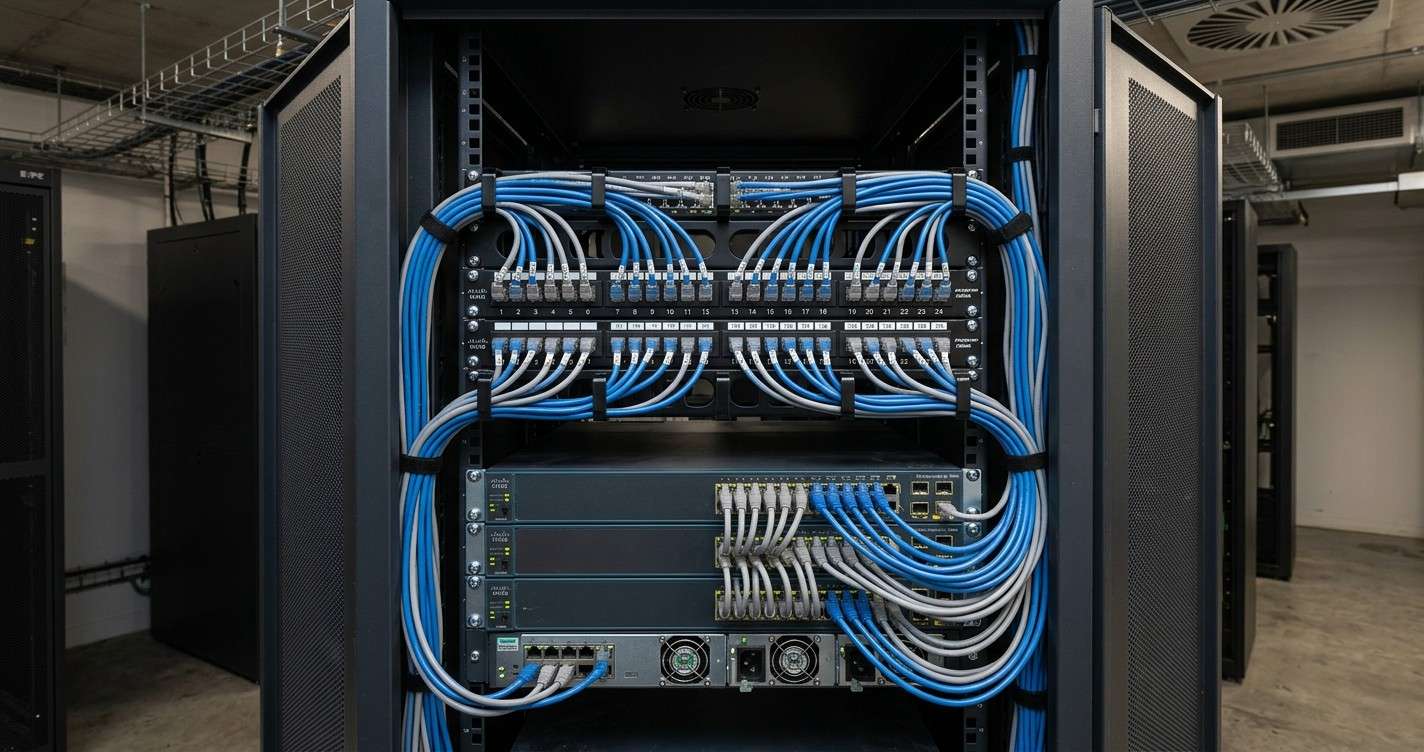
At fibresales, our Cat6 Patch Cables are the preferred choice for most residential, commercial and business networking applications, while our Cat6AU Ultra Thin Patch Cables are designed for high-density communications cabinets and data centres where saving space and improving airflow are priorities.
The following guide will help you choose the right solution for your network.
Choosing the Right Cable Length
Selecting the correct cable length creates a cleaner installation, improves airflow within communications cabinets and reduces unnecessary cable clutter.
Using cables that are too long can make maintenance more difficult, while cables that are too short may place unnecessary strain on connectors.
As a general guide:
| Cable Length | Recommended Application |
|---|---|
| 0.25–0.5 metre | Patch panels to switches within cabinets |
| 1 metre | Desktop computers and nearby equipment |
| 2–3 metres | Office workstations and printers |
| 5 metres | Small office installations |
| 10 metres and above | Larger office layouts and equipment rooms |
Where possible:
- Choose the shortest practical cable.
- Allow enough slack for equipment maintenance.
- Avoid tightly stretched cables.
- Minimise unnecessary cable loops.
If you’re unsure which length is best for your installation, read our article What Length Patch Cable Should I Buy? | fibresales Buying Guidefor practical advice.
Choosing the Right Colour
Although cable colour does not affect performance, it plays an important role in organised structured cabling systems.
Using consistent colour coding allows technicians to quickly identify network services and reduces troubleshooting time.
Common examples include:
| Colour | Typical Use |
|---|---|
| Blue | Standard data network |
| Red | Critical infrastructure |
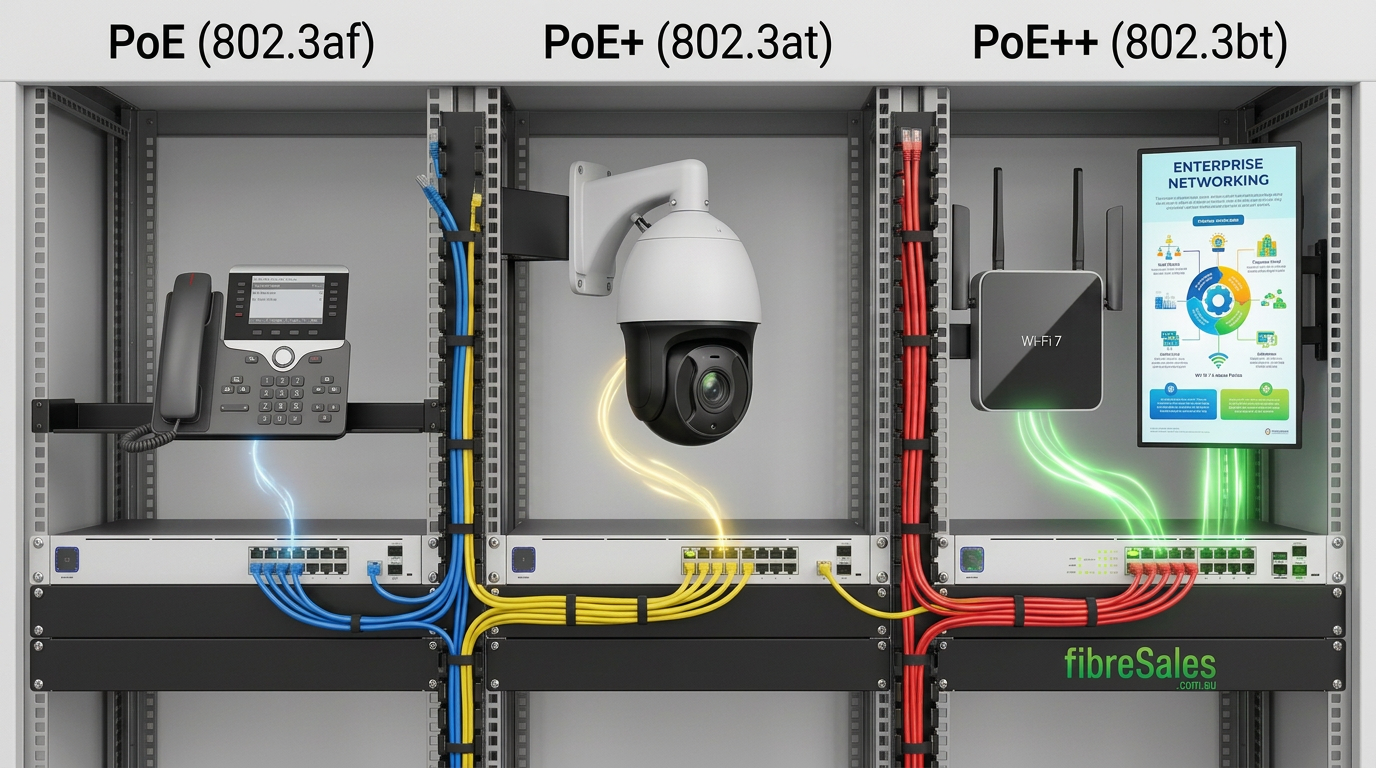
| Yellow | Voice or dedicated services |
| Green | Security and CCTV |
| Black | General-purpose networking |
Establishing a colour standard across your organisation makes future upgrades and maintenance significantly easier.
Cat5e vs Cat6 vs Cat6A vs Cat6AU
Selecting the right Ethernet category depends on your current network requirements and future growth plans.
| Feature | Cat5e | Cat6 | Cat6A | Cat6AU |
|---|---|---|---|---|
| Maximum Ethernet Speed | 1 Gigabit | 1 Gigabit (10Gb over shorter distances) | 10 Gigabit | 10 Gigabit |
| Bandwidth | 100 MHz | 250 MHz | 500 MHz | 500 MHz |
| Cable Size | Standard | Standard | Larger Diameter | Ultra Thin |
| Ideal Applications | Home networking | Business networking | Enterprise networks | High-density racks & data centres |
For the majority of business, education and commercial installations, Cat6 Patch Cables provide the best balance of performance, durability and value.
Where rack density, airflow and cable management are important, Cat6AU Ultra Thin Patch Cables offer the advantages of Category 6A performance with a significantly reduced cable diameter.
For a more detailed comparison, read:
UTP or Shielded?
One of the most common questions customers ask is whether they need shielded Ethernet cables.
For most installations, the answer is no.
Standard UTP (Unshielded Twisted Pair) Cat6 Patch Cables provide excellent performance in homes, offices, schools, retail stores and commercial buildings where electrical interference is minimal.
Shielded cables may be worth considering when network cables are installed near:
- Industrial machinery
- High-voltage electrical equipment
- Electric motors
- Manufacturing equipment
- Areas with significant electromagnetic interference (EMI)
Choosing the correct cable type helps maximise network performance while avoiding unnecessary installation costs.
Choosing the Right Patch Cable for Your Application
Different networking environments have different performance requirements. Selecting the right patch lead helps improve reliability while making future maintenance easier.
Home and Home Office
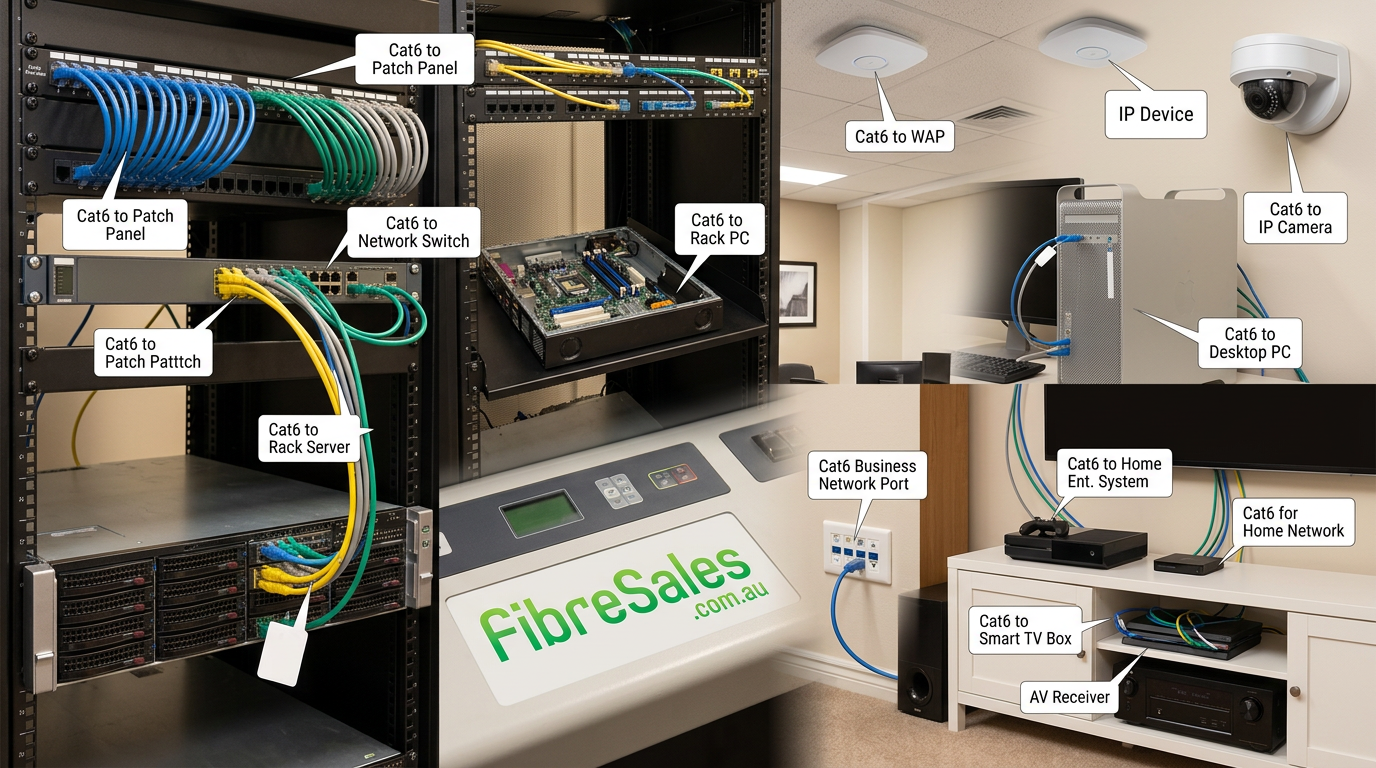
For home broadband, gaming systems, smart televisions, desktop computers and home offices, Cat6 Patch Cables provide excellent speed, reliability and value.
Business and Commercial Networks
Commercial environments require dependable patch leads capable of supporting:
- Computers
- Network switches
- Wireless access points
- VoIP phone systems
- Printers
- Network-attached storage (NAS)
Professionally manufactured Cat6 patch leads help minimise downtime while supporting future network expansion.
Data Centres and Communications Cabinets
Where large numbers of network connections are installed within server racks, cable management becomes increasingly important.
For these environments, Cat6AU Ultra Thin Patch Cables reduce cable congestion, improve airflow around active equipment and make ongoing maintenance considerably easier.
They are an excellent solution for:
- Enterprise data centres
- Communications cabinets
- High-density patch panels
- Server rooms
- Cloud infrastructure
Why Buying Quality Patch Leads Saves Money
Patch cables are often one of the least expensive components in a network, yet poor-quality cables can cause some of the most frustrating faults.
Low-quality patch leads may contribute to:
- Intermittent network outages
- Packet loss
- Reduced network performance
- Increased troubleshooting time
- Premature cable replacement
- Higher long-term maintenance costs
Choosing professionally manufactured Cat6 Patch Cables from fibresales helps reduce these risks while providing dependable performance throughout the life of your network.
Quick Buying Checklist
Before ordering your Ethernet patch leads, ask yourself:
- What cable length do I need?
- Which colour fits our cabling standard?
- Is Cat6 the right choice, or would Cat6AU benefit this installation?
- Will the cables be installed in a high-density communications cabinet?
- Is an LSZH jacket required for this environment?
- Am I purchasing professionally manufactured, factory-tested patch leads from a trusted Australian supplier?
Answering these questions before purchasing will help ensure you select the right patch cable for your current project while supporting future network growth.