
RJ45 Pinout Explained
What Is a PoE RJ45 Pinout?
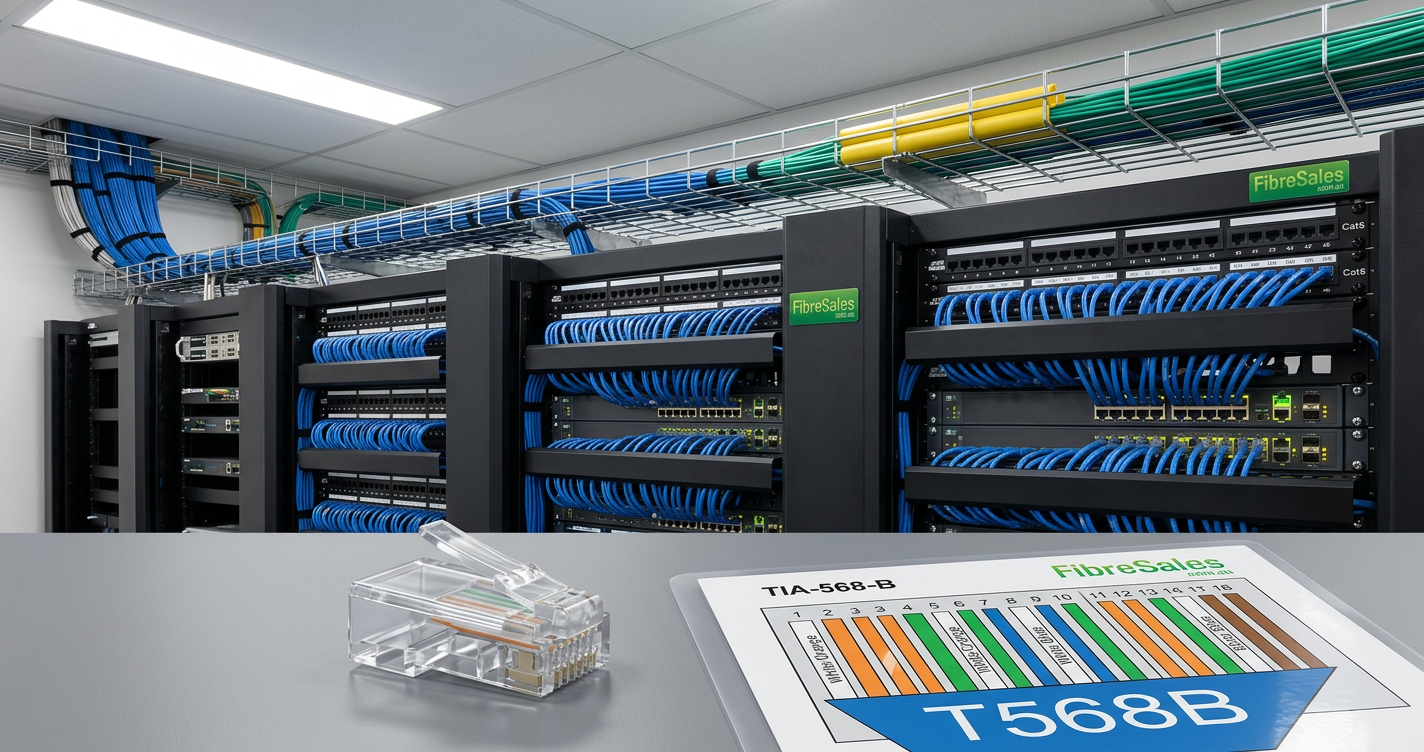
A PoE RJ45 pinout describes how an Ethernet cable carries both network data and electrical power through the same RJ45 connector. One of the most common misconceptions about Power over Ethernet (PoE) is that it requires a special wiring sequence. In reality, PoE uses the standard T568A or T568B Ethernet pinout—it simply adds DC power to the existing twisted pairs defined by the Ethernet standard.
Whether you’re installing IP security cameras, wireless access points, VoIP phones or smart building devices, understanding the PoE RJ45 pinout helps ensure your network delivers reliable power and data without requiring separate electrical cabling.
Modern Power over Ethernet (PoE) technology simplifies commercial and industrial network installations by allowing a single Ethernet cable to power compatible devices while simultaneously carrying network traffic. When combined with professionally manufactured Cat6 Patch Cables, PoE provides a clean, efficient and standards-based solution for today’s connected buildings.
This guide explains how the PoE RJ45 pinout works, which wire pairs carry power, how phantom power operates and why Power over Ethernet uses the standard RJ45 wiring sequence.
Does PoE Change the RJ45 Pinout?
No.
Power over Ethernet does not change the RJ45 wiring sequence.
Whether an Ethernet cable carries data only or both data and power, the connector still follows the standard T568A or T568B wiring arrangement.
This means:
- The conductor colour sequence remains unchanged.
- RJ45 connectors are terminated exactly the same way.
- Standard Ethernet cabling practices still apply.
- The same structured cabling standards govern the installation.
If you need the complete wiring diagrams, colour codes and termination instructions, refer to RJ45 Pinout: How to Wire Ethernet Cables Step-by-Step.
The difference is not the wiring sequence—it is how electrical power is applied to the Ethernet conductors.
How Does Power Travel Through an Ethernet Cable?
Unlike conventional electrical wiring, Power over Ethernet shares the same cable used for data communication.
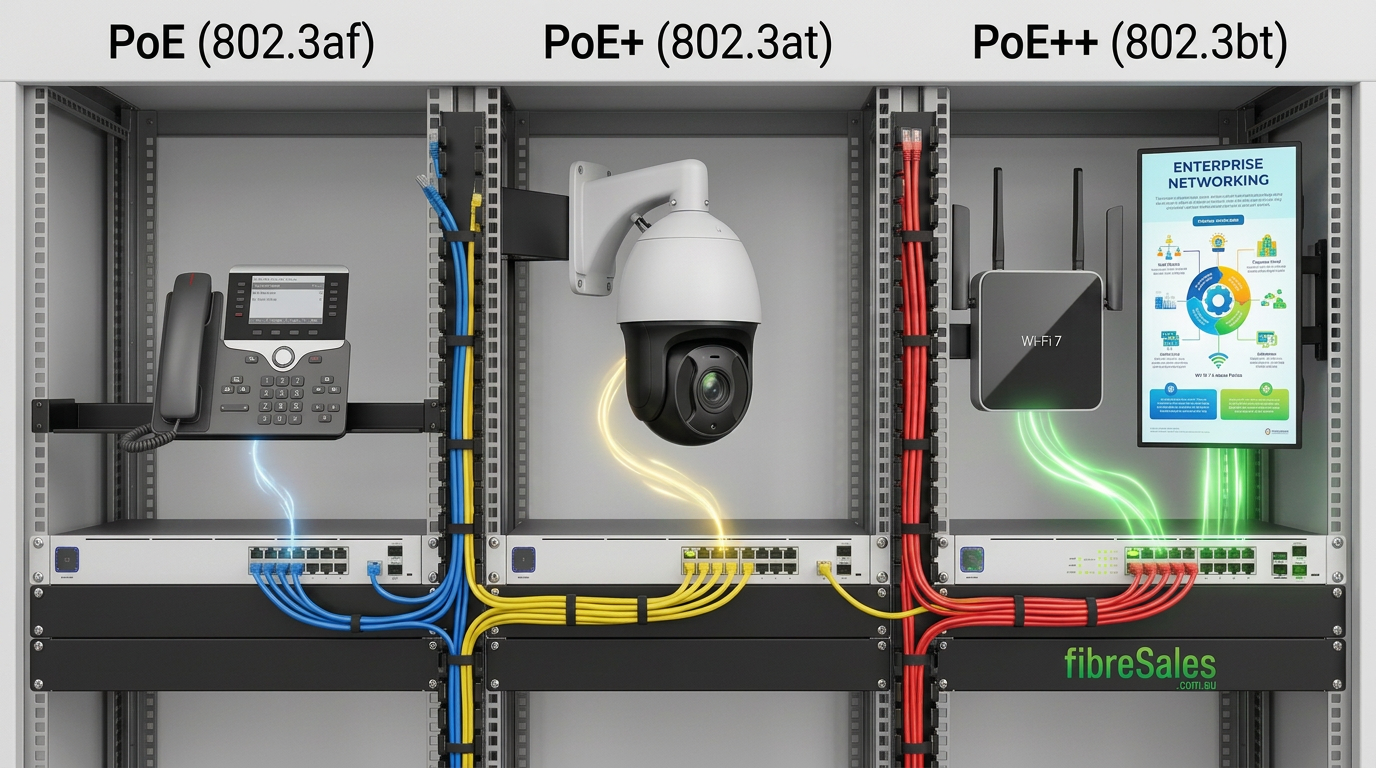
Instead of installing separate power cables for devices such as IP cameras or wireless access points, PoE-capable switches or injectors deliver low-voltage DC power through the Ethernet cable itself.
This allows one Cat6 cable to provide:
- Network communication.
- Electrical power.
- Simplified installation.
- Reduced cabling costs.
- Easier equipment relocation.
Because power and data travel together, PoE significantly reduces installation complexity in commercial offices, schools, warehouses, hospitals and industrial facilities.
What Is Phantom Power?
One of the clever engineering principles behind PoE is phantom power.
Rather than interfering with Ethernet signals, PoE applies DC voltage equally to both conductors within a twisted pair. Ethernet devices transmit and receive data by measuring the voltage difference between the two conductors, so the common DC voltage does not affect data communication.
This technique allows electrical power and high-speed Ethernet traffic to share the same cable simultaneously without reducing network performance.
Phantom power is the reason modern Ethernet networks can support devices such as:
- IP security cameras.
- Wireless access points.
- VoIP telephones.
- Building automation controllers.
- Access control systems.
- Network sensors.
without requiring separate electrical wiring.
For a broader explanation of Power over Ethernet technology, applications and installation considerations, see Understanding PoE and Ethernet Cables | Complete Guide.
Why PoE Has Become the Commercial Standard
Power over Ethernet has transformed commercial network design by reducing installation time and infrastructure costs.
Instead of coordinating electrical contractors and network installers separately, organisations can power many network-connected devices directly through their structured cabling system.
Benefits include:
- Fewer electrical outlets.
- Lower installation costs.
- Simpler cable management.
- Centralised power distribution.
- Easier maintenance.
- Greater flexibility when relocating devices.
Industry standards such as the IEEE 802.3 Power over Ethernet Standard define how PoE delivers power safely while maintaining full Ethernet compatibility. Combined with the ANSI/TIA-568 Structured Cabling Standard, these standards ensure Ethernet cabling can reliably support both data and power across modern commercial networks.
Engineering Decision
One of the biggest misconceptions surrounding Power over Ethernet is that it requires a different RJ45 wiring arrangement. It does not. Whether you’re deploying standard Ethernet or powering devices with PoE, the RJ45 connector still follows the recognised T568A or T568B wiring standard.
The engineering difference lies in how power is delivered, not how the connector is wired. By combining recognised structured cabling practices with professionally manufactured Cat6 Patch Cables, organisations can build Ethernet networks that deliver both reliable data communication and safe, standards-compliant power to connected devices.