Best Cat6 Patch Cable for Home Networks | fibresales Buying Guide
Choosing the best Cat6 patch cable is an important step in building a fast, stable and reliable home network. Whether you are connecting an NBN modem, Wi-Fi router, gaming PC, smart television, network switch or network-attached storage, a quality Cat6 Patch Cables solution provides dependable Gigabit Ethernet performance while supporting many 10 Gigabit applications over shorter cable runs.
However, not all Ethernet patch cables are manufactured to the same standard. Build quality, conductor materials, connector design and factory testing all contribute to long-term network reliability. Therefore, selecting the right patch cable involves more than simply choosing the lowest-priced option.
This buying guide explains how to select the most suitable Cat6 patch cable for a residential network. It also covers cable lengths, connector quality, jacket materials and common buying mistakes. In addition, it explains when Cat6AU Ultra Thin Patch Cables are a better choice for compact communications cabinets or installations where improved airflow and cable management are important.
Why Your Home Network Deserves a Quality Cat6 Patch Cable
A home network is no longer limited to a single computer connected to the internet. Today, many households rely on multiple wired devices, including desktop computers, gaming consoles, smart televisions, network-attached storage (NAS), security cameras and wireless access points. Consequently, choosing a reliable Ethernet cable is just as important as selecting the right modem or router.
A high-quality Cat6 Patch Cables solution provides stable Gigabit Ethernet performance, low latency and dependable connectivity for everyday applications. Furthermore, quality patch cables help minimise intermittent connection problems that are often caused by poorly manufactured connectors or inferior construction.
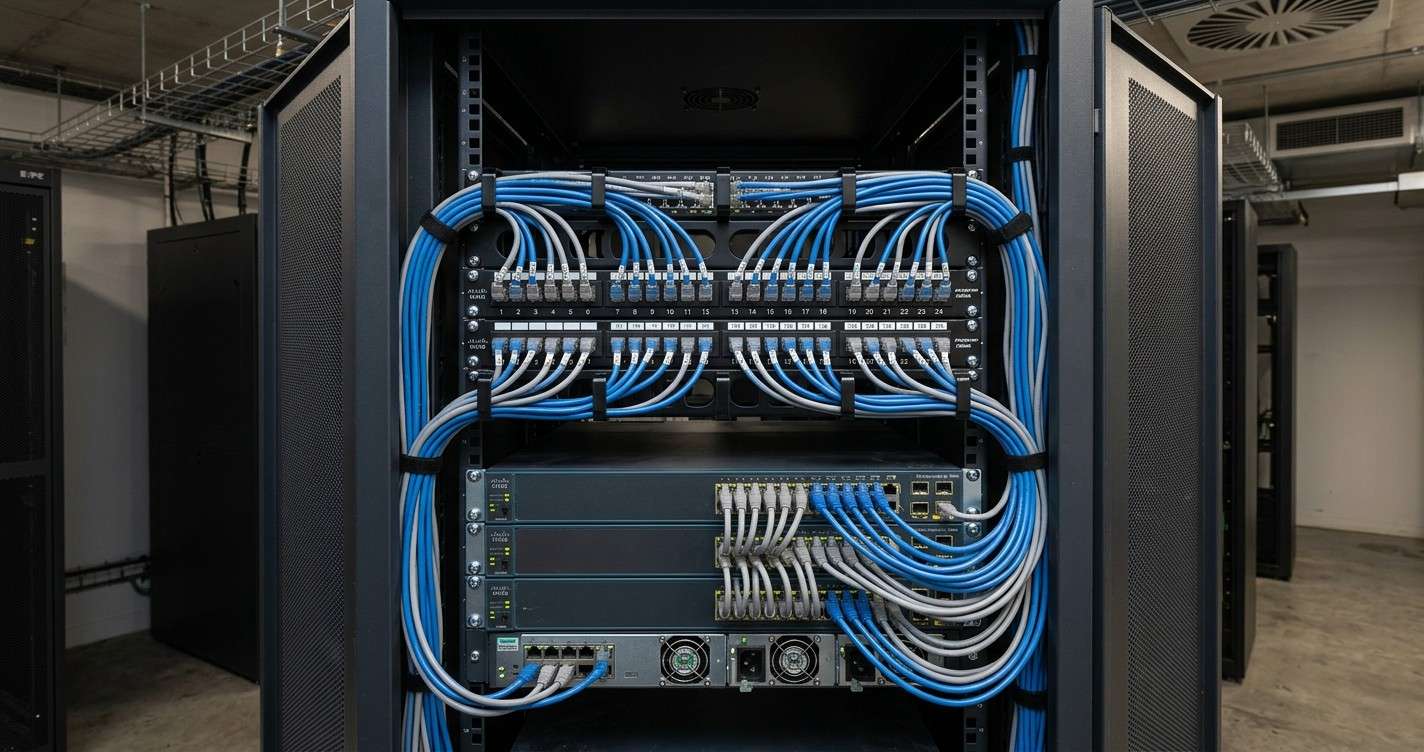
For homeowners planning network upgrades or installing compact communications cabinets, Cat6AU Ultra Thin Patch Cables offer an excellent alternative. Their reduced cable diameter improves airflow, reduces cable congestion and makes cable management easier in confined spaces.
How to Choose the Best Cat6 Patch Cable
Selecting the right Cat6 patch cable depends on your equipment, installation environment and future networking plans. Rather than focusing on price alone, consider the following factors before purchasing.
Choose the Correct Cable Length
Using the shortest practical cable helps maintain a neat installation while avoiding unnecessary cable clutter. Although Ethernet standards support cable runs of up to 100 metres, excessively long patch leads inside the home can make troubleshooting and cable management more difficult.
As a general guide:
| Device | Recommended Patch Cable Length |
|---|---|
| NBN modem to router | 0.5–1 metre |
| Router to network switch | 0.5–1 metre |
| Desktop computer | 1–3 metres |
| Smart television | 2–5 metres |
| Gaming console | 2–5 metres |
| Network printer | 2–3 metres |
| NAS device | 1–2 metres |
For detailed guidance on measuring the route and allowing suitable slack, read What Length What Length Patch Cable Should I Buy? | fibresales Buying Guide
Buy Factory-Tested Patch Cables
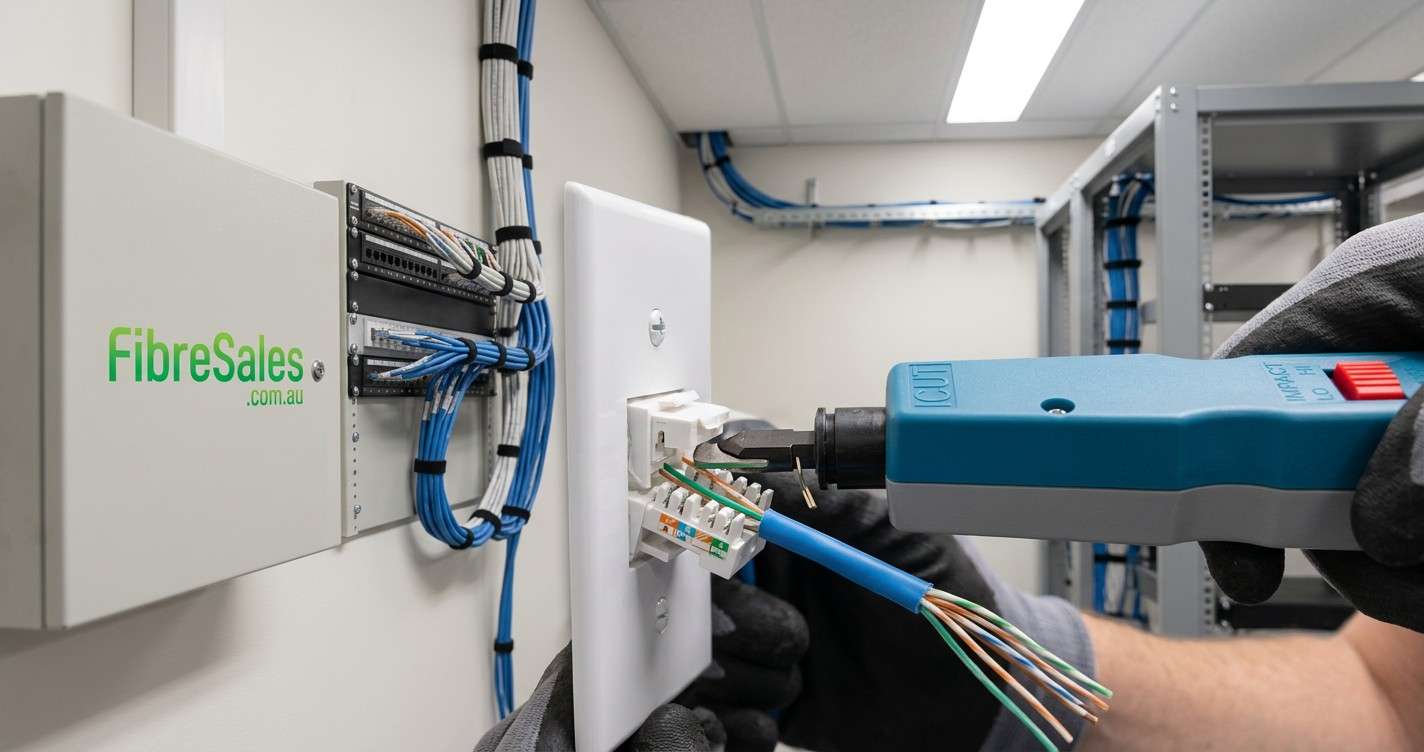
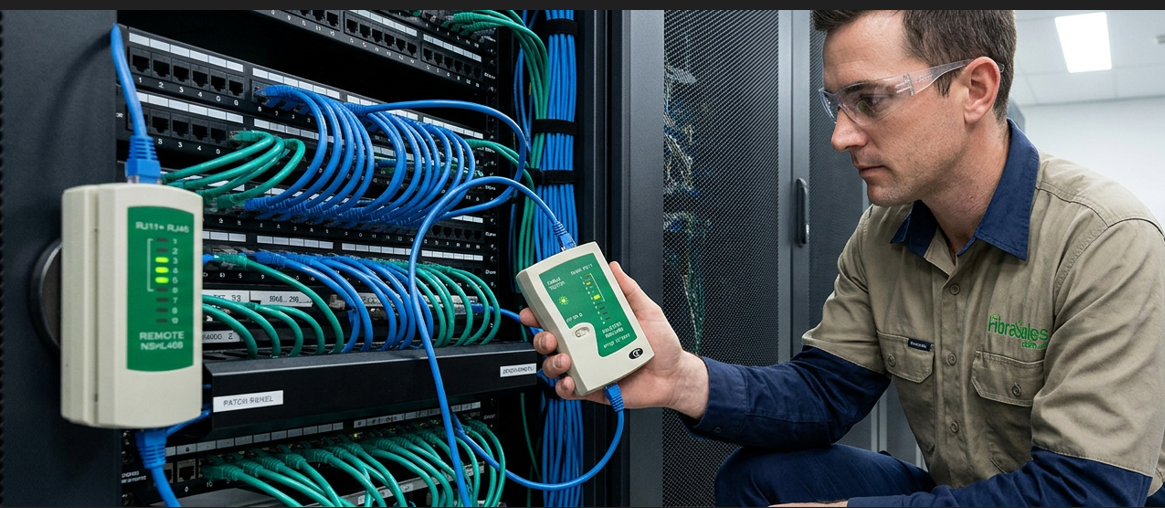
Factory testing provides confidence that every patch cable has been correctly terminated and tested before shipment. This significantly reduces the likelihood of wiring faults that can lead to packet loss, intermittent network connections or reduced performance.
Professionally manufactured Cat6 Patch Cables are tested to verify conductor continuity, pin configuration and connector integrity before they reach the customer.
Choose Quality RJ45 Connectors
Although network performance depends on the complete cable assembly, connector quality remains critical.
High-quality RJ45 connectors:
- Maintain reliable electrical contact.
- Resist corrosion through gold-plated contacts.
- Withstand repeated insertion and removal.
- Reduce the likelihood of intermittent connection faults.
- Improve long-term network reliability.
Rather than purchasing the lowest-priced cable available, invest in professionally manufactured patch cables designed for long service life.
Select the Right Cable Jacket
Most residential installations use PVC-jacketed patch cables because they are durable, flexible and well suited to home environments.
However, where additional fire safety requirements apply, Low Smoke Zero Halogen (LSZH) cable jackets may be preferred because they produce less smoke and fewer corrosive gases during a fire. These cables are commonly specified for apartments, schools, hospitals and commercial buildings.
The appropriate jacket material depends on the installation environment rather than network performance.
Typical Home Applications
Quality Cat6 patch cables are suitable for almost every wired Ethernet device within a modern home, including:
- NBN modem and router connections.
- Desktop and workstation computers.
- Gaming consoles.
- Smart televisions and media streaming devices.
- Network-attached storage (NAS).
- Home office docking stations.
- Gigabit network switches.
- Wireless access points.
- Smart home hubs.
Choosing the correct patch cable helps ensure every connected device operates reliably while supporting future network upgrades without replacing the entire cabling infrastructure.
Engineering Decision
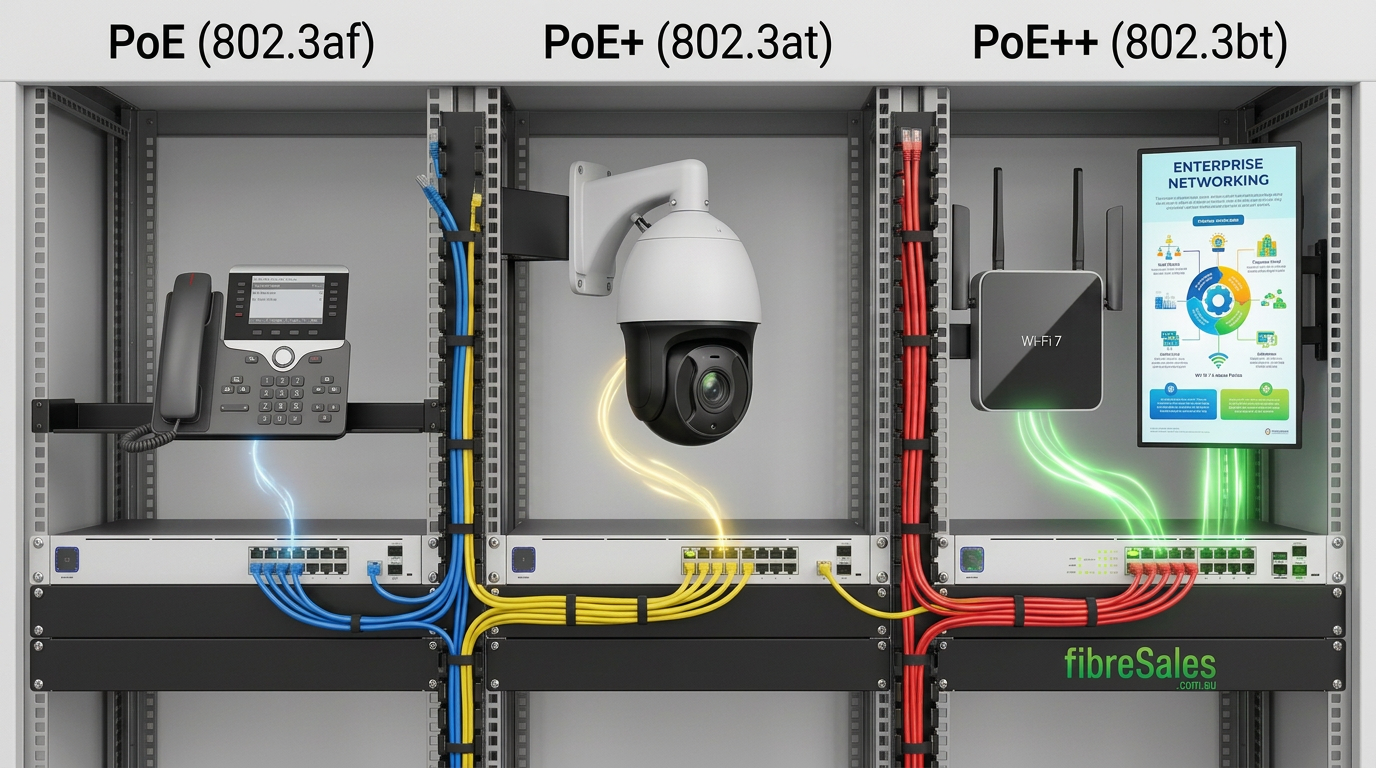
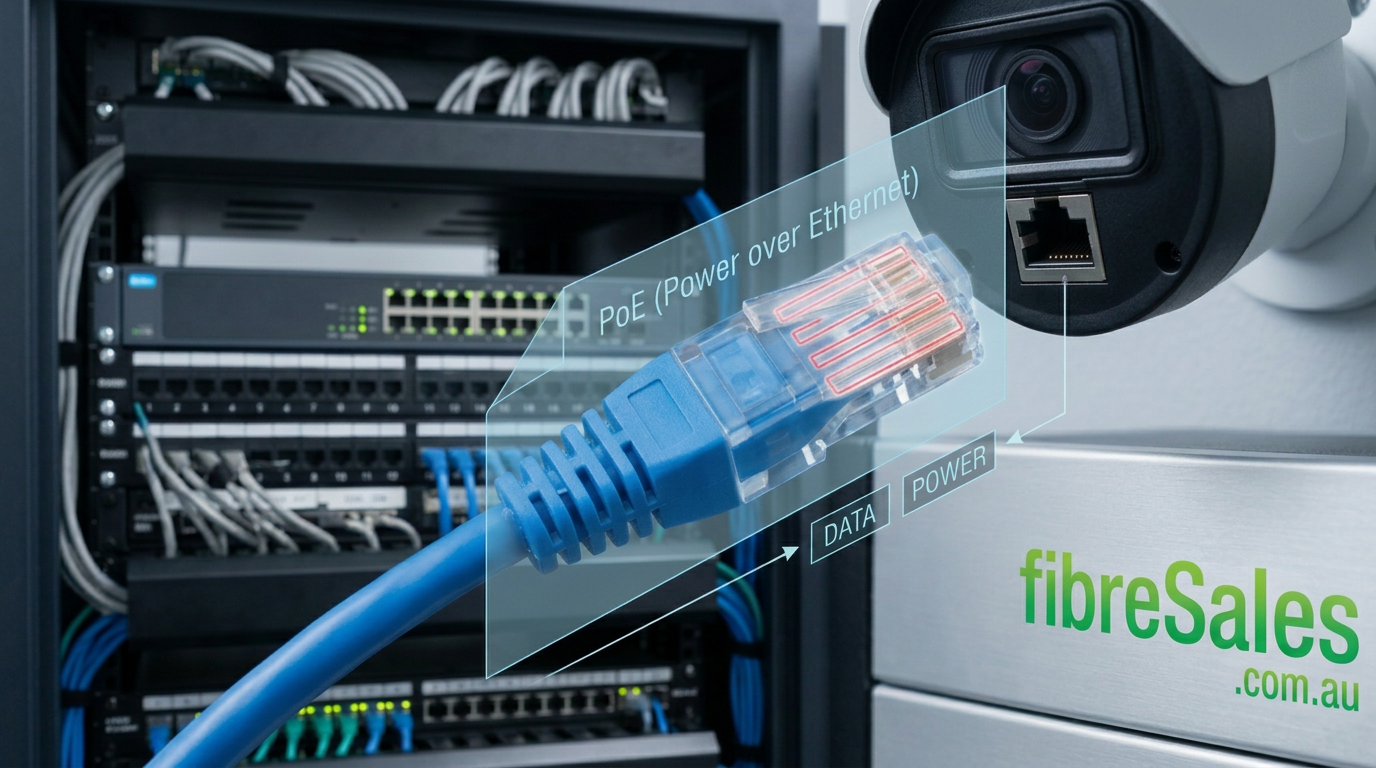
For most Australian homes, a standard Cat6 Patch Cables installation is the right choice. It comfortably supports Gigabit Ethernet, Power over Ethernet (PoE) devices and many 10 Gigabit applications over shorter distances while offering excellent value for everyday networking.
If your installation includes a compact communications cabinet or a large number of network connections, Cat6AU Ultra Thin Patch Cables can improve cable management by reducing cable diameter and increasing airflow around active networking equipment.
The best solution depends on the installation environment rather than simply choosing the highest cable specification.
Technical Standards and Best Practices
When selecting Ethernet patch cables, it is good practice to choose products that support recognised structured cabling standards.
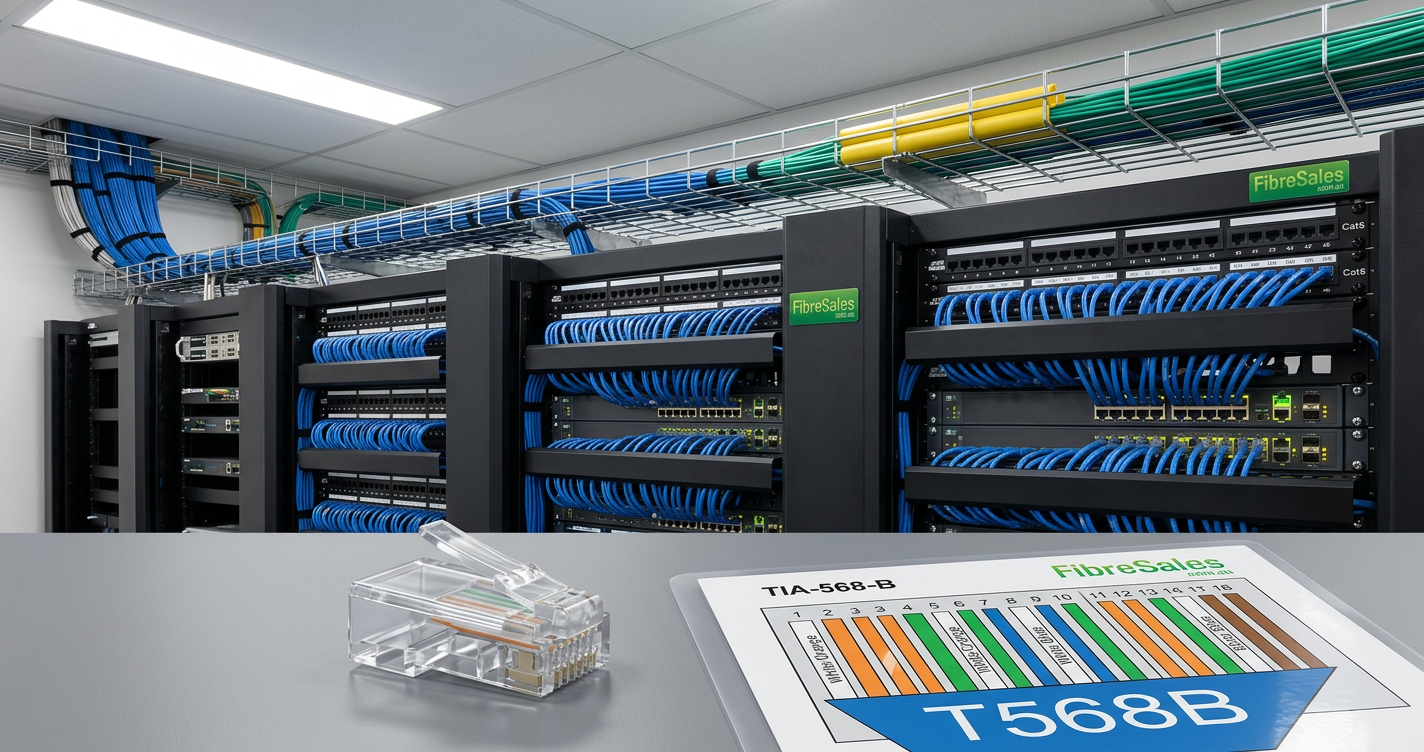
The ANSI/TIA-568 Structured Cabling Standard defines recognised structured cabling practices used throughout commercial and residential networks. It provides guidance on performance categories, installation practices and connector pin assignments.
The ISO/IEC 11801 – Generic Cabling for Customer Premises standard establishes internationally recognised performance requirements for structured cabling systems across a wide range of building types.
Ethernet performance is defined by the IEEE 802.3 Ethernet Standards, which specify the physical-layer and data-link requirements used by modern Ethernet networks.
Selecting quality patch cables and following recognised installation practices helps deliver a reliable home network that remains easier to maintain and upgrade over time.
Real-World Installation Example
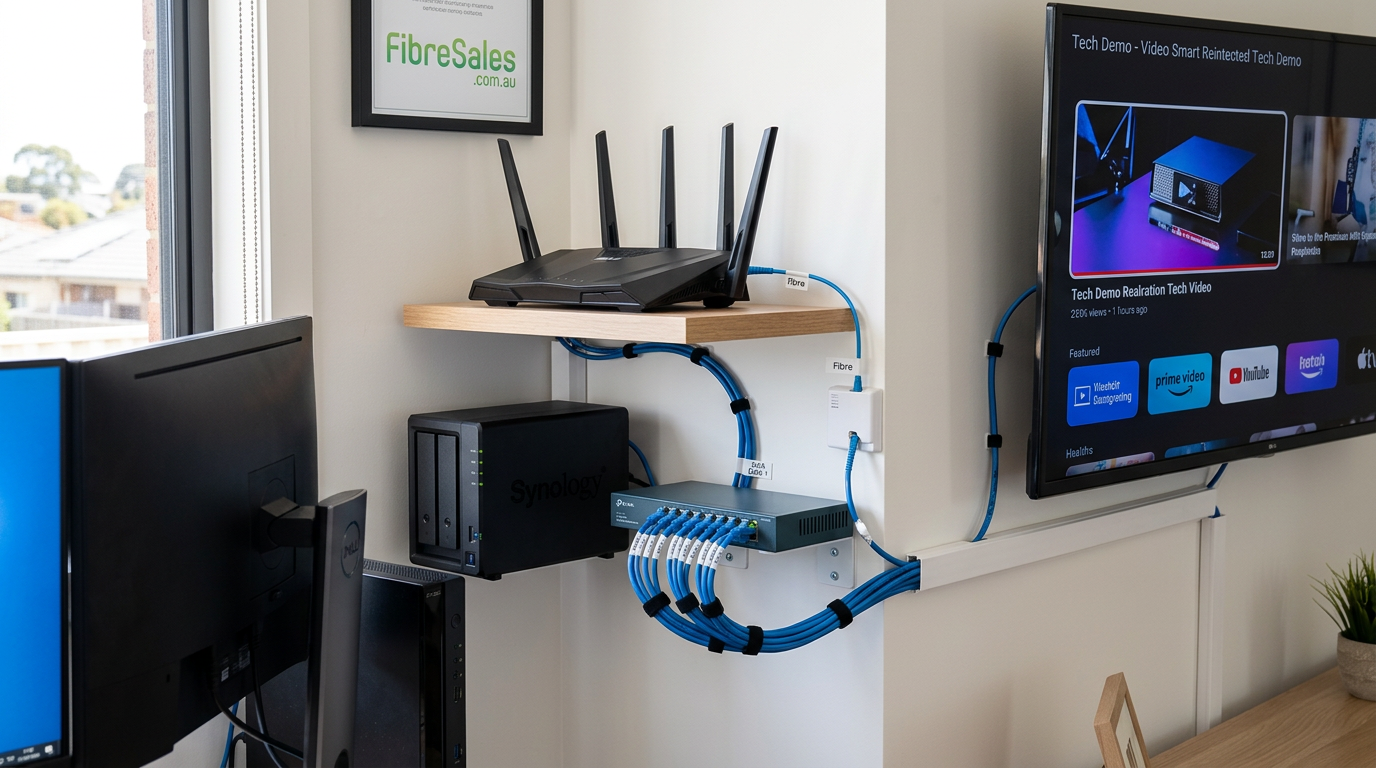
A homeowner is upgrading an existing NBN connection to support remote work, 4K streaming and online gaming. The home network includes a router, an 8-port Gigabit switch, two desktop computers, a NAS device, wireless access points and multiple smart televisions.
After measuring each cable run, the homeowner installs Cat6 Patch Cables in the required lengths. Inside the communications cabinet, Cat6AU Ultra Thin Patch Cables are selected to improve airflow and reduce cable congestion around the switch.
The result is a tidy installation that is easier to maintain while providing dependable wired connectivity throughout the home.
Common Mistakes When Buying Cat6 Patch Cables
Avoid these common purchasing mistakes:
- Buying cables longer than necessary, creating unnecessary cable congestion.
- Selecting products based on price alone instead of build quality.
- Purchasing untested cables from unknown manufacturers.
- Ignoring connector quality and strain relief.
- Using indoor patch cables in unsuitable environments.
- Overlooking future expansion when planning a home network.
- Choosing shielded cables where they provide no practical benefit.
- Failing to label cables during installation, making future maintenance more difficult.
Frequently Asked Questions
Is Cat6 good enough for a home network?
Yes. For the vast majority of homes, Cat6 provides more than enough bandwidth for internet access, streaming, online gaming, video conferencing and local network transfers.
Can Cat6 support 10 Gigabit Ethernet?
Yes. Under suitable conditions and over shorter cable distances, Cat6 can support 10 Gigabit Ethernet. For a detailed explanation, read Can Cat6 Run 10Gb? once it is published.
Should I buy Cat6 or Cat6AU?
Standard Cat6 Patch Cables are the best choice for most homes. Cat6AU Ultra Thin Patch Cables are better suited to high-density installations or compact communications cabinets where improved airflow and cable management are priorities.
Does cable colour affect performance?
No. Cable colour is used for identification and cable management only. It has no impact on Ethernet performance.
How long should a home patch cable be?
Choose the shortest practical length that comfortably reaches between devices without placing strain on the connectors. For more guidance, see
Engineering Decision
For most Australian homes, a standard Cat6 Patch Cables installation is the right choice. It comfortably supports Gigabit Ethernet, Power over Ethernet (PoE) devices and many 10 Gigabit applications over shorter distances while offering excellent value for everyday networking.
If your installation includes a compact communications cabinet or a large number of network connections, Cat6AU Ultra Thin Patch Cables can improve cable management by reducing cable diameter and increasing airflow around active networking equipment.
The best solution depends on the installation environment rather than simply choosing the highest cable specification.
Technical Standards and Best Practices
When selecting Ethernet patch cables, it is good practice to choose products that support recognised structured cabling standards.
The ANSI/TIA-568 Structured Cabling Standard defines recognised structured cabling practices used throughout commercial and residential networks. It provides guidance on performance categories, installation practices and connector pin assignments.
The ISO/IEC 11801 – Generic Cabling for Customer Premises standard establishes internationally recognised performance requirements for structured cabling systems across a wide range of building types.
Ethernet performance is defined by the IEEE 802.3 Ethernet Standards, which specify the physical-layer and data-link requirements used by modern Ethernet networks.
Selecting quality patch cables and following recognised installation practices helps deliver a reliable home network that remains easier to maintain and upgrade over time.
Real-World Installation Example
A homeowner is upgrading an existing NBN connection to support remote work, 4K streaming and online gaming. The home network includes a router, an 8-port Gigabit switch, two desktop computers, a NAS device, wireless access points and multiple smart televisions.
After measuring each cable run, the homeowner installs Cat6 Patch Cables in the required lengths. Inside the communications cabinet, Cat6AU Ultra Thin Patch Cables are selected to improve airflow and reduce cable congestion around the switch.
The result is a tidy installation that is easier to maintain while providing dependable wired connectivity throughout the home.
Common Mistakes When Buying Cat6 Patch Cables
Avoid these common purchasing mistakes:
- Buying cables longer than necessary, creating unnecessary cable congestion.
- Selecting products based on price alone instead of build quality.
- Purchasing untested cables from unknown manufacturers.
- Ignoring connector quality and strain relief.
- Using indoor patch cables in unsuitable environments.
- Overlooking future expansion when planning a home network.
- Choosing shielded cables where they provide no practical benefit.
- Failing to label cables during installation, making future maintenance more difficult.
Frequently Asked Questions
Is Cat6 good enough for a home network?
Yes. For the vast majority of homes, Cat6 provides more than enough bandwidth for internet access, streaming, online gaming, video conferencing and local network transfers.
Can Cat6 support 10 Gigabit Ethernet?
Yes. Under suitable conditions and over shorter cable distances, Cat6 can support 10 Gigabit Ethernet. For a detailed explanation, read Can Cat6 Run 10Gb? once it is published.
Should I buy Cat6 or Cat6AU?
Standard Cat6 Patch Cables are the best choice for most homes. Cat6AU Ultra Thin Patch Cables are better suited to high-density installations or compact communications cabinets where improved airflow and cable management are priorities.
Does cable colour affect performance?
No. Cable colour is used for identification and cable management only. It has no impact on Ethernet performance.
How long should a home patch cable be?
Choose the shortest practical length that comfortably reaches between devices without placing strain on the connectors. For more guidance, see What Length Patch Cable Should I Buy? | fibresales Buying Guide.
Why fibresales
fibresales supplies professionally manufactured Ethernet networking products for residential, commercial and industrial applications. Every Cat6 Patch Cables solution is selected to provide reliable performance, consistent quality and dependable connectivity for Australian installers, businesses and homeowners.
Conclusion
Choosing the best Cat6 patch cable is about more than achieving fast network speeds. The right cable improves reliability, simplifies cable management and helps create a home network that is ready for future upgrades.
For most Australian households, Cat6 Patch Cables provide the ideal balance of performance, durability and value. However, if you are installing equipment inside a compact communications cabinet or require improved cable management, Cat6AU Ultra Thin Patch Cables offer a practical alternative without compromising network performance.
By selecting quality Ethernet patch cables, measuring cable lengths correctly and following recognised installation practices, you can build a reliable wired network that supports today’s connected devices while remaining ready for tomorrow’s technology.
Shop fibresales
Explore the complete range of Cat6 Patch Cables and Cat6AU Ultra Thin Patch Cables to find the right solution for your home network. fibresales supplies quality networking products trusted by Australian businesses, installers and home users.
For more fibre optic solutions, technical resources, and installation products, visit www.fibresales.com.au.
Continue Learning
- What Length Patch Cable Should I Buy? | fibresales Buying Guide – Learn how to select the correct patch cable length for cleaner installations, improved cable management and reliable network performance.
- What is a Cat6 Patch Cable? Complete Guide for Home & Business – Understand how Cat6 patch cables work, where they are used and why they remain the preferred choice for modern Ethernet networks.
- Copper Patch Leads Explained | The Complete Guide to Ethernet Patch Cables – Discover the differences between Ethernet patch leads, construction methods and common applications.
- Copper Networking Explained | The Complete Guide to Ethernet Networks – Explore Ethernet networking fundamentals, structured cabling and copper network design.
- CAT6 vs CAT6A vs CAT6AU | Which Ethernet Patch Cable Should You Choose? – Compare the three cable categories to determine which solution best suits your installation.
- Cat6 vs Fibre: Which Network Cable Should You Choose? – Compare copper Ethernet and fibre optic cabling to determine the best solution for different networking environments.
References
- IEEE 802.3 Ethernet Standards – Defines the Ethernet physical-layer and data-link standards used by modern wired networks.
- ANSI/TIA-568 Structured Cabling Standard – Provides recognised structured cabling practices for commercial and residential Ethernet installations.
- ISO/IEC 11801 – Generic Cabling for Customer Premises – International standard covering the design and performance requirements of structured cabling systems.
- BICSI Telecommunications Distribution Methods Manual (TDMM) – Industry-recognised guidance for telecommunications infrastructure design and best practice.
- Australian Communications and Media Authority (ACMA) – Australian Cabling Standards – Australian regulatory information relating to cabling requirements and industry compliance.