CAT6 vs CAT6A vs CAT6AU | Which Ethernet Patch Cable Should You Choose?
CAT6 vs CAT6A vs CAT6AU is one of the most common comparisons when choosing an Ethernet patch cable for a home, business or data centre. Understanding the differences between these cable categories will help you select the right solution for your network.
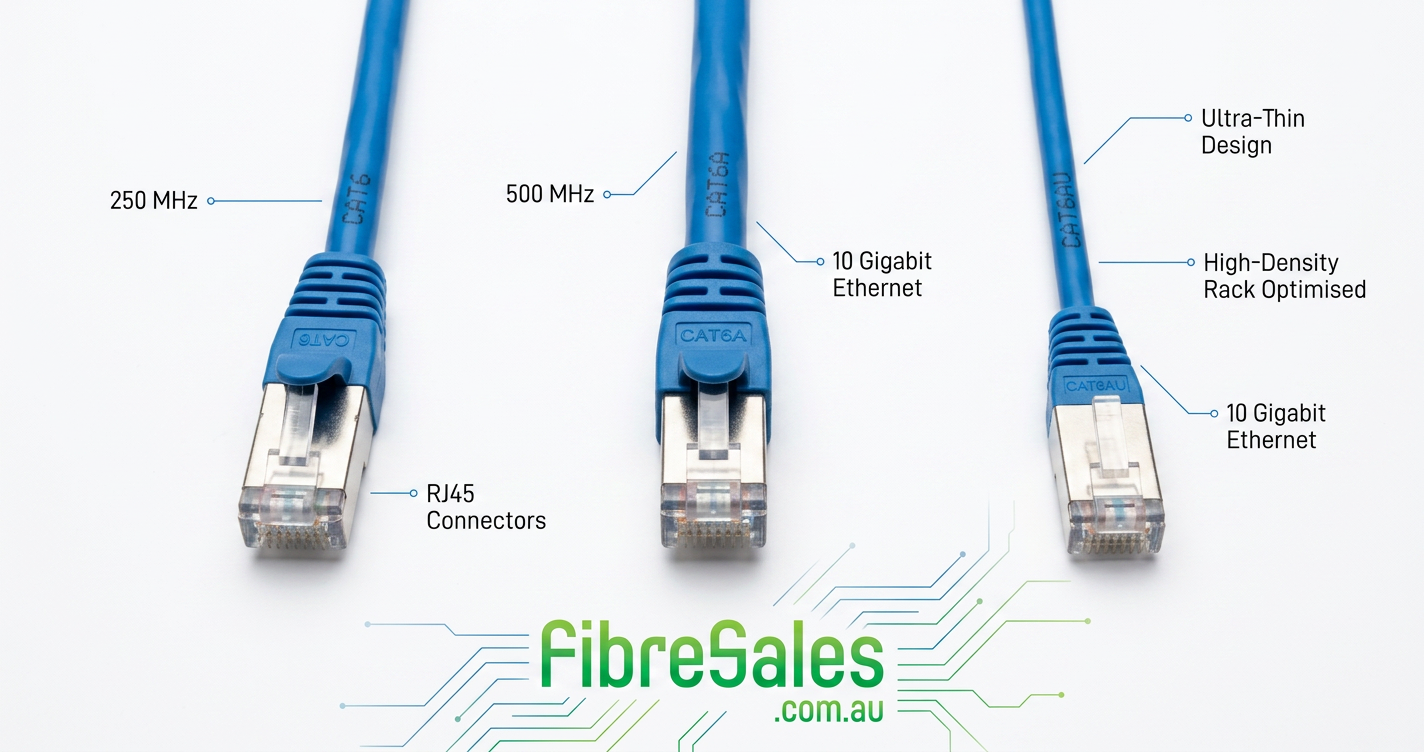
Although these three cable types share many similarities, they are designed for different environments. Standard CAT6 remains an excellent choice for everyday Gigabit Ethernet networks, while CAT6A delivers higher bandwidth and reliable 10 Gigabit performance over longer distances. CAT6AU takes those same CAT6A performance characteristics and packages them into a slimmer, more flexible patch lead that is ideal for modern server racks and crowded network cabinets.
If you’re new to structured cabling, it helps to first understand how Copper Networking forms the backbone of most Ethernet networks. You may also find our guide to Copper Patch Leads Explained useful for understanding how patch leads connect switches, routers, patch panels and network devices.
In this guide, we’ll compare CAT6, CAT6A and CAT6AU side by side, explain where each cable performs best, and help you decide which option offers the right balance of performance, flexibility and long-term value for your network.
What You’ll Learn
By the end of this guide, you’ll understand:
- The differences between CAT6, CAT6A and CAT6AU patch cables.
- How speed, bandwidth and transmission distance compare.
- Why CAT6AU has become increasingly popular in Australian data centres and network cabinets.
- Which cable is best suited to home networks, business environments and high-density installations.
- How to choose the right Ethernet patch cable for your current requirements while planning for future network upgrades.
CAT6 vs CAT6A vs CAT6AU at a Glance
| Feature | CAT6 | CAT6A | CAT6AU |
|---|---|---|---|
| Maximum Ethernet Speed | 10Gb up to 55 m* | 10Gb up to 100 m | 10Gb patching applications |
| Bandwidth | 250 MHz | 500 MHz | 500 MHz |
| Cable Diameter | Standard | Larger | Ultra-thin |
| Flexibility | Excellent | Moderate | Excellent |
| Rack Airflow | Good | Fair | Excellent |
| Best For | Homes and offices | Enterprise networks | High-density racks and cabinets |
| Future Ready | Good | Excellent | Excellent |
*Actual 10 Gigabit performance depends on installation quality, interference and channel length.
Why Understanding the Differences Matters
It’s easy to assume that newer cable categories are always the better choice, but that’s not necessarily true. The best Ethernet patch cable depends on how your network is being used, the available installation space and whether you’re planning for future expansion.
For example, a standard office network running Gigabit Ethernet may never require the additional bandwidth offered by CAT6A. On the other hand, organisations deploying high-speed switching, virtualisation, network storage or modern Wi-Fi access points often benefit from the additional performance headroom that CAT6A provides.
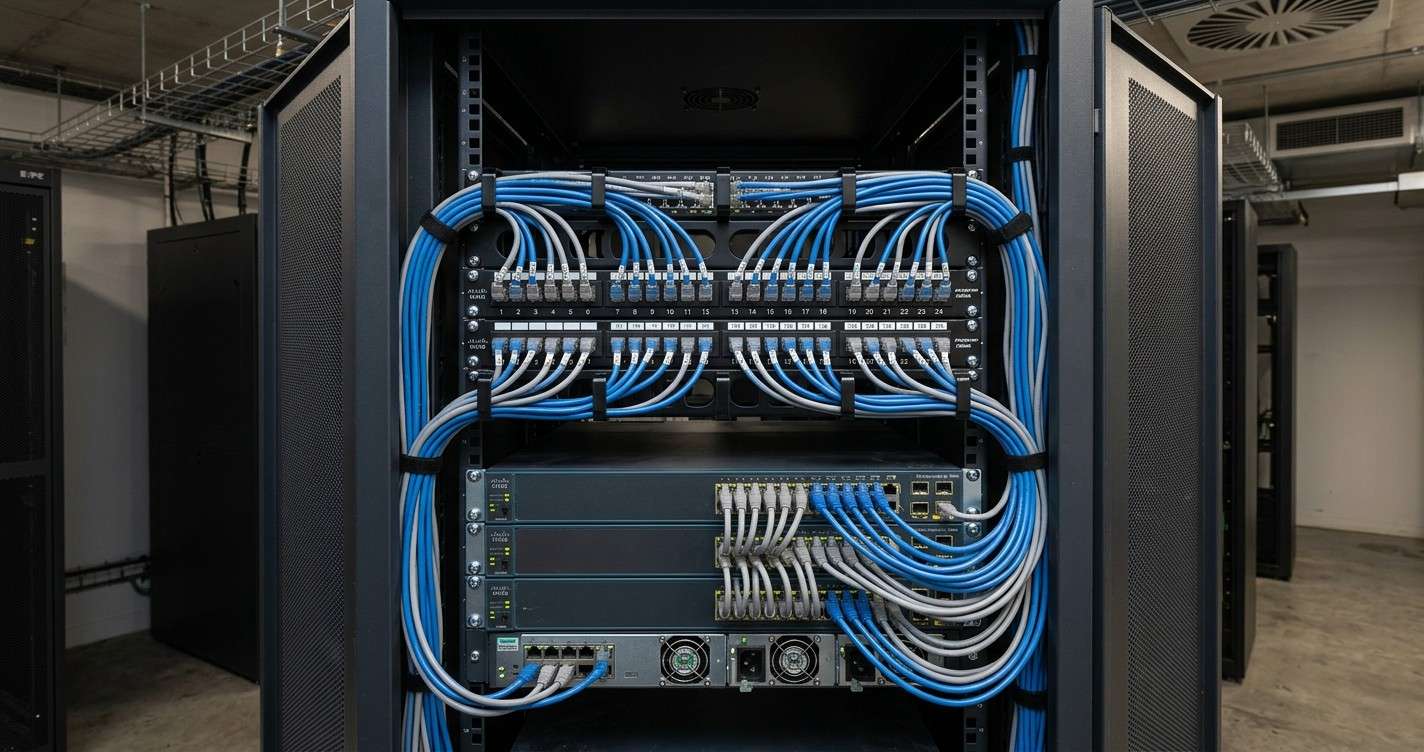
Physical cable size is another important consideration. Traditional CAT6A patch leads are noticeably thicker than CAT6, which can make cable management more challenging in crowded racks. If space, airflow and cable organisation are priorities, our guide to Slimline vs Standard Patch Leads explains why slimmer cables are increasingly being used in modern network cabinets.
Likewise, conductor size can influence flexibility and overall cable construction. If you’d like to learn more about why many premium Ethernet patch leads use 24AWG conductors, see our guide to CAT6 Patch Cables (24AWG).
In the following sections, we’ll examine each cable category individually before comparing their technical specifications, installation characteristics and ideal applications.