INTRODUCTION
Fibre termination methods determine how optical fibres are connected to end equipment, patch panels, or network infrastructure. The method selected directly affects installation speed, signal performance, and long-term reliability.
In real-world deployments, fibre termination decisions are typically based on a balance between performance requirements, installation environment, and project time constraints.
1. Fibre Termination Methods – FIELD TERMINATION
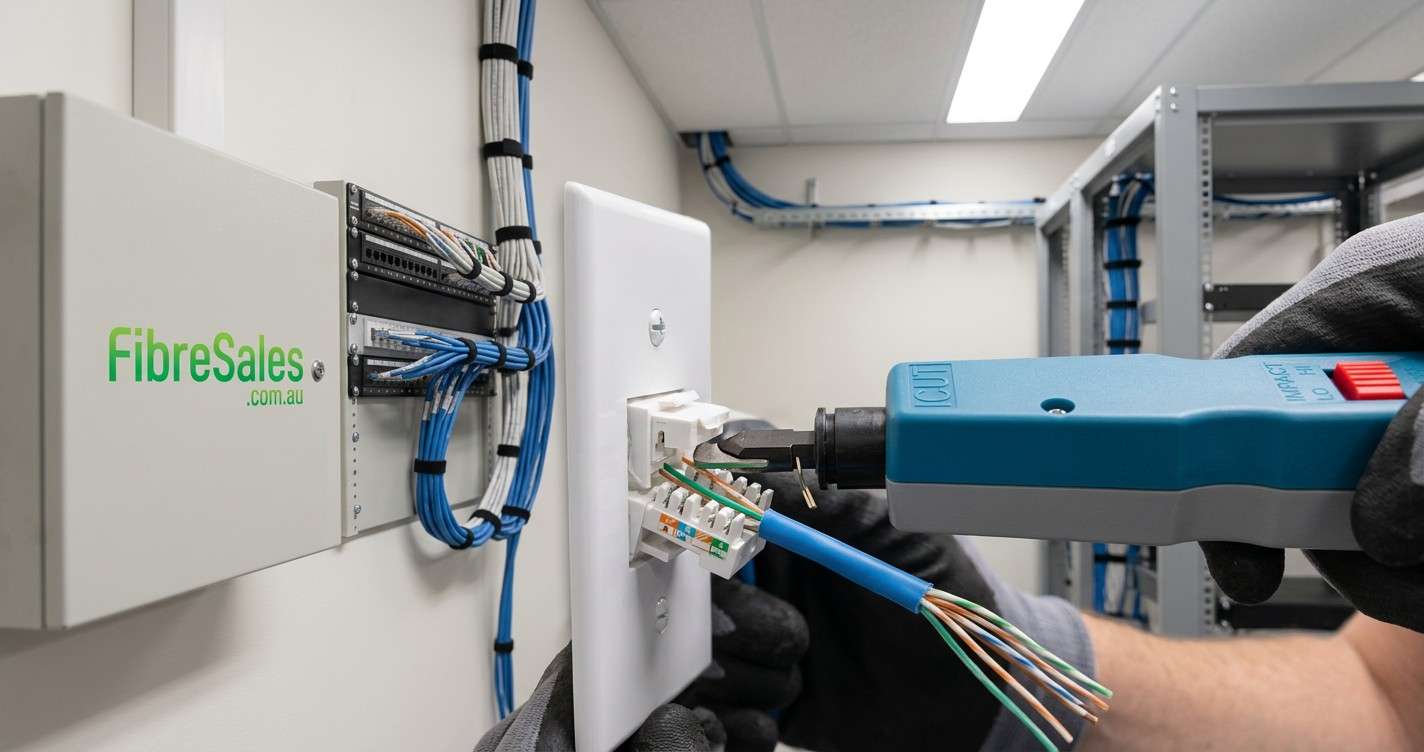
Field termination is typically used where installation flexibility outweighs the need for factory-controlled connector performance.
Key characteristics:
- custom-length flexibility
- on-site connector installation
- requires skilled technicians
- more variability in performance
Typical use cases:
- retrofit installations
- custom building layouts
- emergency deployments
Considerations:
Field termination quality is highly dependent on technician skill and cleanliness standards. Poor termination practices can significantly increase insertion loss and reduce link stability.
2. Fibre Termination Methods – FUSION SPLICED TERMINATION (PIGTAIL METHOD)
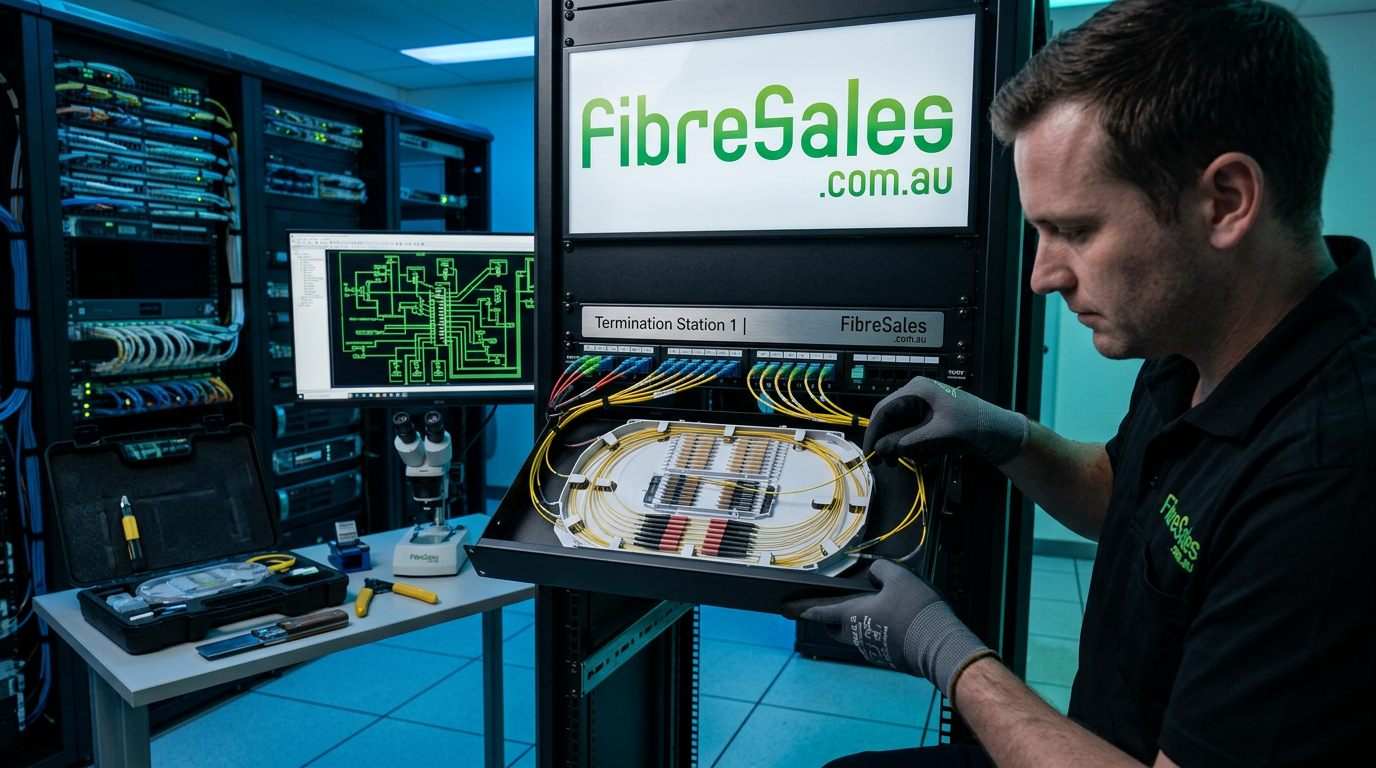
This is one of the most widely used professional termination methods in structured fibre networks.
Process:
- factory-terminated pigtail is spliced to backbone fibre
- splice is protected in enclosure or tray
- connector end is patched into equipment
Typical Splice Loss≈0.02−0.1 dB\text{Typical Splice Loss} \approx 0.02 – 0.1\ \text{dB}
Advantages:
- very low loss
- high reliability
- consistent performance
- industry standard for backbone networks
Common applications:
- data centres
- telecom infrastructure
- enterprise fibre networks
3. Fibre Termination Methods – PRE-TERMINATED FIBRE SYSTEMS
pre-terminated systems are commonly selected in high-density data centre deployments where installation speed and factory-certified performance are prioritised.
https://fibresales.com.au/pre-terminated-cable-an-alternative-for-you/
Advantages:
- fastest installation method
- lowest risk of field errors
- factory-certified performance
- reduced labour cost
Limitations:
- less flexibility on-site
- requires accurate pre-planning
- transport and handling constraints
Best use cases:
- data centres
- structured enterprise networks
- high-density fibre deployments
4. TERMINATION PERFORMANCE COMPARISON
Fibre Termination Methods – Field Termination:
- flexibility: high
- performance consistency: medium
- speed: medium
- cost efficiency: medium
Fibre Termination Methods – Fusion Spliced Termination:
- flexibility: medium
- performance consistency: very high
- speed: medium
- cost efficiency: high (long-term)
Pre-Terminated Systems:
- flexibility: low
- performance consistency: very high
- speed: very high
- cost efficiency: high (large scale installs)
5. CONNECTOR TYPES IN TERMINATION
Common fibre connectors used in termination include:
- LC
- SC
- MPO / MTP
- ST (legacy systems)
👉 https://fibresales.com.au/fibre-optic-connectors-guide/
Connector choice impacts:
- density
- polarity design
- system scalability
6. COMMON TERMINATION MISTAKES
Most termination failures are caused by installation errors rather than component defects.
Common issues:
- dirty connectors during installation
- incorrect strip lengths
- poor splice alignment
- incorrect polarity in MPO systems
- insufficient strain relief
7. PERFORMANCE IMPACT OF FIBRE TERMINATION METHODS
Termination quality directly affects:
- insertion loss
- reflectance levels
- network stability
- long-term maintenance requirements
Even small increases in loss can impact high-speed links in dense optical networks.
8. LINK TO TESTING (TRUNK 1 INTEGRATION)
After termination, all fibre links must be validated using structured testing procedures.
👉 https://fibresales.com.au/fibre-optic-testing-guide
This includes:
- OTDR testing
- insertion loss testing
- continuity verification
REAL-WORLD ENGINEERING INSIGHT
In practical deployments, termination method selection is driven by project constraints rather than theory. High-performance networks typically prioritise fusion spliced or pre-terminated systems due to their consistency and reduced failure rates.
Field termination is generally reserved for flexible or non-standard installations where pre-engineered solutions are not feasible.