
What Length Cat6 Patch Cable Should I Buy?
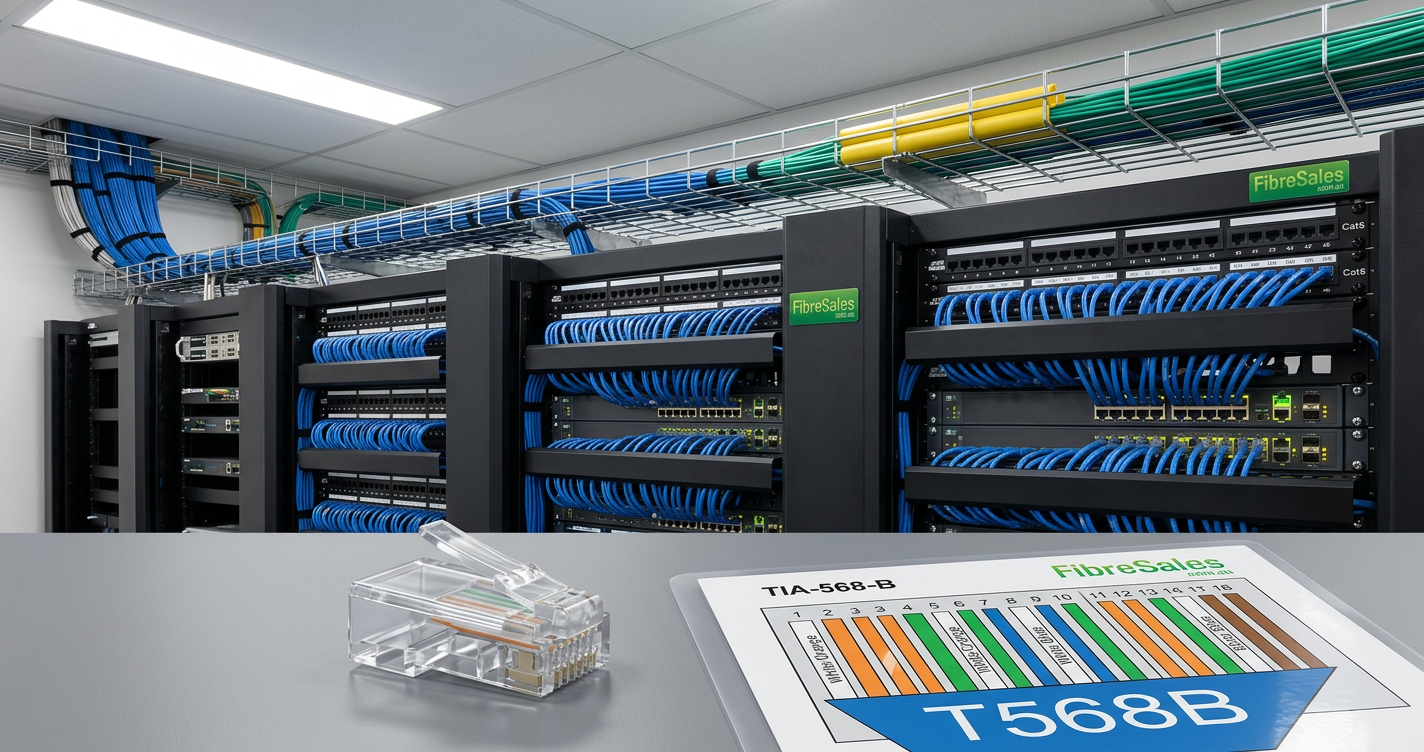
Choosing the correct patch cable length helps create a cleaner and more reliable network. It also makes future maintenance much easier. Whether you are installing a home network or fitting out a large data cabinet, the right cable length improves cable management and reduces clutter.
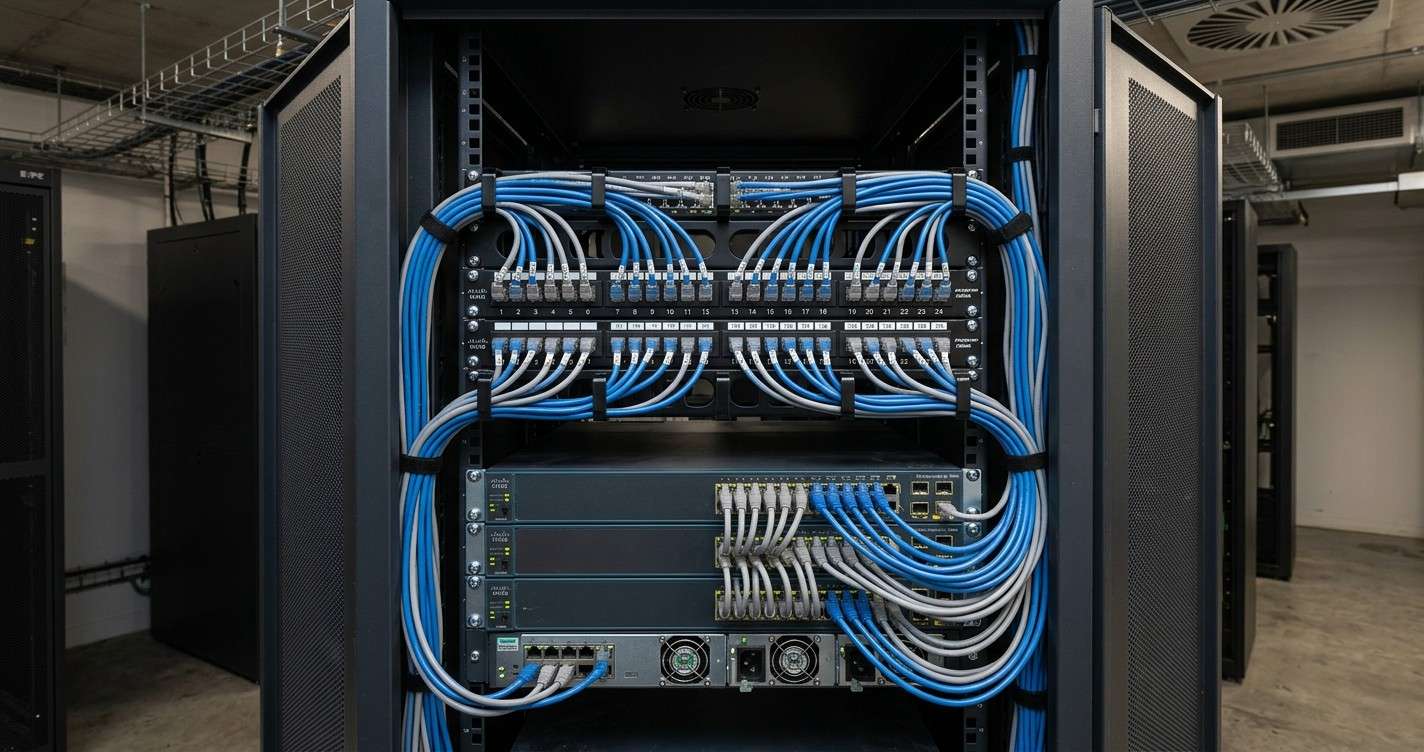
Many people buy cables that are longer than they need. Although the network still works, excess cable quickly becomes untidy. It can block airflow inside cabinets, make fault-finding slower and leave unused cable coiled behind equipment.
Buying a cable that is too short creates different problems. The cable may pull on the RJ45 connectors or prevent equipment from being moved during maintenance. Over time, this can place unnecessary stress on both the cable and the connected devices.
The best approach is simple. Choose the shortest patch cable length that allows the cable to follow a natural path. Leave a small amount of slack for maintenance. Avoid large loops of unused cable wherever possible.
If you are selecting new network cables, Cat6 Patch Cables from fibresales are available in a wide range of lengths and colours. This makes it easy to find the right cable for homes, offices, schools, hospitals, warehouses and data centre’s.
Why Choosing the Right Length Matters
A patch cable does more than connect two devices. The correct length also improves the appearance, organisation and serviceability of your network.
Selecting the correct patch cable length helps you:
- Keep network cabinets neat.
- Improve airflow around switches.
- Reduce cable congestion.
- Make fault-finding easier.
- Reduce strain on connectors.
- Simplify future upgrades.
- Create a more professional installation.
A well-organised cabinet is easier to manage. Technicians can identify cables more quickly, and equipment remains easier to service.
Why Longer Isn’t Better
Many installers buy longer cables because they think extra length provides flexibility. In reality, the opposite is often true.
Unused cable takes up valuable space inside racks and cabinets. It creates unnecessary cable bundles and makes tracing individual connections more difficult. As the network grows, these problems become even more noticeable.
Choosing the correct patch cable length produces a cleaner installation. It also improves airflow and makes future changes much easier.
When measuring for a new installation, follow the planned cable route instead of measuring in a straight line. Allow enough slack for maintenance. However, avoid leaving unnecessary cable coiled inside the cabinet.
Common Patch Cable Lengths
Ethernet patch cables are available in a wide range of standard lengths. Selecting the correct length helps maintain a tidy installation and reduces unnecessary cable management.
The table below provides general recommendations for the most common applications.
| Patch Cable Length | Recommended Use |
|---|---|
| 0.25 m | Adjacent devices inside a rack or cabinet |
| 0.5 m | Switch-to-patch-panel connections |
| 1 m | Small office desks and workstation connections |
| 2 m | Standard office and home networking |
| 3 m | Larger desks and nearby equipment |
| 5 m | Small equipment rooms and wall-mounted cabinets |
| 10 m | Longer room connections where a structured cabling outlet is nearby |
| 15–30 m | Temporary equipment or longer patching requirements within Ethernet limits |
For most installations, shorter cables produce the neatest result. They reduce cable clutter and improve airflow around active equipment.
Choosing the Right Length for Your Application
The best patch cable length depends on where the cable will be installed. Measuring the cable route before ordering helps avoid buying cables that are too short or unnecessarily long.
What Length Cat 6 Patch Cable for Home Networks
Home networks usually require shorter patch cables because devices are positioned close together.
Typical lengths include:
- 0.5 m between a modem and router.
- 1 m for desktop computers.
- 2–3 m for televisions and gaming consoles.
- 3–5 m where equipment is positioned further from the wall outlet.
Avoid stretching cables across walkways or around furniture. Instead, follow the wall or cable management path where possible.
What Cat6 Patch Cable Length for Office Workstations
Office desks often need slightly longer patch cables to allow for monitor arms, docking stations and desk movement.
A 2 m or 3 m cable is suitable for many office environments. It provides enough flexibility without leaving excessive spare cable beneath the desk.
If desks are frequently rearranged, allowing a small amount of additional slack can simplify future changes.
What Cat6 Patch Cable Length for Network Cabinets
Communications cabinets benefit from the shortest practical cables.
Shorter patch cables help:
- Improve airflow.
- Reduce cable congestion.
- Make ports easier to identify.
- Simplify maintenance.
- Improve the overall appearance of the cabinet.
Many installers .use different cable lengths throughout a cabinet rather than one standard length. This approach creates a much cleaner installation.
For high-density environments, Cat6A Ultra Thin Patch Cables can improve airflow while reducing cable congestion.
What Cat6 Patch Cable Length for for Data Centres
Data centres require careful cable planning. Every cable should follow a defined routing path and maintain consistent cable management.
Selecting the correct patch cable length helps technicians:
- Trace connections quickly.
- Improve cooling efficiency.
- Reduce cable strain.
- Simplify future expansion.
Even small improvements in cable management can make large installations easier to maintain.
Should You Leave Extra Slack?
A small amount of slack is recommended. However, excessive slack creates unnecessary clutter.
As a general guide:
- Leave enough cable to remove equipment for servicing.
- Follow the planned cable route.
- Avoid tight bends near the connectors.
- Do not coil large amounts of spare cable inside the cabinet.
- Replace cables that are clearly too long rather than bundling excess cable.
A properly sized cable usually looks better and performs better over the life of the installation.
Common Mistakes When Choosing Cat6 Patch Cable Length
Many network problems are caused by poor cable management rather than faulty hardware. Choosing the wrong cable length often contributes to these issues.
Common mistakes include:
- Buying one cable length for every installation.
- Leaving large coils of spare cable inside racks.
- Measuring in a straight line instead of following the cable route.
- Pulling cables tight between devices.
- Ignoring future maintenance requirements.
- Ordering longer cables “just in case.”
Planning cable lengths before ordering usually produces a cleaner, more professional installation. It also reduces wasted cable and simplifies future maintenance.
Recommended Cat6 Patch Cable Lengths by Device
Different devices require different cable lengths. Selecting the shortest practical patch cable length helps keep installations organised while still allowing enough flexibility for maintenance.
The recommendations below suit most residential, commercial and enterprise Ethernet installations.
| Device or Connection | Recommended Length |
|---|---|
| Router to modem | 0.25–0.5 m |
| Patch panel to switch | 0.25–0.5 m |
| Switch to server | 0.5–1 m |
| Desktop computer | 1–2 m |
| Laptop docking station | 1–2 m |
| VoIP phone | 2 m |
| Network printer | 2–3 m |
| Wireless access point | 2–5 m |
| IP camera | 2–10 m |
| Smart TV or media player | 2–5 m |
These are general recommendations only. Always measure the planned cable route before ordering to ensure the cable reaches comfortably without excessive slack.
Measuring Before You Buy
Taking a few minutes to measure correctly can prevent unnecessary cable replacements and improve the finished installation.
When measuring for a patch cable length, you should:
- Measure along the actual cable path rather than in a straight line.
- Allow enough slack to disconnect equipment for servicing.
- Avoid tight bends around furniture, cabinet rails or cable management.
- Select the next standard cable length if your measurement falls between two sizes.
- Avoid buying significantly longer cables than required.
Accurate measurements help create a neater installation while reducing cable congestion.
Choosing the Right Cable Type
Selecting the correct length is only part of the decision. Choosing the right cable construction is equally important.
For most home and office networks, Cat6 Patch Cables provide reliable Gigabit Ethernet performance and support many 10 Gigabit applications over shorter distances.
Where rack density is high or airflow is critical, Cat6A Ultra Thin Patch Cables reduce cable bulk while making cable management easier.
If your installation uses Power over Ethernet (PoE), select high-quality factory-tested patch cables that comply with recognised industry standards such as ANSI/TIA-568 and IEEE 802.3.
Does Cable Length Affect Network Performance?
For standard Ethernet patch leads used within the maximum channel length specified by industry standards, the cable length itself has very little effect on network performance.
Performance issues are more commonly caused by:
- Poor-quality patch cables.
- Damaged connectors.
- Incorrect cable categories.
- Excessive bending or crushing.
- Poor installation practices.
Using certified Cat6 Patch Cables from fibresales helps ensure reliable performance for home, commercial and enterprise networks.
For larger structured cabling installations, follow ANSI/TIA-568 structured cabling standards and ISO/IEC 11801 generic customer-premises cabling when designing permanent cabling infrastructure.
Maximum Ethernet Cable Length
Ethernet cable length limits apply to the entire channel, not only the patch cable.
For most copper Ethernet installations, the maximum channel length is 100 metres. This channel usually includes:
- Up to 90 metres of permanent horizontal cabling.
- Up to 10 metres of combined patch cabling.
- Connectors, outlets and patch panels within the channel.
These limits are defined through structured cabling standards, including ANSI/TIA-568 and ISO/IEC 11801.
Although a long patch cable may operate correctly, it can reduce the length available for permanent cabling. Therefore, installers should consider the complete channel before selecting a cable.
Typical Ethernet Channel Layout
| Channel Component | Typical Maximum Length |
|---|---|
| Permanent horizontal cabling | 90 m |
| Combined patch cables | 10 m |
| Complete Ethernet channel | 100 m |
The 100-metre limit applies to common twisted-pair Ethernet installations. However, the supported speed also depends on cable category, installation quality and connected hardware.
For more detail on copper network design, read Copper Networking Explained.
Can Cat6 Run 10 Gigabit Ethernet?
Cat6 can support 10 Gigabit Ethernet over shorter distances. However, installation conditions affect the maximum reliable distance.
In many installations, Cat6 supports 10GBASE-T over distances up to approximately 55 metres. Alien crosstalk, cable quality and bundle size can affect performance.
Cat6A is designed to support 10GBASE-T across the full 100-metre channel. Therefore, it may be more suitable for high-performance backbone links and demanding commercial networks.
The relevant Ethernet specifications are maintained within the IEEE 802.3 Ethernet standards.
For a detailed comparison, read Cat6 vs Cat6A before selecting the cable category.
Does Patch Cable Length Affect PoE?
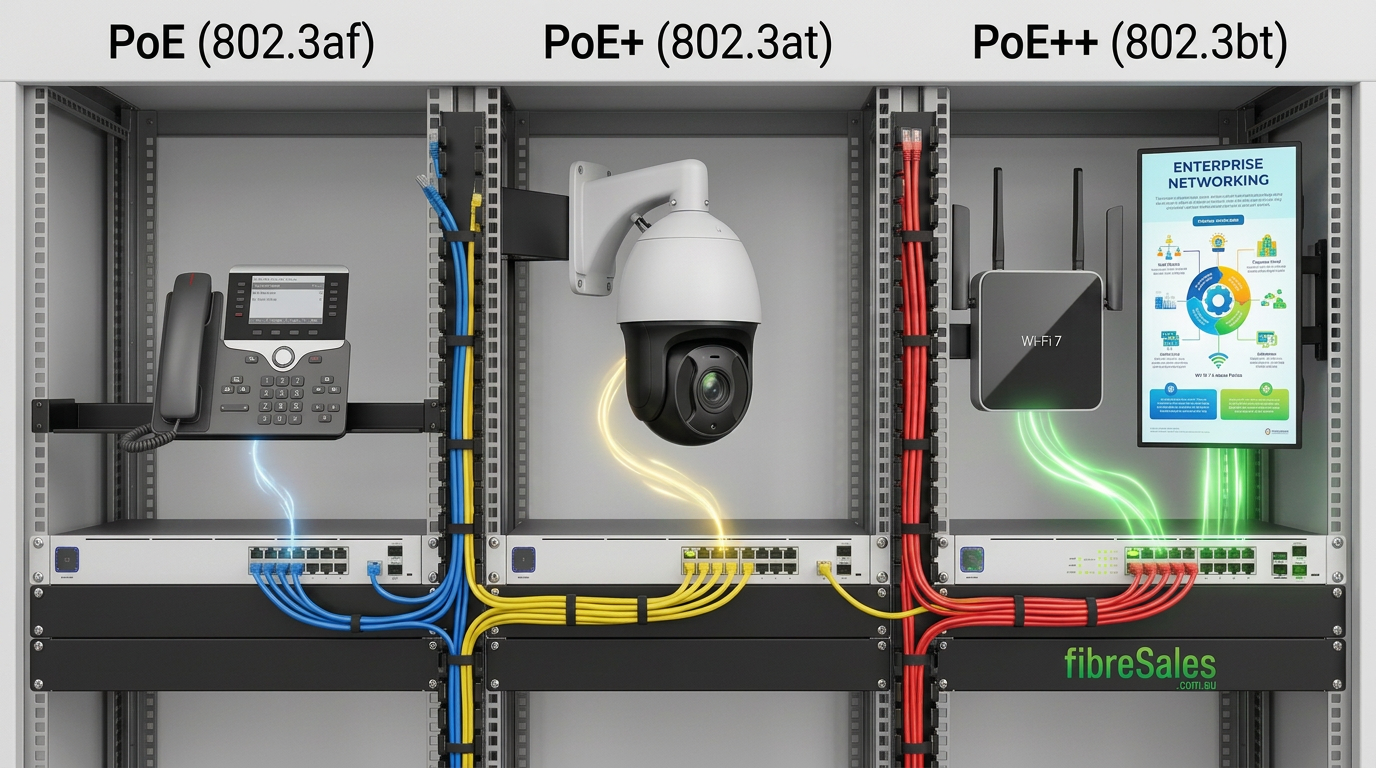
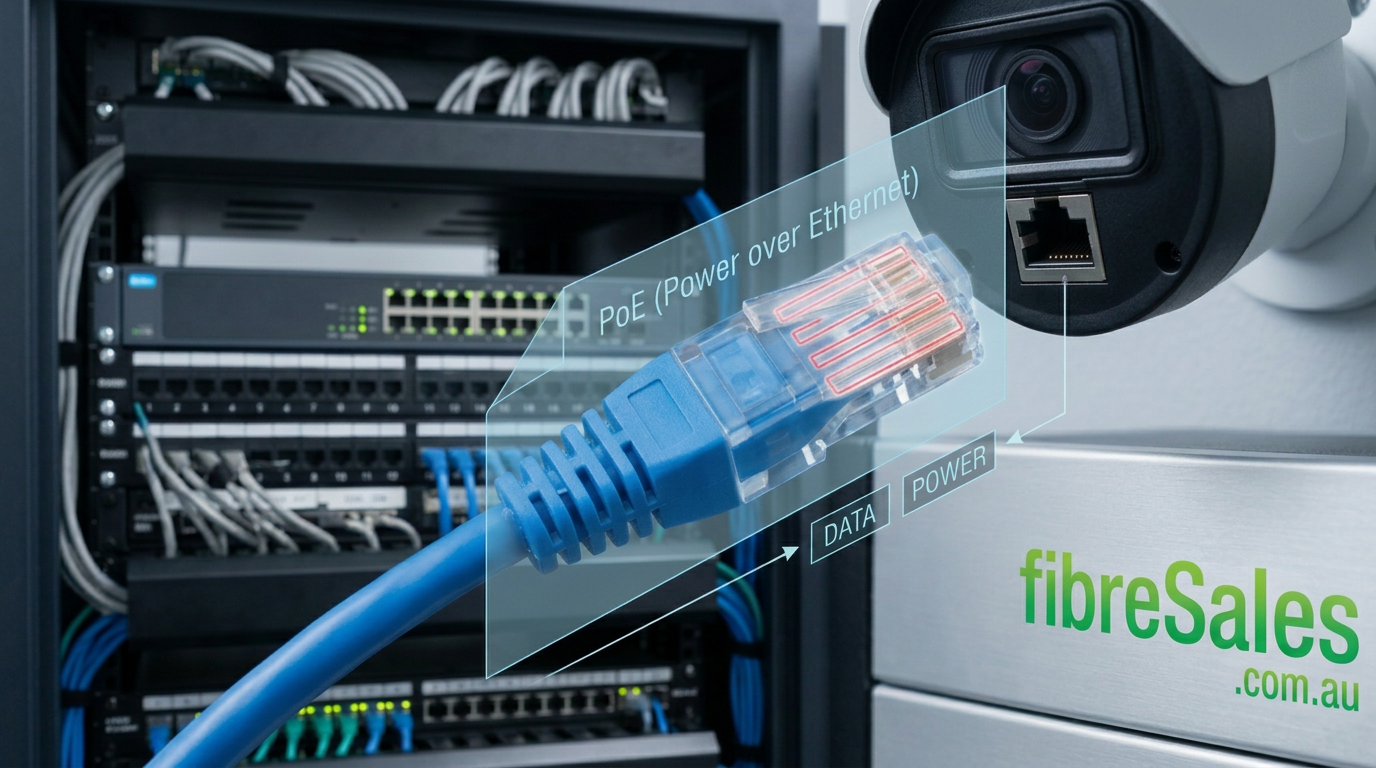
Patch cable length can affect Power over Ethernet performance because copper conductors create electrical resistance.
Longer cables produce more resistance than shorter cables. As a result, some power is lost as heat before it reaches the connected device.
This issue becomes more important when powering:
- Wireless access points.
- IP cameras.
- VoIP phones.
- Building access systems.
- High-power PoE devices.
High-quality Cat6 Patch Cables use suitable conductors and factory-terminated connectors. Therefore, they provide more consistent power delivery than poor-quality alternatives.
Power over Ethernet requirements are covered by standards within IEEE 802.3. Australian installations must also comply with applicable ACMA cabling standards.
Engineering Decision
Choose the shortest practical patch cable when using PoE.
However, do not pull the cable tight or remove the slack needed for maintenance. The correct cable should follow the planned route without sharp bends, tension or large unused coils.
For longer PoE channels, confirm:
- The total channel length.
- The required PoE power level.
- The cable category.
- The conductor construction.
- The connected device requirements.
- The expected ambient temperature.
These checks reduce voltage loss and help maintain reliable device operation.
Patch Cable Length and Signal Quality
Cable length is only one factor that affects Ethernet performance.
Signal quality can also be reduced by:
- Damaged conductors.
- Poor connector termination.
- Excessive bending.
- Crushed cable jackets.
- Electromagnetic interference.
- Incorrect cable categories.
- Low-quality materials.
A correctly sized cable will not solve a damaged or unsuitable installation. Therefore, cable quality should be considered alongside length.
The Cat6 Patch Cables available from fibresales are suitable for home, office, cabinet and commercial networking applications. Selecting the correct length helps protect performance while keeping the installation organised.
Frequently Asked Questions
What Cat6 Patch Cable Length should I buy for my home network?
For most home networks, a 1 m to 3 m patch cable length is suitable. Measure the actual cable route before ordering rather than estimating the distance.
If you are connecting a modem, router, switch or computer, Cat6 Patch Cables are available in multiple standard lengths, making it easy to select the best fit for your installation.
Is it better to buy a longer Ethernet cable?
Not usually.
A longer cable creates unnecessary slack, increases cable clutter and makes cable management more difficult. It can also restrict airflow inside communications cabinets.
Choose the shortest patch cable length that comfortably follows the planned cable route while leaving enough slack for future maintenance.
Can a patch cable be too short?
Yes.
A cable that is too short places unnecessary strain on the connectors and connected equipment. It can also make servicing difficult if devices need to be moved during maintenance.
Always allow a small service loop, but avoid excessive spare cable. One solution is to add an RJ45 coupler to extend the length.
Does patch cable length affect internet speed?
Under normal operating conditions, patch cable length does not reduce internet speed provided the complete Ethernet channel complies with recognised structured cabling standards.
Network performance is more likely to be affected by:
- Poor-quality patch cables.
- Damaged connectors.
- Incorrect cable category.
- Poor installation practices.
The maximum channel lengths for balanced twisted-pair cabling are defined in the ANSI/TIA-568 Structured Cabling Standard and ISO/IEC 11801.
Can I use a 10 metre patch cable?
Yes.
A 10-metre patch cable is suitable for many installations provided the total Ethernet channel remains within the maximum distance specified by the IEEE 802.3 Ethernet Standards and recognised structured cabling standards.
Before ordering a longer cable, measure the complete cable route to confirm the required length.
What Cat6 Patch Cable Length is best for a data cabinet?
For communications cabinets, shorter cables generally provide the best results.
Common cabinet lengths include:
- 0.25 m
- 0.5 m
- 1 m
These lengths help:
- Improve airflow.
- Reduce cable congestion.
- Simplify cable tracing.
- Create a cleaner installation.
Where cable density is high, Cat6A Ultra Thin Patch Cables can further reduce cable bulk and improve airflow. (Insert the verified fibresales product link specified in the Master Guide.)
Should I leave slack in a patch cable?
Yes.
Leave enough slack to disconnect equipment safely during maintenance. However, avoid large coils of unused cable because they increase cabinet congestion and make cable management more difficult.
Are all Ethernet patch cables the same?
No.
Patch cables differ in:
- Cable category.
- Conductor construction.
- Jacket material.
- Shielding.
- Connector quality.
- Factory testing.
Selecting a high-quality Cat6 Patch Cables helps deliver reliable network performance for residential, commercial and enterprise installations.
For help selecting the appropriate cable category, read Everything You Need to Know – Cat6 Cables.
Why Buy from fibresales?
Choosing the correct patch cable length is only part of building a reliable Ethernet network. The quality of the cable is equally important.
At fibresales, our Cat6 Patch Cables are factory tested to deliver dependable performance across home, commercial and enterprise networks.
Whether you need a single patch lead or a complete project solution, fibresales offers:
- Multiple standard cable lengths.
- Colour options for easier cable identification.
- Reliable factory-tested performance.
- Fast Australia-wide delivery.
- Technical support from experienced networking specialists.
Selecting the correct cable length helps create a cleaner installation, simplifies future maintenance and supports long-term network reliability.
For more fibre optic solutions, technical resources, and installation products, visit https://www.fibresales.com.au.
What Cat6 Patch Cable Length Conclusion
Choosing the correct patch cable length helps create a cleaner, safer and more reliable Ethernet installation. While cable length does not normally affect network performance within recognised standards, selecting the shortest practical cable improves cable management, reduces strain on connectors and simplifies future maintenance.
Whether you are installing a home network, upgrading an office or building a high-density data cabinet, measuring the cable route before ordering ensures you purchase the correct cable the first time.
Cat6 Patch Cables from fibresales are available in a wide range of lengths, colours and specifications to suit residential, commercial and enterprise networking applications. Selecting the right cable today helps deliver a neater installation and more reliable network tomorrow.
For more fibre optic solutions, technical resources, and installation products, visit www.fibresales.com.au.
Continue Learning
Expand your knowledge of Ethernet networking, structured cabling and patch cable selection with these related guides from fibresales.
- Cat6 Patch Cables (24AWG) – Learn about 24AWG Cat6 patch cables, their construction, applications and how to select the right cable for your network.
- Copper Patch Leads Explained | The Complete Guide to Ethernet Patch Cables – Understand Ethernet patch lead construction, cable categories, shielding options and common applications.
- Copper Networking Explained | The Complete Guide to Ethernet Networks – Explore Ethernet standards, structured cabling, network design principles and copper networking technologies.
- Choosing the Right Copper Patch Cable – Compare cable categories, conductor types and installation considerations before purchasing.
- Everything You Need to Know – Cat6 Cables – Learn about Cat6 performance, bandwidth, supported applications and installation best practices.
- Cat6 vs Fibre | Which Network Cable Should You Choose? – Compare copper Ethernet and fibre optic cabling to determine the best solution for your network.
References
The technical information in this guide is based on recognised industry standards and manufacturer best practices.