Slimline vs Standard Patch Leads: Which Ethernet Cable Should You Choose?
Choosing between slimline vs standard patch leads is no longer simply a matter of cable diameter. As networks become denser and equipment racks house increasing numbers of switches, servers and Power over Ethernet (PoE) devices, patch lead selection has a measurable impact on airflow, cable management and long-term network maintenance.
While both cable types perform the same basic function of connecting network devices, each has advantages depending on the application. Understanding these differences will help installers and IT professionals choose the right solution for commercial offices, data centres, industrial facilities and enterprise networks.
If you’re new to Ethernet cabling, begin with our Copper Networking Explained article for a complete overview of structured copper networking. You may also find our Copper Patch Leads Explained guide useful when selecting Ethernet cables for different applications.
FibreSales offers a comprehensive range of Copper Patch Leads suitable for commercial, industrial and enterprise networking, including both slimline and standard Ethernet patch leads.
What Are Slimline Patch Leads?
Slimline patch leads are Ethernet cables manufactured with a reduced outer diameter, typically around 28 AWG conductors compared with the larger conductors commonly found in standard patch leads.
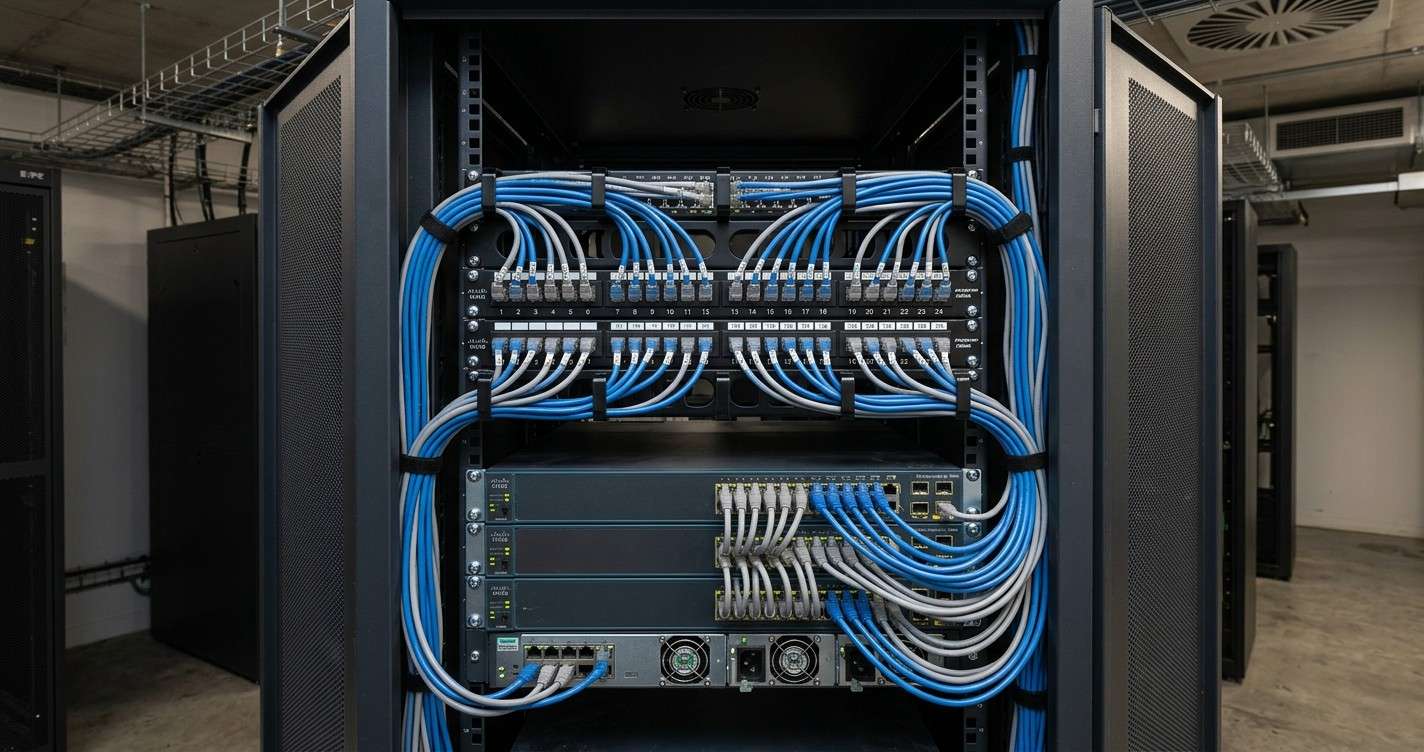
Their smaller size allows more cables to be installed within the same cable management space while improving airflow around switches and servers.
Slimline patch leads are particularly popular in:
- High-density switch cabinets.
- Data centres.
- Server racks.
- Communications cabinets.
- Equipment with limited cable clearance.
What Are Standard Patch Leads?
Standard patch leads generally use larger conductors, such as 24 AWG or 26 AWG, depending on the cable category and manufacturer.
These cables have traditionally been the preferred choice for general office installations because they provide excellent mechanical durability and broad compatibility across Ethernet applications.
Standard patch leads remain suitable for:
- Office networks.
- Educational facilities.
- Healthcare environments.
- Retail installations.
- General commercial structured cabling.
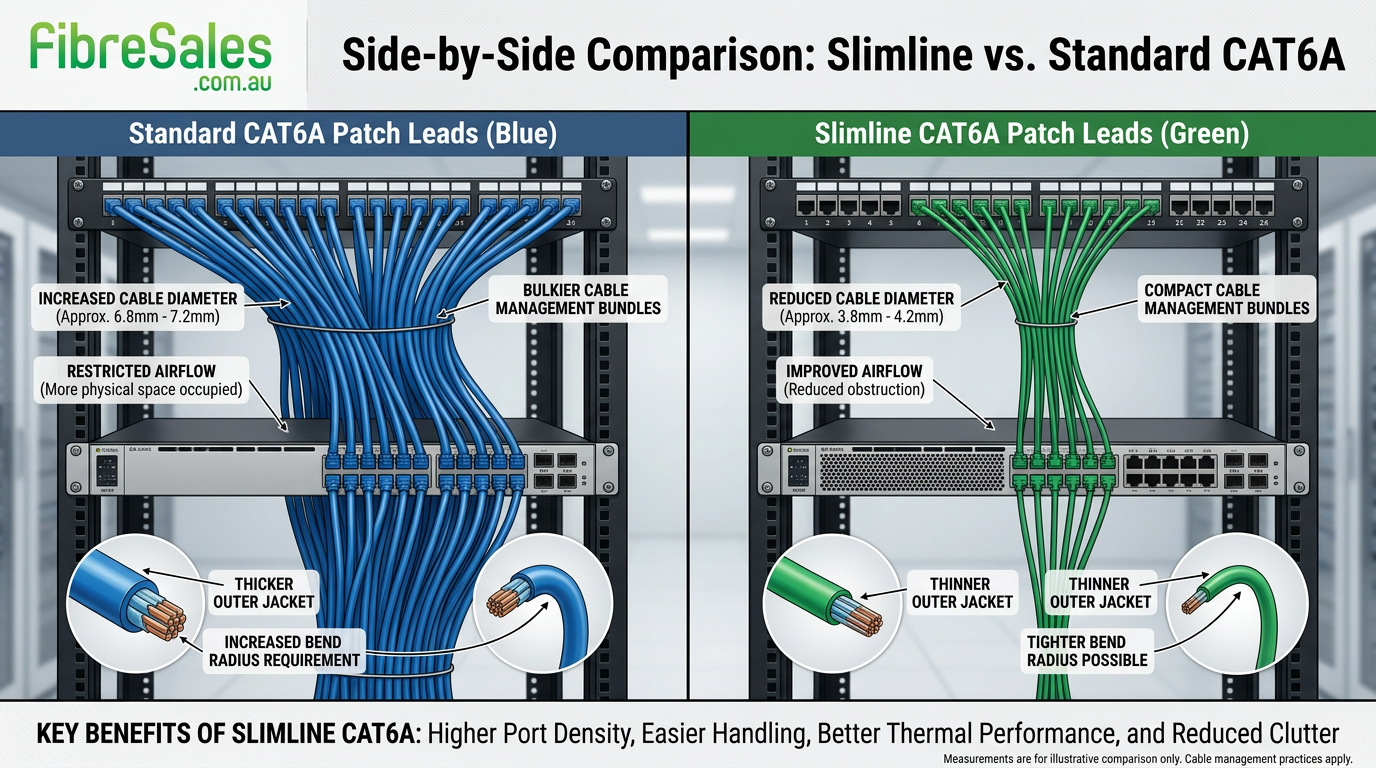
Slimline vs Standard Patch Leads: Physical Differences
The most obvious difference in slimline vs standard patch leads is cable diameter.
| Feature | Slimline | Standard |
|---|---|---|
| Cable Diameter | Smaller | Larger |
| Rack Density | Excellent | Good |
| Airflow | Excellent | Moderate |
| Flexibility | Higher | Moderate |
| Cable Weight | Lower | Higher |
The reduced cable size of slimline patch leads makes installation and cable routing significantly easier in densely populated cabinets.
Slimline vs Standard Patch Leads for Airflow
One of the greatest advantages of slimline patch leads is improved airflow.
Modern network switches generate considerable heat, particularly when supporting high-speed Ethernet and PoE devices. Large bundles of traditional patch leads can restrict airflow around equipment.
Slimline cables occupy less physical space, allowing cooling systems to operate more efficiently and helping maintain stable equipment temperatures.
Engineering Decision
For high-density racks where cooling is critical, slimline patch leads often provide measurable improvements in airflow without sacrificing Ethernet performance for typical patch lead lengths.
Slimline vs Standard Patch Leads for Cable Management
Cable management is another area where slimline vs standard patch leads differ significantly.
Slimline patch leads:
- Reduce cable congestion.
- Improve rack presentation.
- Simplify tracing individual cables.
- Make equipment maintenance easier.
- Reduce pressure on cable management panels.
In large installations containing hundreds of patch leads, these advantages can significantly reduce maintenance time.
Slimline vs Standard Patch Leads and PoE
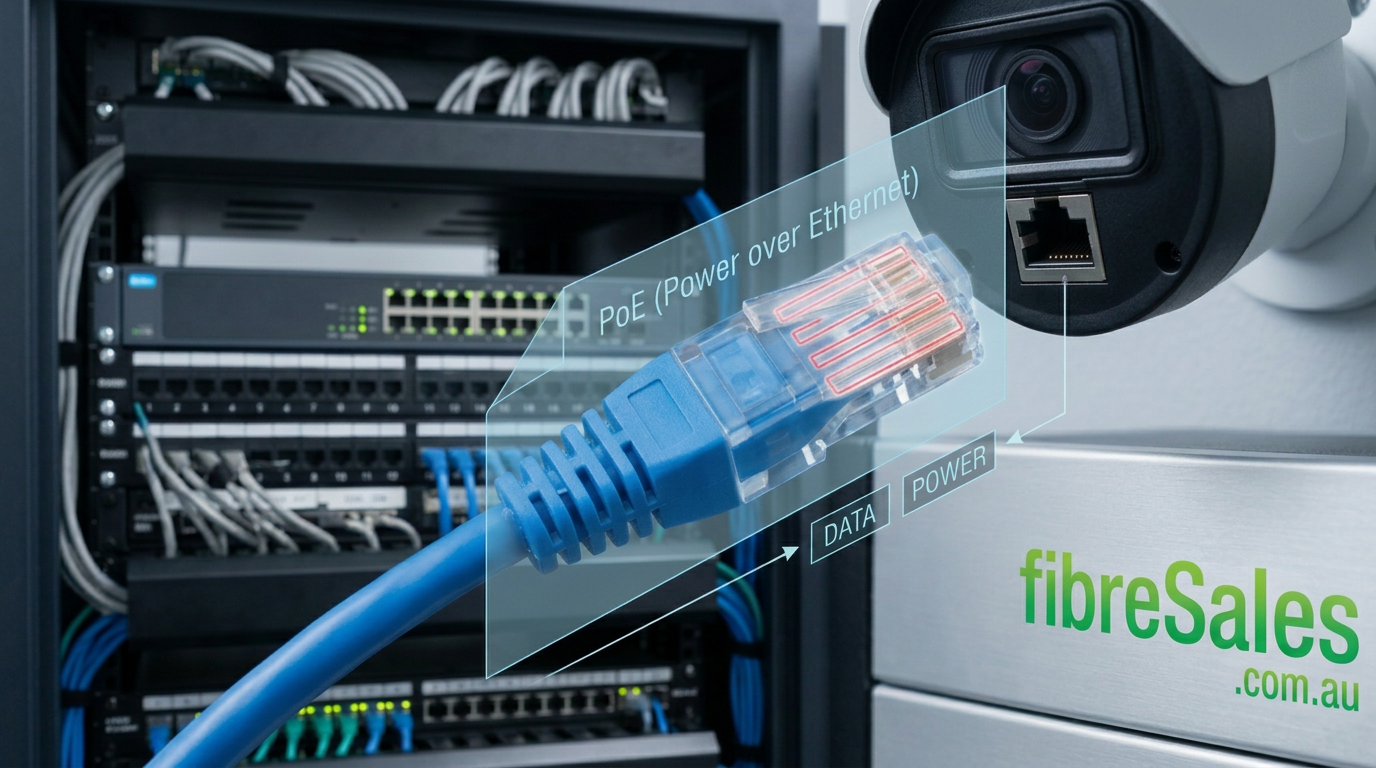
Power over Ethernet places additional electrical demands on Ethernet cabling.
Standard patch leads with larger conductors may provide advantages where:
- High-power PoE is used continuously.
- Long patch lead lengths are required.
- Large cable bundles generate additional heat.
Slimline patch leads are widely used with PoE; however, installers should always verify that the selected cable is rated for the intended PoE standard and application.
related article:
Best Cat6 Cable for PoE
Slimline vs Standard Patch Leads for Different Applications
Choosing between slimline vs standard patch leads depends largely on the installation environment.
Slimline patch leads are ideal for:
- Data centres.
- High-density switch cabinets.
- Enterprise racks.
- Telecommunications rooms.
- Modern office fit-outs.
Standard patch leads are well suited to:
- General commercial networks.
- Industrial environments.
- Educational facilities.
- Warehouse installations.
- Applications requiring additional mechanical robustness.
Common Mistakes When Choosing Patch Leads
Incorrect patch lead selection often creates unnecessary maintenance problems.
Common mistakes include:
- Choosing cable based solely on price.
- Ignoring rack density.
- Using excessive cable lengths.
- Failing to consider airflow.
- Selecting unsuitable cable categories.
- Overlooking PoE requirements.
Common Mistake
Using long patch leads to compensate for poor cable management creates unnecessary congestion and reduces airflow within network cabinets.
Real-World Field Scenario
A managed services provider upgraded a customer’s server room containing four 48-port switches. The existing installation used standard CAT6 patch leads with significant excess cable stored within the rack.
Following a redesign, the installation team replaced the cables with correctly sized slimline CAT6A patch leads and reorganised the cable management system. The reduced cable diameter improved airflow around the switches, simplified fault tracing and created additional space for future expansion without replacing the rack infrastructure.
Best Practices for Selecting Patch Leads
To achieve reliable Ethernet performance:
- Select the correct cable category.
- Choose the shortest practical cable length.
- Match the patch lead to the installation environment.
- Consider airflow in high-density cabinets.
- Confirm PoE compatibility where required.
- Maintain professional cable management.
- Replace damaged patch leads promptly.
These practices improve network reliability while reducing maintenance costs.
Engineering Decision Insight
The choice between slimline vs standard patch leads should be based on the operational requirements of the network rather than personal preference. Slimline patch leads offer clear advantages in high-density environments where airflow, flexibility and cable management are priorities, while standard patch leads continue to provide excellent durability for many general-purpose installations. Selecting the most appropriate cable for the application contributes to better network performance and simplifies future maintenance.
Conclusion
Understanding the differences between slimline vs standard patch leads helps network designers and installers select the most appropriate Ethernet cable for each application. While both cable types deliver reliable network connectivity, slimline patch leads excel in high-density environments where airflow and cable management are critical, whereas standard patch leads remain an excellent choice for many commercial and industrial installations.
To explore FibreSales’ range of Copper Patch Leads, including slimline and standard Ethernet cables, visit: https://fibresales.com.au/,
For more expert guidance on Ethernet infrastructure, structured cabling and product selection, return to the Copper Networking Explained
You can also browse our growing library of technical articles and networking resources at https://fibresales.com.au/, where you’ll find practical installation guides, troubleshooting advice and professional products to support your next network deployment such as read our articles CAT6 Patch Cables (24AWG), Full Guide to Choosing the Right Copper patch cable and Copper Patch Leads explained.
References
For additional technical guidance, consult:
- ISO/IEC 11801 Information Technology – Generic Cabling.
- IEEE 802.3 Ethernet Standards.
- BICSI Telecommunications Distribution Methods Manual (TDMM).
- Ethernet Alliance technical resources.
Continue Learning
- Copper Networking Explained | The Complete Guide to Ethernet Networks
- What is a Cat6 Patch Cable?
- CAT6 vs CAT6A vs CAT6AU | Which Ethernet Patch Cable Should You Choose?
- Slimline vs Standard Patch Leads | Which Ethernet Cable Should You Choose?
- Cat6 for IP Cameras
- Best Cat6 Cable for PoE
- Best Cat6 Patch Cable for Home Networks
- What Length Patch Cable Should I Buy? | fibresales Buying Guide