UTP vs Shielded Cat6 Patch Cables | Which Should You Choose?
UTP vs Shielded is a common comparison for anyone purchasing Cat6 Patch Cables. While shielded Ethernet cables have an important role in specialised environments, most homes, offices, schools and commercial buildings achieve excellent network performance with high-quality UTP patch cables. Choosing the correct cable type helps reduce unnecessary costs, simplifies installation and delivers reliable Ethernet performance for years to come.
UTP (Unshielded Twisted Pair) patch cables use tightly twisted copper conductors to minimise interference without additional shielding. In contrast, shielded cables include metallic foil or braided shielding that protects against high levels of electromagnetic interference (EMI). Although shielding sounds like the better option, most standard Ethernet installations simply do not generate enough interference to justify the additional cost and installation requirements.
In this guide, you’ll learn the differences between UTP and shielded Cat6 patch cables, when shielding genuinely adds value, and why professionally manufactured Cat6 Patch Cables are the preferred choice for the vast majority of residential and commercial Ethernet networks. If your project also requires improved cable management inside communications cabinets, Cat6AU Ultra Thin Patch Cables provide the same reliable network performance while reducing cable congestion and improving airflow.
What Is the Difference Between UTP and Shielded Cat6 Patch Cables?
When comparing UTP vs Shielded, it’s important to understand that both cable types are designed to transmit Ethernet data reliably. The key difference is how they protect the signal from external electrical interference, not how fast they transmit data.
For the overwhelming majority of Ethernet installations, professionally manufactured Cat6 Patch Cables provide all the performance required without additional shielding. UTP remains the industry standard for homes, offices, schools, retail stores and most commercial buildings because it delivers reliable network performance while keeping installation simple and cost-effective.
What Is UTP?
UTP (Unshielded Twisted Pair) uses four twisted pairs of copper conductors enclosed within a protective outer jacket. The twisting of each pair helps cancel electrical noise and minimise signal interference without the need for metallic shielding.
This design offers several advantages:
- Lower installation costs.
- Greater cable flexibility.
- Easier cable management.
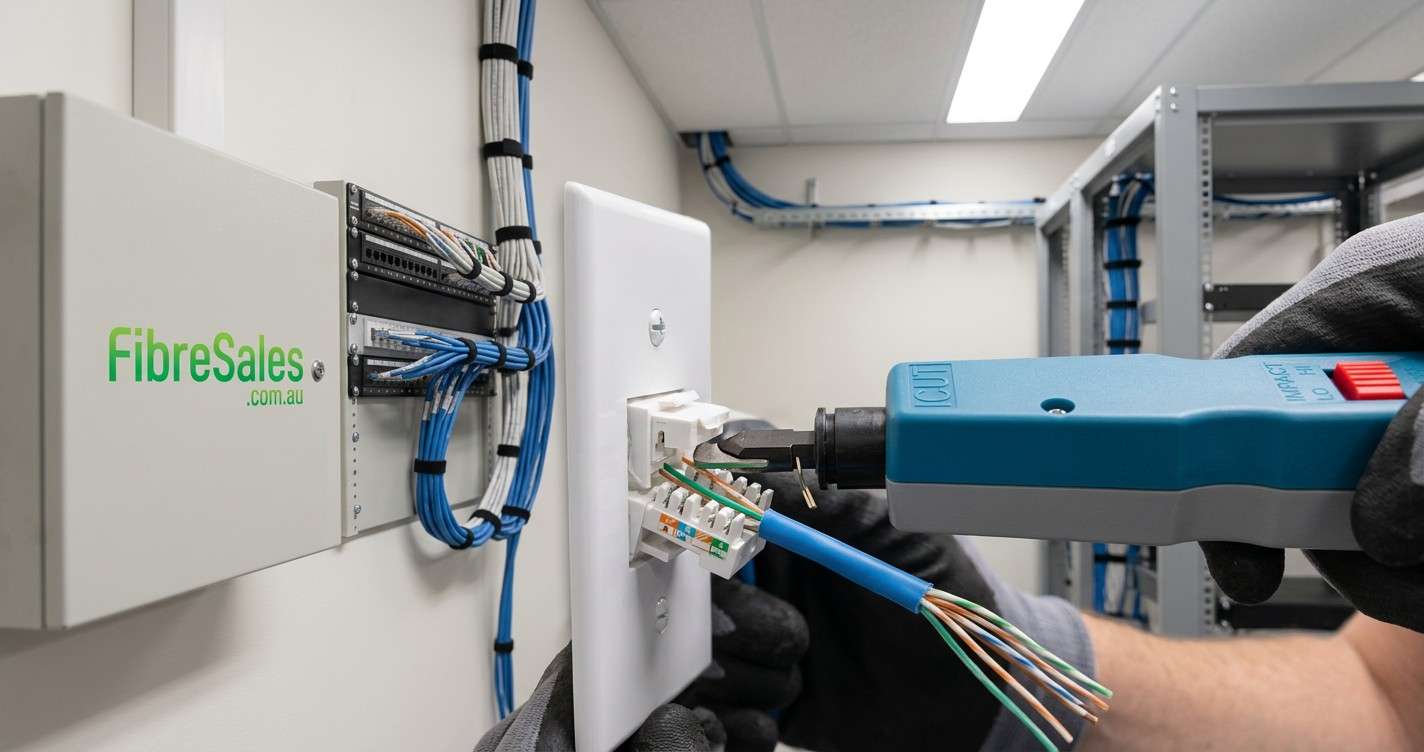
- Simpler cable termination.
- Reduced cable diameter.
- Excellent Gigabit and 10 Gigabit Ethernet performance when installed correctly.
These benefits explain why professionally manufactured Cat6 Patch Cables are the preferred choice for most structured cabling installations across Australia.
Where high-density communications cabinets require improved airflow and easier cable routing, Cat6AU Ultra Thin Patch Cables deliver the same dependable Ethernet performance while reducing cable congestion.
What Is a Shielded Cat6 Patch Cable?
Shielded Cat6 patch cables include an additional layer of metallic foil, braided shielding or both to protect Ethernet signals from high levels of electromagnetic interference (EMI).
Installers typically choose shielded cabling for specialised environments such as:
- Manufacturing facilities.
- Industrial automation systems.
- Heavy electrical plant rooms.
- Mining operations.
- Equipment located near large electric motors.
- Areas containing variable frequency drives (VFDs).
- High-EMI industrial environments.
In these applications, shielding can help reduce the effects of external electrical interference. However, shielded cabling also requires correct grounding and installation practices. Without proper grounding, the shielding may provide little benefit and, in some cases, can negatively affect network performance.
For this reason, industry best practice recommends installing shielded systems only where the operating environment genuinely requires additional protection from electromagnetic interference.
UTP vs Shielded Comparison
| Feature | UTP | Shielded |
|---|---|---|
| Ethernet performance | Excellent | Excellent |
| Gigabit Ethernet | Yes | Yes |
| 10 Gigabit Ethernet | Yes | Yes |
| Requires grounding | No | Yes |
| Installation complexity | Low | Higher |
| Cable flexibility | Excellent | Reduced |
| Typical installation cost | Lower | Higher |
| Best suited for | Homes, offices, schools and commercial buildings | High-EMI industrial environments |
For most installations, UTP vs Shielded is not a question of network performance. Instead, it is a question of whether the installation environment contains enough electrical interference to justify the additional complexity of a shielded cabling system.
Do Most Networks Need Shielded Cabling?
In almost every residential and commercial environment, the answer is no.
Modern Ethernet standards and high-quality Cat6 Patch Cables provide reliable performance without shielding because the twisted-pair design already rejects the levels of electrical interference commonly found in offices, schools, retail premises and homes.
Shielded cabling generally becomes necessary only where Ethernet cables are installed close to significant sources of electromagnetic interference or where a project specification explicitly requires shielded infrastructure.
As a result, UTP remains the preferred solution for the vast majority of structured cabling projects because it combines reliable performance, easier installation and lower overall project costs.
Engineering Decision
When comparing UTP vs Shielded, the installation environment should drive your decision—not the assumption that shielded cables always perform better.
For almost every home, office, school, retail store and standard commercial network, professionally manufactured Cat6 Patch Cables provide the ideal combination of performance, reliability and value. UTP cables are easier to install, do not require grounding and fully support Gigabit Ethernet and many 10 Gigabit Ethernet applications when installed correctly.
Shielded cabling becomes the better choice only when significant electromagnetic interference (EMI) exists or when a project specification specifically requires a shielded cabling system. In these situations, the entire channel—including patch panels, connectors and grounding—must be designed and installed correctly to achieve the intended benefits.
For installations that require improved cable management inside communications cabinets, Cat6AU Ultra Thin Patch Cables offer an excellent UTP solution by reducing cable congestion and improving airflow around active network equipment.
Industry Standards and Best Practices
The decision between UTP vs Shielded should align with recognised structured cabling standards and the requirements of the installation environment.
The ANSI/TIA-568 Structured Cabling Standard provides recognised guidance for structured cabling systems, including installation practices, performance categories and connector requirements.
The ISO/IEC 11801 – Generic Cabling for Customer Premises establishes internationally recognised requirements for structured cabling systems used in commercial and residential buildings.
Ethernet performance is defined by the IEEE 802.3 Ethernet Standards. Both UTP and shielded Cat6 cabling can meet these standards when the cabling system is correctly designed, installed and tested.
Industry best practice recommends avoiding shielded cabling unless it provides a genuine technical advantage. For standard structured cabling projects, professionally manufactured Cat6 Patch Cables remain the preferred solution because they simplify installation while delivering dependable Ethernet performance.
Real-World Installation Example
An accounting firm is fitting out a new office with desktop computers, VoIP phones, wireless access points and network printers. The Ethernet cabling runs through suspended ceilings and standard office cable trays with no significant sources of electromagnetic interference.
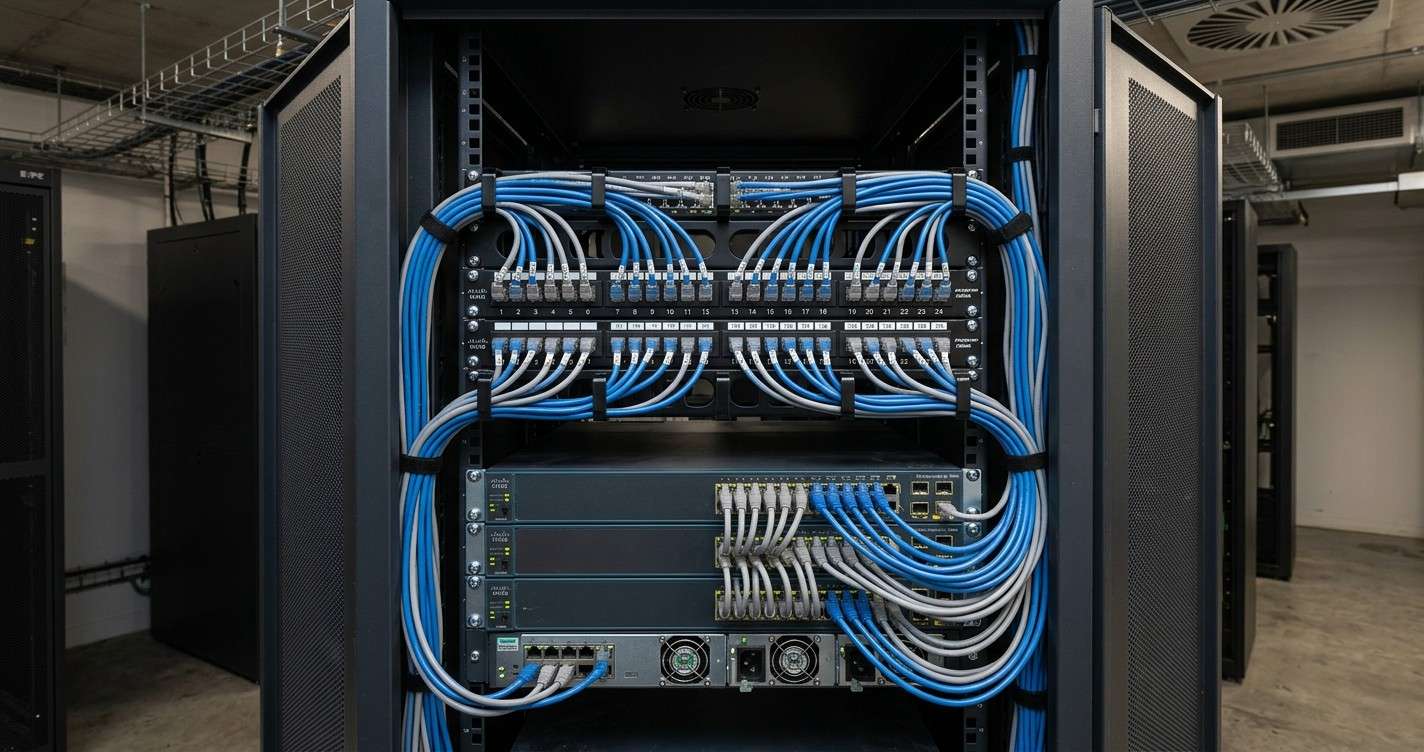
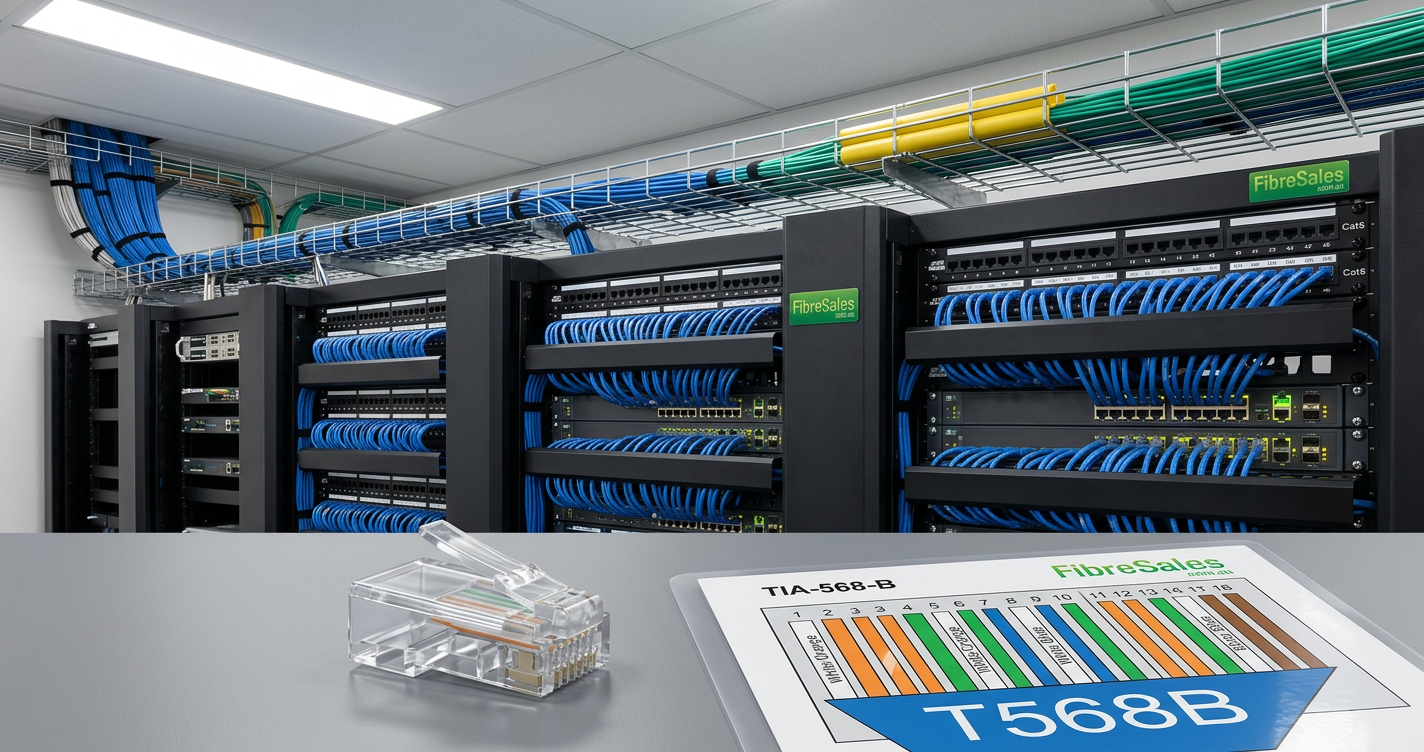
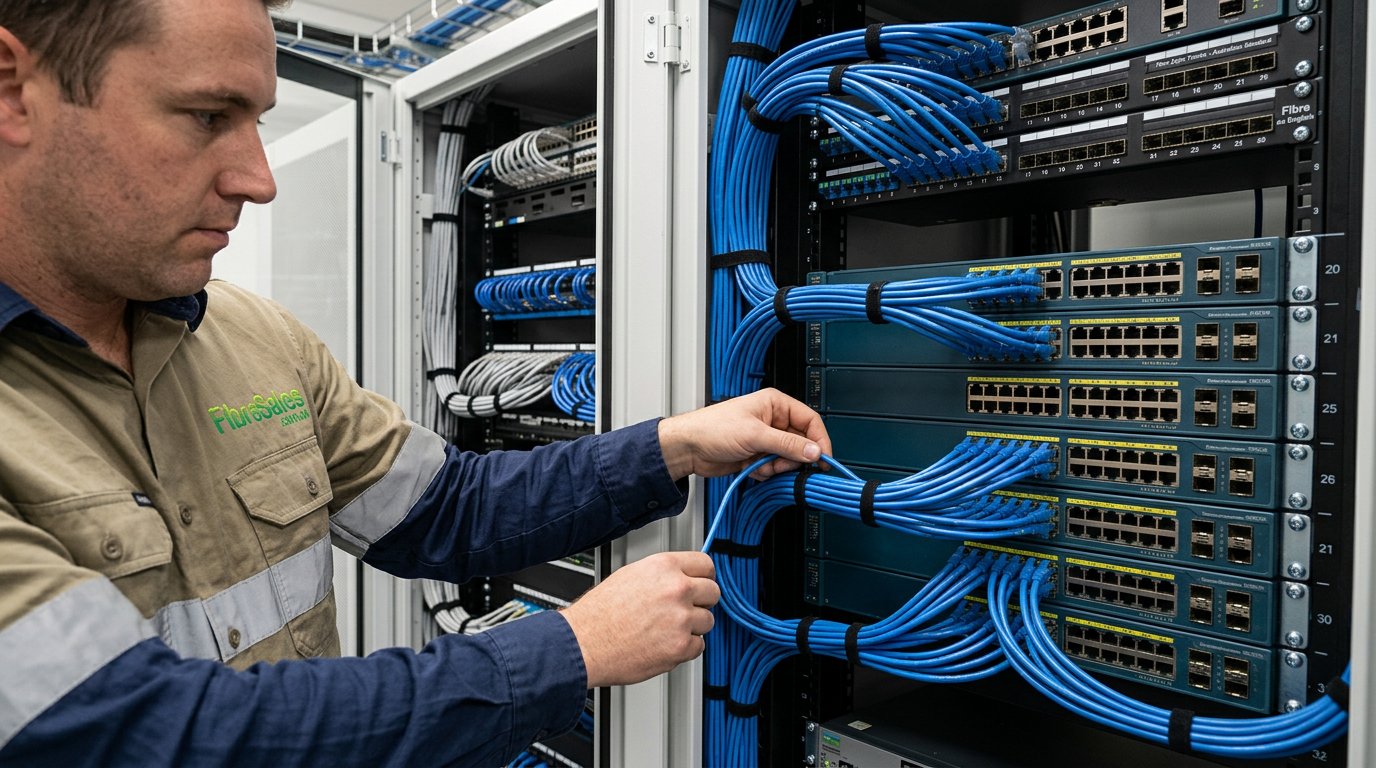
After assessing the installation, the contractor specifies professionally manufactured Cat6 Patch Cables throughout the office. Because the communications cabinet contains multiple switches and patch panels, Cat6AU Ultra Thin Patch Cables are installed within the rack to improve cable organisation and airflow.
The completed network delivers reliable Gigabit Ethernet performance, supports future upgrades and avoids the additional cost and complexity of a shielded cabling system that the environment does not require.
Common Mistakes When Choosing Between UTP vs Shielded
Avoid these common mistakes when comparing UTP vs Shielded:
- Assuming shielded cables always provide better network performance.
- Purchasing shielded patch cables because they appear to be a premium option.
- Installing shielded cabling without correctly grounding the entire system.
- Paying for shielding where there is little or no electromagnetic interference.
- Overlooking the reliability of professionally manufactured Cat6 Patch Cables for standard structured cabling installations.
- Using poor-quality patch leads instead of factory-tested products.
- Ignoring cable management inside communications cabinets where Cat6AU Ultra Thin Patch Cables can simplify installation and improve airflow.
Frequently Asked Questions
Is UTP better than shielded Cat6?
For most installations, yes. When comparing UTP vs Shielded, UTP provides excellent Ethernet performance, lower installation costs and simpler deployment. Shielded cabling is generally required only in environments with high levels of electromagnetic interference.
Does UTP support 10 Gigabit Ethernet?
Yes. Professionally manufactured Cat6 Patch Cables can support Gigabit Ethernet and many 10 Gigabit Ethernet applications when installed within the recommended channel limits.
When should I choose shielded cabling?
Shielded cabling is most appropriate in industrial facilities, manufacturing environments, plant rooms or other locations where significant electromagnetic interference is present or where project specifications require shielding.
Does shielding improve network speed?
No. Shielding does not increase Ethernet speed. Its purpose is to reduce the effects of external electromagnetic interference in demanding electrical environments.
Do offices and homes need shielded Cat6 cables?
In most cases, no. Standard homes, offices, schools and retail environments perform exceptionally well with high-quality Cat6 Patch Cables because these environments rarely generate enough interference to justify shielded cabling.
Why fibresales
fibresales supplies professionally manufactured Cat6 Patch Cables designed to deliver dependable Ethernet performance across residential, commercial and business networks. For communications cabinets and high-density installations, Cat6AU Ultra Thin Patch Cables provide the same reliable UTP performance while improving cable management and airflow. By supplying quality UTP networking products suited to the vast majority of installations, fibresales helps customers build reliable, standards-based Ethernet networks with confidence.
UTP vs Shielded Conclusion
When comparing UTP vs Shielded, the right choice depends on the installation environment—not on the assumption that shielded cables deliver better Ethernet performance. For the overwhelming majority of Australian homes, offices, schools, retail stores and commercial buildings, professionally manufactured Cat6 Patch Cables provide reliable Gigabit and 10 Gigabit Ethernet performance without the added cost or complexity of shielded cabling.
Shielded Cat6 patch cables have an important role in specialised industrial environments where significant electromagnetic interference exists. However, these systems require correct grounding and installation to perform as intended. Unless your project specification or operating environment specifically calls for shielding, UTP remains the simplest, most cost-effective and widely deployed solution for structured cabling.
If your installation also requires improved cable management inside communications cabinets or network racks, Cat6AU Ultra Thin Patch Cables offer the same dependable UTP performance while improving airflow and reducing cable congestion.
Shop fibresales
Whether you’re installing a home network, upgrading a business or fitting out a commercial communications cabinet, fibresales supplies professionally manufactured Cat6 Patch Cables designed for dependable Ethernet performance and long-term reliability.
For high-density switch cabinets and patch panels, explore our range of Cat6AU Ultra Thin Patch Cables to simplify cable management and maximise airflow around active networking equipment.
For more fibre optic solutions, technical resources, and installation products, visit www.fibresales.com.au.
Continue Learning
Continue building your Ethernet networking knowledge with these related fibresales guides:
- What is a Cat6 Patch Cable? Complete Guide for Home & Business – Learn how Cat6 patch cables work, where they are used and how to choose the right cable for your network.
- Best Cat6 Patch Cable for Home Networks | fibresales Buying Guide – Discover how to select the right Cat6 patch cable for streaming, gaming, home offices and everyday networking.
- What Length Patch Cable Should I Buy? | fibresales Buying Guide – Learn how to choose the correct patch cable length for reliable performance and tidy cable management.
- Can Cat6 Run 10G? Complete Guide to 10 Gigabit Ethernet – Understand when Cat6 supports 10 Gigabit Ethernet and the factors that influence network performance.
- CAT6 vs CAT6A vs CAT6AU | Which Ethernet Patch Cable Should You Choose? – Compare Cat6 cable categories to determine the best solution for your installation.
- LSZH vs PVC Cat6 Patch Cables | Which Jacket Should You Choose? – Learn how cable jacket materials affect safety, compliance and installation environments while maintaining the same Ethernet performance.
- Copper Patch Leads Explained | The Complete Guide to Ethernet Patch Cables – Explore Ethernet patch lead construction, connector quality and the features that contribute to long-term network reliability.
- Copper Networking Explained | The Complete Guide to Ethernet Networks – Understand structured cabling, Ethernet standards and copper networking best practices.
- Does Cat6 Patch Lead Colour Matter? Understand how to use colour in copper networks to your advantage.
References
- IEEE 802.3-2022 – IEEE Standard for Ethernet – Defines Ethernet operation and physical-layer requirements across supported network media.
- ISO/IEC 11801-1:2017 – Generic Cabling for Customer Premises – Establishes general requirements for structured cabling systems that support data, voice and video services.
- BICSI Telecommunications Distribution Methods Manual – Provides recognised ICT infrastructure design and installation guidance, including current cabling practices.
- ACMA – Australian Cabling Standards – Outlines the principal cabling rules and standards that registered cablers must follow in Australia.