LSZH vs PVC is one of the most important considerations when selecting Cat6 Patch Cables for a new network installation. While both jacket types deliver the same Ethernet performance, they are designed for different environments, safety requirements and building regulations. Choosing the correct cable jacket can improve safety, simplify compliance and ensure your network is suited to its intended application.
Whether you are installing structured cabling in an office, upgrading a communications cabinet, fitting out a school or expanding a home network, understanding the differences between Low Smoke Zero Halogen (LSZH) and Polyvinyl Chloride (PVC) cable jackets will help you make an informed purchasing decision. Likewise, if your installation requires improved cable management in high-density racks, Cat6AU Ultra Thin Patch Cables provide the same reliable Ethernet performance while reducing cable congestion and improving airflow around active network equipment.
In this guide, you’ll learn how LSZH and PVC cable jackets differ, where each should be used, the advantages and disadvantages of both materials, and how to choose the right Cat6 Patch Cables for your installation.
What Are LSZH and PVC Cat6 Patch Cables?
Although LSZH vs PVC is often discussed as if it affects network performance, the cable jacket material has no impact on Ethernet speed, bandwidth or data transmission. Both jacket types can support the same Cat6 performance specifications when manufactured to the appropriate standards.
The difference lies in the outer jacket material and how it behaves during installation and, more importantly, during a fire.
Professionally manufactured Cat6 Patch Cables are available with either LSZH or PVC jackets, allowing installers to select the most suitable cable for the installation environment rather than the network speed.
LSZH vs PVC: What’s the Difference?
When comparing LSZH vs PVC, the primary distinction is the material used to protect the internal conductors.
LSZH (Low Smoke Zero Halogen)
LSZH cable jackets are manufactured from compounds that produce very little smoke and no significant halogen gases when exposed to fire.
These properties help to:
- Improve visibility during evacuation.
- Reduce corrosive gases that can damage electronic equipment.
- Minimise risks to people in enclosed environments.
- Assist projects that specify low-smoke cabling.
For this reason, LSZH cables are commonly specified in:
- Commercial offices.
- Schools and universities.
- Hospitals and healthcare facilities.
- Airports and transport hubs.
- Government buildings.
- Data centres.
- Multi-storey buildings.
- Public venues.
When these environments require reliable Ethernet connectivity, professionally manufactured Cat6 Patch Cables with LSZH jackets provide both network performance and compliance with many project specifications.
PVC (Polyvinyl Chloride)
PVC is the traditional jacket material used on many Ethernet patch cables. It is flexible, durable and cost-effective, making it suitable for a wide variety of everyday networking applications.
PVC patch cables are commonly used in:
- Home networks.
- Small business offices.
- Retail stores.
- Workshops.
- Temporary network installations.
- General indoor networking.
For many residential and light commercial installations, Cat6 Patch Cables with PVC jackets provide an economical solution while delivering the same Cat6 network performance as LSZH alternatives.
LSZH vs PVC Comparison
| Feature | LSZH | PVC |
|---|---|---|
| Ethernet performance | Equal | Equal |
| Supports Gigabit Ethernet | Yes | Yes |
| Supports 10 Gigabit Ethernet | Yes | Yes |
| Low smoke during fire | Yes | No |
| Halogen free | Yes | No |
| Flexible | Good | Excellent |
| Typical purchase cost | Higher | Lower |
| Common applications | Commercial and public buildings | Homes and general offices |
The choice between LSZH vs PVC is therefore based on installation requirements and safety considerations, not network speed.
Which Jacket Should You Choose?
The right jacket material depends on where the cable will be installed.
Choose LSZH when:
- Building specifications require low-smoke cabling.
- Installing networks in schools, hospitals or public buildings.
- Working on commercial fit-outs.
- Protecting valuable networking equipment from corrosive combustion gases.
- Meeting project or customer compliance requirements.
Choose PVC when:
- Installing a typical home network.
- Expanding a small office.
- Cost is an important consideration.
- No LSZH specification applies.
- General-purpose indoor Ethernet cabling is required.
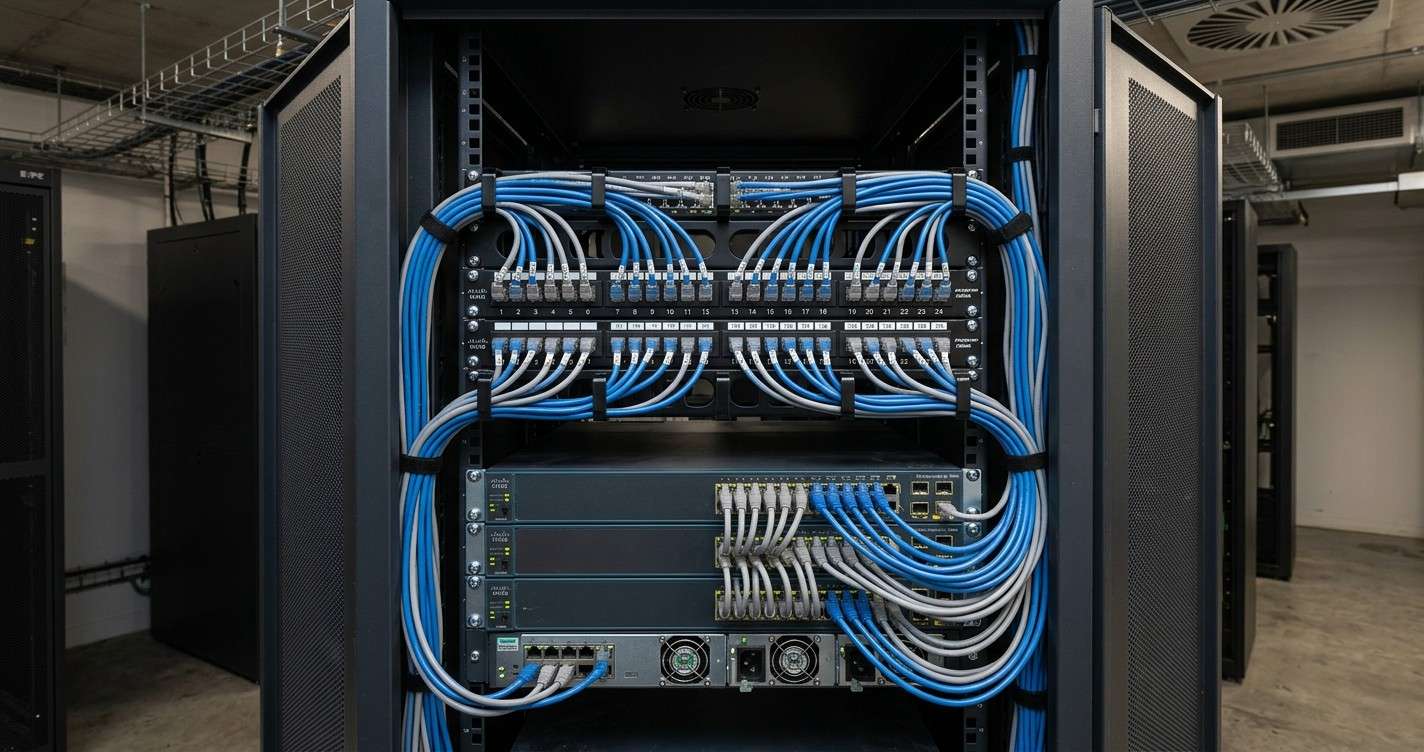
Regardless of jacket material, selecting professionally manufactured Cat6 Patch Cables ensures dependable Ethernet performance. Where installations involve high-density switch cabinets or limited rack space, Cat6AU Ultra Thin Patch Cables can further improve cable management and airflow without compromising network capability.
Engineering Decision
Choosing between LSZH vs PVC should be based on the installation environment, applicable building requirements and long-term operational needs—not Ethernet performance.
For most residential installations and many small business networks, professionally manufactured Cat6 Patch Cables with PVC jackets provide an economical and reliable solution for Gigabit and 10 Gigabit Ethernet applications.
However, when installing structured cabling in schools, hospitals, government facilities, commercial offices or other public buildings, LSZH cable jackets are often the preferred or specified choice because they produce significantly less smoke and fewer corrosive gases during a fire.
Where communications cabinets contain a large number of patch leads, Cat6AU Ultra Thin Patch Cables offer additional benefits by reducing cable congestion, improving airflow around active equipment and simplifying cable management.
Industry Standards and Best Practices
The choice between LSZH vs PVC should also consider recognised cabling standards and project specifications.
The ANSI/TIA-568 Structured Cabling Standard provides recognised installation practices for structured cabling systems, including Ethernet performance and connector requirements.
The ISO/IEC 11801 – Generic Cabling for Customer Premises establishes internationally recognised requirements for structured cabling systems used in commercial and residential buildings.
Ethernet performance itself is defined by the IEEE 802.3 Ethernet Standards. Whether a cable has an LSZH or PVC jacket, compliance with the relevant Ethernet specifications depends on the complete cable construction rather than the jacket material alone.
Selecting quality Cat6 Patch Cables from a reputable supplier helps ensure both network reliability and compliance with recognised industry standards.
Real-World Installation Example
A contractor is completing the structured cabling for a new medical centre. The communications room includes multiple patch panels, managed switches, wireless access points and IP telephony equipment.
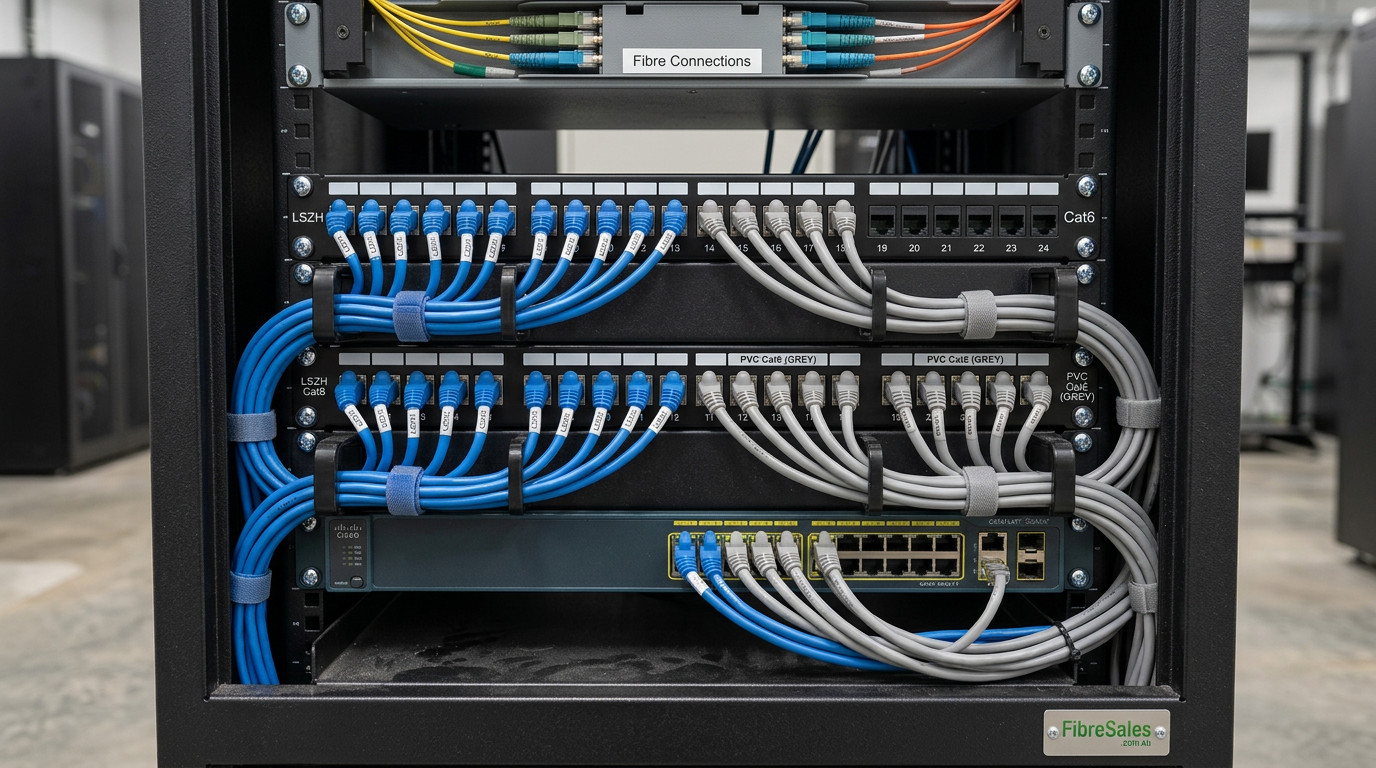
Because the project specification requires low-smoke cabling, the installer selects LSZH Cat6 Patch Cables throughout the installation. Within the equipment rack, Cat6AU Ultra Thin Patch Cables are used to improve cable organisation and maintain airflow around the network switches.
The completed installation meets the project requirements while providing a clean, reliable and easily maintained Ethernet network.
Common Mistakes When Choosing Between LSZH and PVC
Avoid these common purchasing mistakes when comparing LSZH vs PVC:
- Assuming LSZH cables provide faster Ethernet performance than PVC cables.
- Choosing PVC cables where project specifications require LSZH.
- Paying extra for LSZH cables when a standard residential installation does not require them.
- Selecting patch cables based on price rather than build quality.
- Overlooking the importance of professionally manufactured Cat6 Patch Cables.
- Failing to consider cable management in high-density communications cabinets where Cat6AU Ultra Thin Patch Cables may provide significant installation benefits.
- Ignoring future expansion when planning a structured cabling system.
Frequently Asked Questions
Does LSZH perform better than PVC?
No. When comparing LSZH vs PVC, both jacket materials deliver the same Ethernet performance when the cable is manufactured to the appropriate Cat6 specification. The difference relates to fire performance rather than network speed.
Should I use LSZH cables at home?
For most homes, PVC Cat6 Patch Cables are suitable. However, some homeowners may choose LSZH cables for added peace of mind or to align with specific building requirements.
Why do commercial buildings specify LSZH?
Many commercial projects specify LSZH cabling because it produces lower smoke levels and fewer corrosive gases during a fire, helping improve occupant safety and reduce damage to electronic equipment.
Are LSZH patch cables more expensive?
Generally, yes. LSZH patch cables typically cost more than PVC alternatives because of the specialised materials used in the jacket construction.
Does the cable jacket affect 10 Gigabit Ethernet?
No. The jacket material does not determine Ethernet performance. Both LSZH and PVC Cat6 Patch Cables can support Gigabit and 10 Gigabit Ethernet when manufactured and installed correctly.
Why fibresales
fibresales supplies high-quality Cat6 Patch Cables for residential, commercial and industrial networking projects across Australia. Whether your installation requires LSZH or PVC cable jackets, our range is designed to deliver dependable Ethernet performance, consistent quality and long-term reliability. For high-density communications cabinets, Cat6AU Ultra Thin Patch Cables provide an efficient solution for improving cable management while maintaining the same network performance.
Conclusion
When comparing LSZH vs PVC, the most important consideration is where the Cat6 patch cable will be installed rather than how fast it can transmit data. Both jacket types support the same Cat6 Ethernet performance when manufactured to the appropriate standard, making the decision one of safety, compliance and installation requirements rather than network speed.
For most residential networks and general office environments, professionally manufactured Cat6 Patch Cables with PVC jackets provide a reliable and cost-effective solution. However, for commercial buildings, schools, hospitals, government facilities and other projects where fire safety specifications apply, LSZH patch cables are often the preferred choice because they produce less smoke and fewer corrosive gases if exposed to fire.
Selecting the correct jacket material from the beginning helps ensure your network not only performs reliably but also complies with project specifications and remains suitable for future expansion. Where high-density communications cabinets are involved, Cat6AU Ultra Thin Patch Cables provide additional cable management benefits while maintaining the same dependable Ethernet performance.
Shop fibresales
Whether you’re installing a home network, fitting out a commercial office or completing a structured cabling project, fibresales supplies high-quality Ethernet solutions designed for Australian conditions.
Browse our range of Cat6 Patch Cables for reliable everyday networking, or choose Cat6AU Ultra Thin Patch Cables where improved cable management and airflow are important in communications cabinets and equipment racks.
For more fibre optic solutions, technical resources, and installation products, visit www.fibresales.com.au.
Continue Learning
Expand your knowledge of Cat6 networking with these related fibresales guides:
- What is a Cat6 Patch Cable? Complete Guide for Home & Business – Learn how Cat6 patch cables work, where they are used and what makes them suitable for modern Ethernet networks.
- Best Cat6 Patch Cable for Home Networks | fibresales Buying Guide – Discover how to choose the best Cat6 patch cable for home offices, gaming, streaming and everyday networking.
- What Length Patch Cable Should I Buy? | fibresales Buying Guide – Find out how to choose the correct cable length for cleaner installations and improved network reliability.
- CAT6 vs CAT6A vs CAT6AU | Which Ethernet Patch Cable Should You Choose? – Compare the three cable categories to determine which is best for your network.
- Can Cat6 Run 10G? Complete Guide to 10 Gigabit Ethernet – Learn when Cat6 can support 10 Gigabit Ethernet and the factors that influence performance.
- Copper Patch Leads Explained | The Complete Guide to Ethernet Patch Cables – Understand Ethernet patch lead construction, connector quality and buying considerations.
- Copper Networking Explained | The Complete Guide to Ethernet Networks – Explore structured cabling, Ethernet standards and copper network design fundamentals.
- Cat6 vs Fibre: Which Network Cable Should You Choose? – Compare copper Ethernet and fibre optic cabling to determine the right solution for different network environments.
References
- IEEE 802.3-2022 – IEEE Standard for Ethernet – Defines Ethernet operation and physical-layer requirements across supported network media.
- ISO/IEC 11801-1:2017 – Generic Cabling for Customer Premises – Establishes general requirements for structured cabling systems that support data, voice and video services.
- BICSI Telecommunications Distribution Methods Manual – Provides recognised ICT infrastructure design and installation guidance, including current cabling practices.
- ACMA – Australian Cabling Standards – Outlines the principal cabling rules and standards that registered cablers must follow in Australia.