
Do Cat6 Patch Lead Colours Matter? | Complete Buying Guide | fibresales

Patch Lead Colors Cat6

Do Cat6 Patch Lead Colours Matter?

Patch Lead Colours play an important role in organising structured cabling systems, but they have no impact on Ethernet performance. Whether you choose blue, yellow, red, green or black, a professionally manufactured Cat6 Patch Cable delivers the same speed, bandwidth and Power over Ethernet (PoE) capability when it shares the same specifications. The colour simply makes it easier to identify network connections, manage cables and troubleshoot equipment.

Many businesses use different cable colours to separate network functions, making communications cabinets easier to understand at a glance. For example, an installer might use blue for general network connections, yellow for uplinks, red for critical equipment, green for security systems and black for backbone or general-purpose connections. While these colour schemes are common, there is no universal standard, so the best approach is to choose a logical system and apply it consistently throughout your network.

In this guide, you’ll learn whether patch lead colours affect performance, why colour coding improves network management and how selecting the right Cat6 Patch Cables can help create a well-organised, easy-to-maintain Ethernet installation. If you’re working with high-density communications cabinets, Cat6AU Ultra Thin Patch Cables provide the same dependable performance while reducing cable congestion and improving airflow.

Why Do Cat6 Patch Lead Colours Exist?

Many people assume different Patch Lead Colours indicate different cable speeds or performance levels. In reality, the colour of a Cat6 patch lead is simply an outer jacket colour and does not change the cable’s electrical performance.

Manufacturers produce patch leads in multiple colours to help installers organise structured cabling systems more effectively. By assigning colours to different network functions, technicians can identify connections more quickly, reduce mistakes during maintenance and simplify future network upgrades.

Whether you choose blue, yellow, red, green or black, a professionally manufactured Cat6 Patch Cable performs exactly the same when the cable specification, conductor quality and construction remain identical.


Do Different Colours Affect Network Performance?

The simple answer is no.

The colour of the cable jacket has no influence on:

  • Ethernet speed
  • Network bandwidth
  • Signal quality
  • Power over Ethernet (PoE)
  • Latency
  • Cable reliability
  • Maximum transmission distance

A blue Cat6 patch lead performs exactly the same as a yellow, red, green or black Cat6 patch lead if they are manufactured to the same Cat6 standard.

Instead of focusing on colour, buyers should look for factors that genuinely affect performance, including:

  • Compliance with Cat6 specifications.
  • High-quality copper conductors.
  • Factory-tested performance.
  • Durable RJ45 connectors.
  • Quality strain relief and snagless boots.

These characteristics have a much greater impact on long-term network reliability than the colour of the cable jacket.


Common Uses for Cat6 Patch Lead Colours

Although there is no international colour standard, many organisations adopt their own colour-coding system to make structured cabling easier to manage.

Some common examples include:

ColourCommon Use
BlueGeneral data network connections
YellowInternet, WAN or network uplinks
RedCritical servers, core switches or priority equipment
GreenSecurity systems, CCTV or dedicated networks
BlackGeneral-purpose connections or backbone links

These examples are widely used throughout the industry, but every organisation can develop its own colour convention. The important thing is to apply the chosen colour scheme consistently across the entire network.


Why Colour Coding Makes Network Management Easier

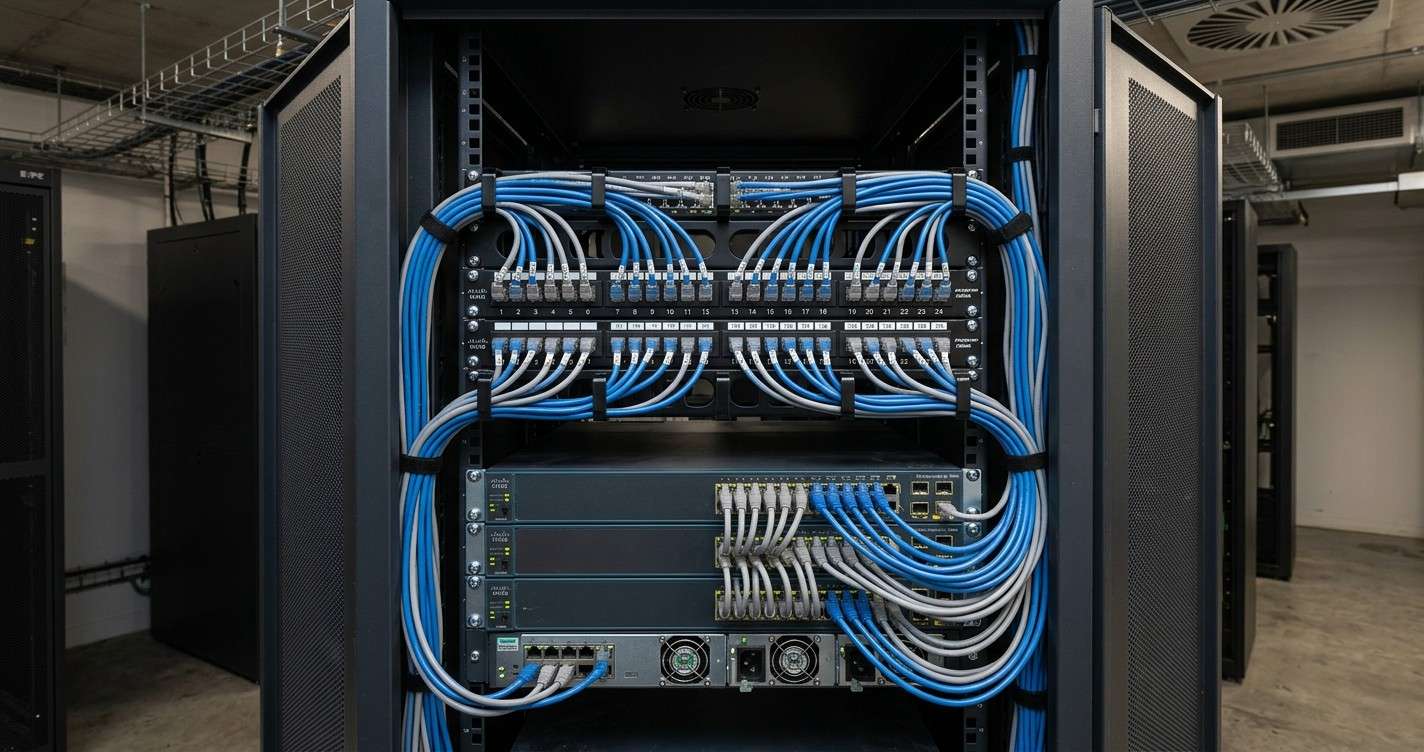
Colour coding provides immediate visual identification inside communications cabinets, server rooms and equipment racks.

Instead of tracing every cable individually, technicians can often identify the purpose of a connection simply by following the agreed colour scheme.

A consistent colour strategy helps teams:

  • Locate network connections faster.
  • Reduce accidental disconnections.
  • Speed up fault finding.
  • Simplify equipment upgrades.
  • Improve cable management.
  • Make communications cabinets easier to understand.
  • Reduce installation errors.

These small improvements can save significant time when maintaining larger structured cabling systems.

For high-density installations, combining a logical colour scheme with Cat6AU Ultra Thin Patch Cables creates a communications cabinet that is both easier to manage and better organised.


Should You Choose Colour Based on Function?

For most businesses, yes.

Assigning colours to specific network functions creates consistency throughout the organisation and makes future maintenance much easier.

For example, you might choose:

  • Blue for everyday workstation connections.
  • Yellow for Internet or uplink connections.
  • Red for business-critical equipment.
  • Green for CCTV or security devices.
  • Black for backbone or general-purpose links.

There is no requirement to use these exact assignments, but choosing a logical colour system and sticking with it across every installation will make your network easier to support as it grows.

You can also match RJ45-couplers by colour if you need to extend any cable lengths

When purchasing Cat6 Patch Cables, selecting the appropriate colour can improve cable identification without affecting the reliable Ethernet performance your network depends on.

Engineering Decision

When choosing Patch Lead Colors, focus on organisation rather than performance. Every colour in a Cat6 patch lead range performs the same job when the cable is manufactured to the same specification. The real advantage comes from creating a structured colour-coding system that technicians can understand at a glance.

For example, a business might use:

  • Blue for general workstation connections.
  • Yellow for Internet or uplink connections.
  • Red for servers or business-critical equipment.
  • Green for CCTV or security networks.
  • Black for backbone or shared infrastructure.

The specific colours matter less than using them consistently. A clear colour standard reduces confusion, speeds up maintenance and makes future network expansion much simpler.

Professionally manufactured Cat6 Patch Cables are available in multiple colours, allowing you to build an organised Ethernet network without compromising performance. Where cabinet space is limited, Cat6AU Ultra Thin Patch Cables provide the same dependable performance while improving cable management and airflow.


Industry Standards and Best Practices

Structured cabling standards define the electrical performance of Ethernet cabling but do not specify mandatory cable colours.

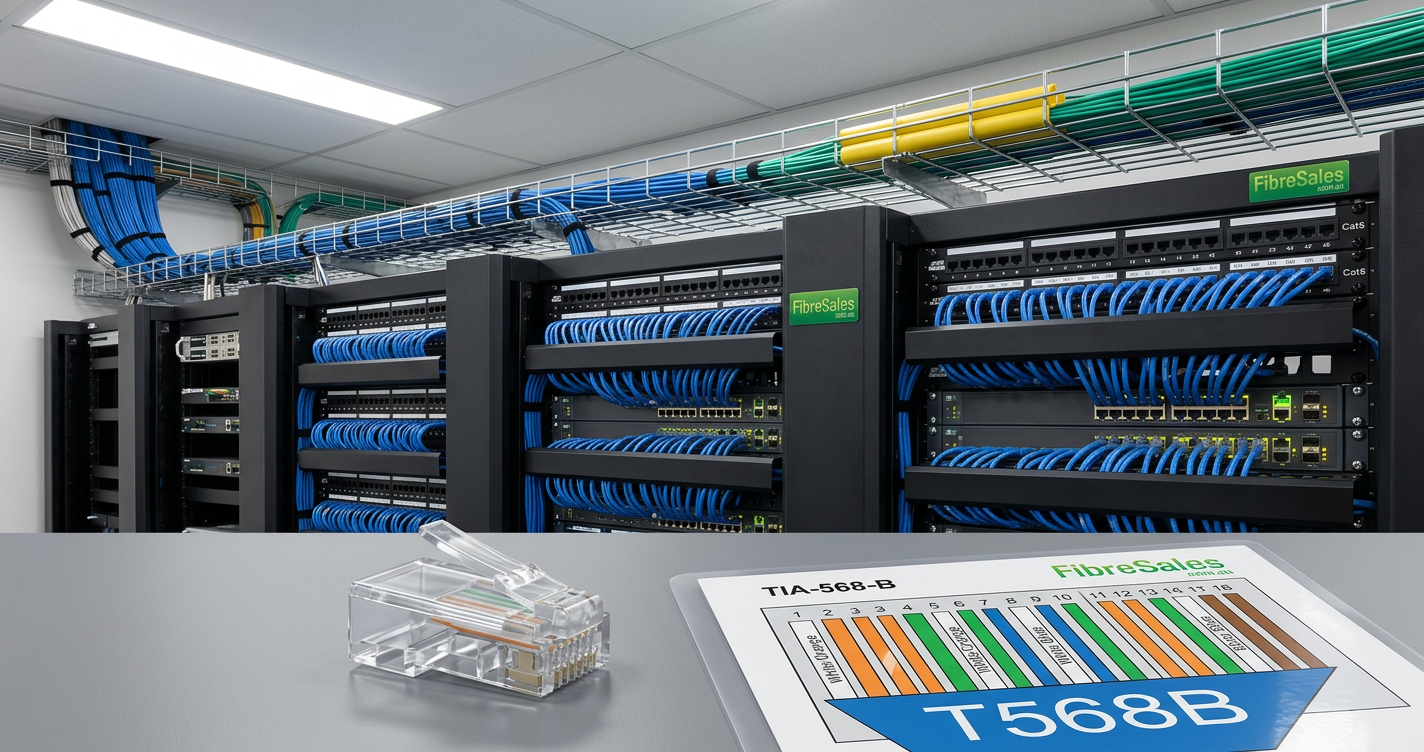
The ANSI/TIA-568 Structured Cabling Standard establishes recognised requirements for structured cabling performance, connector wiring and installation practices. However, it leaves cable colour selection to the network designer or organisation.

Similarly, the ISO/IEC 11801 – Generic Cabling for Customer Premises specifies cabling performance and installation requirements without assigning colours to particular network functions.

The IEEE 802.3 Ethernet Standards define how Ethernet operates over compliant copper cabling regardless of the cable’s outer jacket colour.

Industry best practice recommends developing a logical colour-coding system, documenting it and applying it consistently across every installation. Doing so improves maintenance without affecting network performance.


Real-World Installation Example

A medium-sized business installs a new communications cabinet to support office computers, wireless access points, IP phones and CCTV cameras.

Rather than using a single cable colour throughout the cabinet, the IT team creates a simple colour-coding system:

  • Blue patch leads connect employee workstations.
  • Yellow patch leads identify Internet and WAN uplinks.
  • Red patch leads connect servers and core network equipment.
  • Green patch leads connect CCTV cameras and security devices.
  • Black patch leads provide backbone and shared infrastructure connections.

Months later, the business expands its network. Because every cable follows the same colour convention, technicians identify the correct connections immediately, complete the upgrade faster and minimise disruption to staff.

The organised cabinet also makes future troubleshooting significantly easier than a cabinet containing dozens of identical cables.


Common Mistakes When Choosing Cat6 Patch Lead Colours

Avoid these common mistakes when selecting Patch Lead Colors:

  • Choosing colours based on appearance rather than organisation.
  • Assuming one colour performs better than another.
  • Using different colour schemes across multiple sites.
  • Changing colour conventions midway through an installation.
  • Purchasing low-quality patch leads because the colour matches existing cables.
  • Forgetting to document your colour-coding standard.
  • Overlooking cable management when selecting Cat6AU Ultra Thin Patch Cables for high-density cabinets.

Frequently Asked Questions

Do patch lead colours affect Ethernet speed?

No. The colour of a patch lead has no effect on Ethernet speed, bandwidth or overall network performance. Performance depends on the cable category and manufacturing quality.

Is blue better than black or red?

No. Blue, black, red, yellow and green Cat6 patch leads all perform the same when they share the same Cat6 specifications.

Which patch lead colour should I buy?

Choose the colour that best fits your network’s organisation. Many businesses assign different colours to different network functions so technicians can identify connections more quickly.

Is there a standard colour for Cat6 patch leads?

No. International cabling standards do not assign colours to specific network functions. Every organisation can create its own colour-coding system provided it applies the system consistently.

Should I use different colours in my communications cabinet?

Yes. Using multiple Patch Lead Colors makes communications cabinets easier to manage, simplifies troubleshooting and reduces the chance of disconnecting the wrong cable during maintenance.


Why fibresales

fibresales supplies high-quality Cat6 Patch Cables in blue, yellow, red, green and black, making it easy to build a structured, easy-to-manage Ethernet network. Whether you’re installing a small office or a large commercial communications cabinet, choosing consistent patch lead colours improves organisation without affecting network performance. For high-density installations, Cat6AU Ultra Thin Patch Cables provide the same reliable UTP performance while reducing cable congestion and improving airflow.

Conclusion

When it comes to Patch Lead Colors, appearance has nothing to do with network performance. A blue, yellow, red, green or black Cat6 patch lead will deliver the same Ethernet performance when it is manufactured to the same Cat6 specification. Instead, colour helps you organise your network, identify connections quickly and simplify future maintenance.

Whether you’re installing a small office network or managing a large communications cabinet, a consistent colour-coding strategy makes your infrastructure easier to understand and reduces the likelihood of mistakes during upgrades or troubleshooting. By choosing high-quality Cat6 Patch Cables and applying a logical colour scheme, you can build a structured cabling system that remains easy to manage as your network grows.

For communications cabinets where cable density is a concern, Cat6AU Ultra Thin Patch Cables provide the same dependable Ethernet performance while improving airflow and reducing cable congestion.


Shop fibresales

Whether you’re colour-coding a new installation or expanding an existing network, fibresales offers professionally manufactured Cat6 Patch Cables in blue, yellow, red, green and black to help you build a well-organised Ethernet network.

If you’re working inside high-density communications cabinets or server racks, explore our range of Cat6AU Ultra Thin Patch Cables for improved cable management and better airflow without compromising performance.

For more fibre optic solutions, technical resources, and installation products, visit www.fibresales.com.au.


Continue Learning

Expand your Ethernet networking knowledge with these related fibresales guides:


References


Related Posts

Business Cat6 cable installed in a professional office network cabinet

Best Cat6 Patch Cable for Business | Buying Guide

Business Cat6 cable selection affects far more than whether an Ethernet connection works. In a...

rj45-punch-down-tools-explained

RJ45 Punch-down Tools Explained | Complete Installation Guide

RJ45 Punch-down Tools Explained | Complete Installation Guide RJ45 punch-down tools are essential for terminating...

PoE vs PoE+ vs PoE++

PoE vs PoE+ vs PoE++ | Which Power over Ethernet Standard Do You Need?

PoE vs PoE+ vs PoE++ | Which Power over Ethernet Standard Do You Need? What’s...

PoE RJ45 Pinout showing how Power over Ethernet carries data and electrical power through a Cat6 Ethernet cable.

PoE RJ45 Pinout Explained | Power over Ethernet Wiring Guide

RJ45 Pinout Explained What Is a PoE RJ45 Pinout? A PoE RJ45 pinout describes how...

Ethernet Networks Use T568B in Australian commercial structured cabling installations for compatibility and consistency.

Why Most Ethernet Networks Use T568B | Commercial Wiring Standard

Why Most Ethernet Networks Use T568B Why Most Ethernet Networks Use T568B Although both T568A...

Ethernet Cable Testing using a professional cable tester to verify a Cat6 Ethernet cable.

Ethernet Cable Testing Guide | How to Test Network Cables Correctly

Ethernet Cable Testing Guide Testing Ethernet Cables the Right Way Testing an Ethernet cable is...