Underground Fibre Installation Guide: Best Practices for Installing Fibre Optic Cable
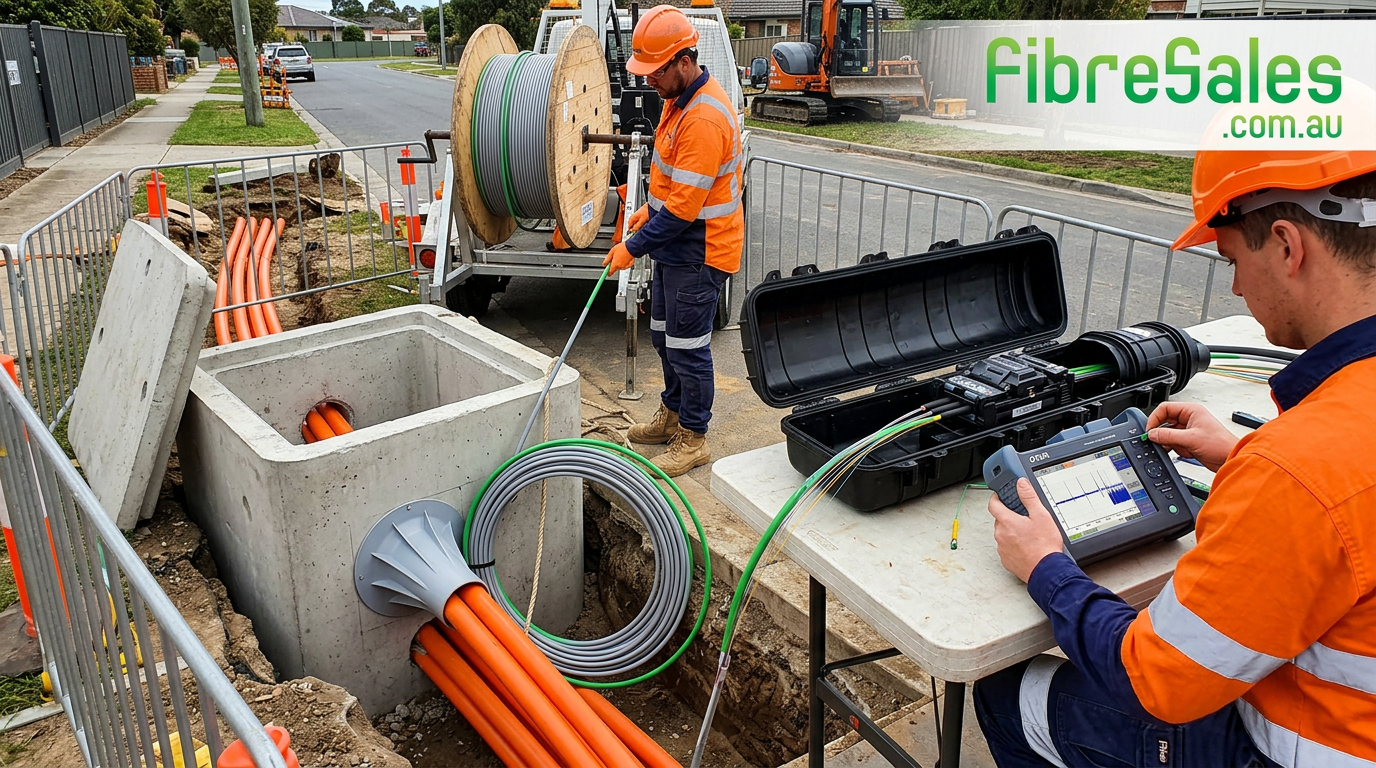
An underground fibre optic network is expected to operate reliably for decades. Achieving that level of reliability depends on far more than selecting the correct cable. Proper planning, installation techniques and post-installation testing all play a critical role in protecting the network from unnecessary failures.
Understanding underground fibre installation best practices helps contractors avoid damaged cables, excessive attenuation and expensive remedial work. Whether installing fibre between buildings, throughout industrial facilities, across mining operations or within telecommunications infrastructure, following recognised installation procedures protects both the cable and the long-term investment.
Before beginning an underground installation, read our Fibre Cable Pulling Techniques guide (https://fibresales.com.au/fibre-cable-pulling-techniques/) and Fibre Installation Best Practices article to understand the fundamentals of safe cable handling. Once installation is complete, our Fibre Optic Testing Performance Guide explains how to verify network performance.
FibreSales supplies professional Fibre Cable, Enclosures, Pigtails, Patch Leads , and professional fibre testing equipment for underground fibre deployments.
Why Underground Fibre Installation Is Different
Unlike indoor cabling, underground fibre installation exposes the network to moisture, ground movement, temperature variation, vehicle loading and accidental excavation.
A properly installed underground cable should withstand these conditions while maintaining low attenuation throughout its service life.
Common causes of underground fibre failures include:
- Poor conduit installation.
- Excessive pulling tension.
- Incorrect cable selection.
- Water ingress.
- Insufficient pit access.
- Inadequate bend radius.
- Third-party excavation damage.
Engineering Decision
The most expensive part of an underground fibre installation is almost always the civil works—not the cable itself. Investing in correct installation practices during construction is considerably less expensive than excavating and replacing damaged infrastructure later.
Planning an Underground Fibre Installation
Successful underground fibre installation begins with careful planning.
Before excavation starts, confirm:
- Route location.
- Existing underground services.
- Conduit size.
- Future expansion requirements.
- Pit locations.
- Cable length.
- Splice locations.
- Access for maintenance.
Planning spare conduit capacity during construction can significantly reduce future upgrade costs.
Choosing the Right Fibre Cable for Underground Installation
Not every fibre optic cable is suitable for underground environments.
Selection depends on factors including:
- Direct burial or conduit installation.
- Rodent protection.
- Moisture resistance.
- Tensile strength.
- Crush resistance.
- Installation distance.
- Fibre count.
Professional Fibre Cable designed for underground applications provides greater mechanical protection than standard indoor cable.
Underground Fibre Installation Using Conduit
Installing fibre within conduit offers excellent long-term protection and simplifies future cable replacement.
Advantages include:
- Mechanical protection.
- Easier maintenance.
- Simplified upgrades.
- Reduced excavation during repairs.
- Improved moisture management.
Before installation:
- Verify conduit continuity.
- Remove debris.
- Install draw rope.
- Check for standing water.
- Confirm conduit diameter.
Conduit should always be sized to allow future cable additions where practical.
Underground Fibre Installation Pits and Access Chambers
Access pits play an important role in underground fibre installation.
They provide:
- Cable pulling access.
- Jointing locations.
- Inspection points.
- Maintenance access.
- Expansion opportunities.
Avoid placing pits in locations prone to flooding where possible, and ensure covers are appropriate for the expected traffic loading.
When fibre joints are required, use quality Enclosures designed for underground environments to protect splices from moisture, dust and mechanical damage.
Protecting Fibre During Underground Installation
Throughout the installation, the cable should be protected from unnecessary mechanical stress.
Avoid:
- Exceeding pulling tension.
- Sharp conduit entries.
- Twisting the cable.
- Excessive sidewall pressure.
- Dropping heavy equipment onto conduit.
- Dragging cable across rough surfaces.
Our Fibre Cable Pulling Techniques guide explains these installation methods in greater detail.
Bend Radius During Underground Fibre Installation
Maintaining the correct bend radius remains essential during underground fibre installation, particularly at pit entries, conduit bends and splice enclosures.
Sharp bends increase optical attenuation and may permanently damage the fibre.
For guidance on bend radius calculations, refer to our Fibre Bend Radius Guide.
Splicing Underground Fibre
Most underground fibre installations require one or more splice locations.
Professional fusion splicing provides:
- Low insertion loss.
- Excellent mechanical strength.
- Long-term reliability.
Protect completed splices using sealed Enclosures and quality Pigtails to ensure environmental protection and organised cable management.
Testing an Underground Fibre Installation
Every installation should be tested before handover.
Recommended testing includes:
- Connector inspection.
- Insertion loss testing.
- OTDR testing.
- Length verification.
- Fibre identification.
- Documentation.
Professional OTDRs , Power Meters, and Light Sources help verify that installation activities have not introduced excessive attenuation.
Our Fibre Test Report Explained article provides guidance on documenting commissioning results.
Common Underground Fibre Installation Mistakes
Many underground failures originate during installation rather than after commissioning.
Common mistakes include:
- Installing undersized conduit.
- Exceeding pulling tension.
- Failing to protect conduit entries.
- Omitting spare draw ropes.
- Ignoring minimum bend radius.
- Installing insufficient pit access.
- Failing to test before backfilling.
Common Mistake
Never backfill a trench before completing fibre testing. Identifying and repairing installation faults is significantly easier while the cable remains accessible.
Real-World Field Scenario
A mining contractor installed approximately 1.8 kilometres of singlemode fibre between two processing facilities using underground conduit.
During commissioning, OTDR testing identified a high-loss event approximately 420 metres from one end of the cable.
Because testing was completed before final reinstatement, the affected conduit section remained accessible. Investigation revealed that the cable had been pinched where the conduit entered an access pit, creating excessive bending stress.
The damaged section was replaced, the conduit entry was modified to maintain the manufacturer’s recommended bend radius, and the cable was retested using an OTDR and Power Meter. The completed installation met the project specification without requiring additional excavation after handover.
Best Practices for Underground Fibre Installation
For reliable underground fibre networks:
- Plan the route thoroughly.
- Install appropriately sized conduit.
- Protect conduit entries.
- Maintain bend radius.
- Monitor pulling tension.
- Install quality splice enclosures.
- Test before backfilling.
- Retain comprehensive test records.
- Leave spare conduit capacity where practical.
These practices reduce lifecycle costs and improve long-term network reliability.
Engineering Decision Insight
A successful underground fibre installation is the result of careful planning, correct cable selection, disciplined installation techniques and comprehensive testing. While the cable itself is designed for decades of service, improper installation can significantly shorten its operational life and increase maintenance costs.
By selecting the appropriate fibre cable, protecting it during installation, maintaining bend radius and pulling tension limits, and verifying performance before handover, installers can deliver infrastructure that remains reliable for many years.
References
For further guidance, consult:
- Fibre Optic Association (FOA) – Fibre optic installation best practices.
- TIA-568 – Optical fibre cabling standards.
- ISO/IEC 14763-3 – Installation and testing of optical fibre cabling..
- Manufacturer installation guides for underground optical fibre cable.
- Local utility and civil construction requirements applicable in Australia.
Conclusion
Professional underground fibre installation is about much more than placing cable in the ground. Careful planning, correct conduit design, disciplined cable handling and comprehensive testing ensure that the network will continue to perform reliably for decades. By following recognised installation practices and verifying performance before handover, contractors can minimise future maintenance and deliver fibre infrastructure with confidence.
For professional Fibre Cable, OTDRs , Power Meters, Light Sources, Cleaning Products and Inspection Microscopes, visit www.fibresales.com.au to explore Australia’s growing resource centre for fibre optic products, technical guides and professional testing solutions.