What is a Cat6 Patch Cable? Complete Guide for Home & Business
The Complete Guide for Home and Business Networks
A Cat6 Patch Cable is one of the most widely used networking components in modern Ethernet installations. From connecting computers and servers to linking switches, patch panels, wireless access points and IP cameras, Cat6 Patch Cables provide the reliable, high-speed connections that today’s home and business networks depend on.
Designed to support Gigabit Ethernet and capable of delivering 10 Gigabit Ethernet over shorter distances, Cat6 Patch Cables offer an excellent balance of performance, reliability and affordability. They are commonly used in residential networks, commercial offices, schools, hospitals, warehouses, data centres and industrial environments where dependable network performance is essential.
Whether you’re upgrading an existing network or planning a new installation, understanding how Cat6 Patch Cables work will help you choose the right solution for your application.
If you’re ready to purchase, explore FibreSales’ complete range of Cat6 Patch Cables available in multiple lengths, colours and specifications for professional networking installations.
What is a Cat6 Patch Cable?
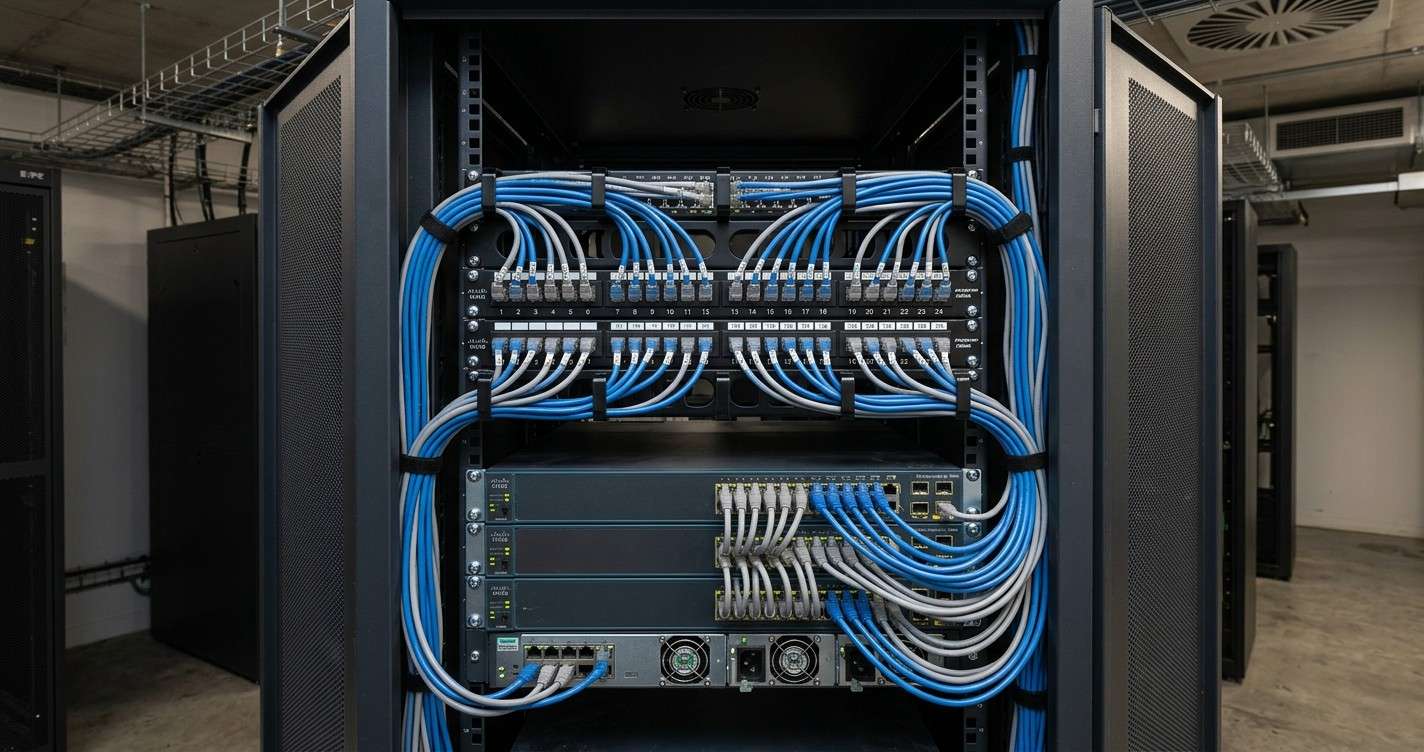
A Cat6 Patch Cable (Category 6 Patch Cable) is a factory-terminated Ethernet cable designed to connect network devices together.
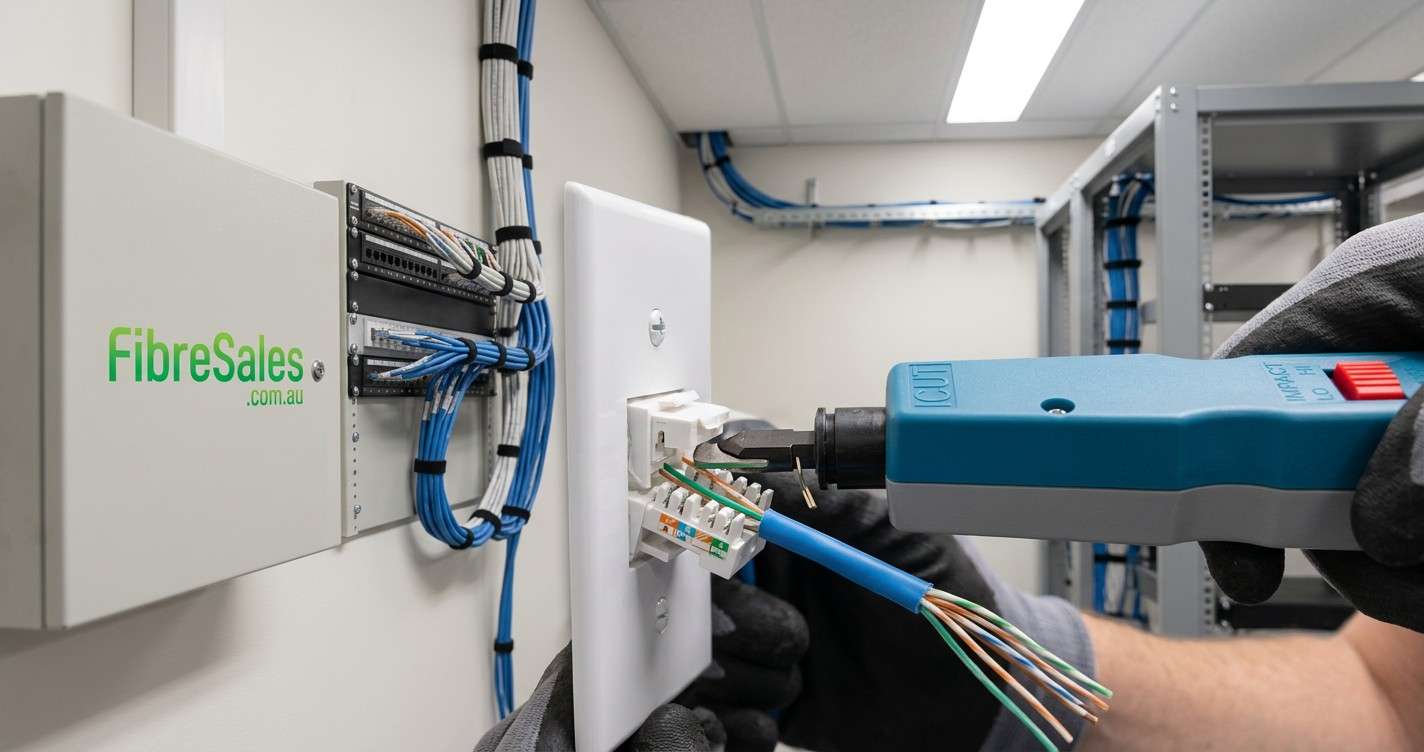
Unlike permanent structured cabling installed inside walls or ceilings, patch cables create the final connection between active network equipment.
Common devices connected using Cat6 Patch Cables include:
- Desktop computers
- Network switches
- Routers
- Patch panels
- Servers
- Network Attached Storage (NAS)
- IP security cameras
- Wireless access points
- VoIP telephones
- Network printers
- Smart televisions
- Gaming consoles
Every Cat6 Patch Cable contains four twisted pairs of copper conductors terminated with standard RJ45 connectors, allowing it to connect directly to almost every Ethernet-enabled device.
Because Cat6 is an internationally recognised cabling standard, these cables are designed to provide consistent performance across a wide range of networking applications while remaining backwards compatible with older Ethernet equipment.
Why is Cat6 So Popular?
As network speeds continue to increase, businesses require cabling that delivers dependable performance both today and into the future.
Cat6 has become the preferred choice because it offers:
- High-speed Gigabit Ethernet performance
- Support for 10 Gigabit Ethernet over shorter cable runs
- Reduced electrical interference
- Improved signal quality
- Excellent Power over Ethernet (PoE) compatibility
- Broad compatibility with existing networking equipment
- Cost-effective performance for most installations
These advantages make Cat6 suitable for everything from small home offices to large enterprise networks.
How Does a Cat6 Patch Cable Work?
Every piece of information travelling across an Ethernet network is transmitted as electrical signals through copper conductors.
Rather than using a single wire, Cat6 Patch Cables contain four precisely twisted wire pairs.
The twisting of each pair helps reduce:
- Electromagnetic interference (EMI)
- Radio frequency interference (RFI)
- Near-End Crosstalk (NEXT)
- Alien Crosstalk (AXT)
By minimising interference, Cat6 Patch Cables maintain higher signal quality, allowing devices to communicate more efficiently and reliably.
This improved construction helps support:
- Faster network speeds
- Lower latency
- Reduced packet loss
- Stable video conferencing
- Reliable VoIP communications
- High-performance cloud applications
- Large file transfers
For businesses operating modern networks, these performance improvements contribute to greater reliability and reduced downtime.
What is Inside a Cat6 Patch Cable?
Although Cat6 Patch Cables appear simple on the outside, they contain several engineered components that work together to maximise Ethernet performance.
Copper Conductors
Each cable contains eight copper conductors arranged into four twisted pairs.
These conductors carry data between connected devices while maintaining precise electrical characteristics required by Ethernet standards.
Twisted Pair Construction
Each wire pair is twisted at a different rate to minimise interference between neighbouring pairs.
This proven design significantly reduces electrical noise while maintaining consistent network performance.
Internal Separator
Many Cat6 cables include a cross-shaped internal separator that keeps each twisted pair physically isolated.
Separating the wire pairs helps reduce crosstalk and improves signal integrity, particularly during high-speed data transmission.
Protective Cable Jacket
The outer jacket protects the internal conductors from physical damage during installation and everyday use.
Depending on the intended environment, Cat6 Patch Cables may use:
- PVC jackets for general indoor installations
- LSZH (Low Smoke Zero Halogen) jackets for environments where reduced smoke and toxic emissions are required
Our guide to Choosing LSZH vs PVC Patch Cables explains which option is best for different applications.
RJ45 Connectors
Every Cat6 Patch Cable is terminated with standard RJ45 (8P8C) connectors, allowing it to connect to Ethernet-enabled devices such as switches, routers, computers and patch panels.
Learn more in our guide to What Does RJ45 Mean?
Key Features of Cat6 Patch Cables
Cat6 Patch Cables provide a number of advantages over older Ethernet cable categories.
Key features include:
- Bandwidth up to 250 MHz
- Gigabit Ethernet support
- 10 Gigabit Ethernet capability over shorter distances
- Factory-tested performance
- Improved resistance to crosstalk
- Reliable Power over Ethernet compatibility
- Plug-and-play installation
- Excellent backwards compatibility with Cat5e networking equipment
These features make Cat6 one of the most versatile Ethernet cabling solutions available today.
Why Choose Cat6 Patch Cables from FibreSales?
Choosing high-quality networking components is just as important as selecting the right network hardware.
FibreSales supplies professionally manufactured Cat6 Patch Cables designed to deliver dependable performance across residential, commercial and industrial installations.
Available in multiple lengths, colours and specifications, our Cat6 Patch Cables are suitable for:
- Home networks
- Corporate offices
- Schools and universities
- Healthcare facilities
- Retail stores
- Warehouses
- Manufacturing facilities
- Data centres
- Government buildings
- CCTV and security systems
Whether you’re installing a single network connection or deploying hundreds of Ethernet links across a large facility, selecting quality patch cables helps improve long-term network reliability.
Cat6 Technical Specifications
Although Ethernet cables can look similar, their performance is determined by recognised standards covering cable construction, electrical characteristics, connector compatibility and transmission performance.
Category 6 cabling requirements are covered by standards including ANSI/TIA-568 and ISO/IEC 11801. Ethernet speeds and network protocols are defined within the IEEE 802.3 Ethernet standards.
Together, these standards help ensure that properly manufactured Cat6 cables can operate consistently with compatible networking equipment from different manufacturers.
Cat6 Specifications at a Glance
| Feature | Cat6 Specification |
|---|---|
| Maximum Bandwidth | 250 MHz |
| Maximum Data Rate | 10 Gbps* |
| Standard Ethernet Speed | 1 Gbps (1000BASE-T) |
| Maximum Channel Length | 100 metres |
| Recommended Patch Lead Length | As required within the 100m channel |
| Connector Type | RJ45 (8P8C) |
| Cable Construction | Four Twisted Copper Pairs |
| Power over Ethernet | Yes (PoE, PoE+, PoE++) |
| Backwards Compatible | Cat5, Cat5e and Cat3 |
*10 Gigabit Ethernet performance depends on installation quality and cable length.
For businesses planning new network installations, [Cat6 Patch Cables] provide an ideal balance between performance, reliability and cost while supporting today’s networking requirements and future upgrades.
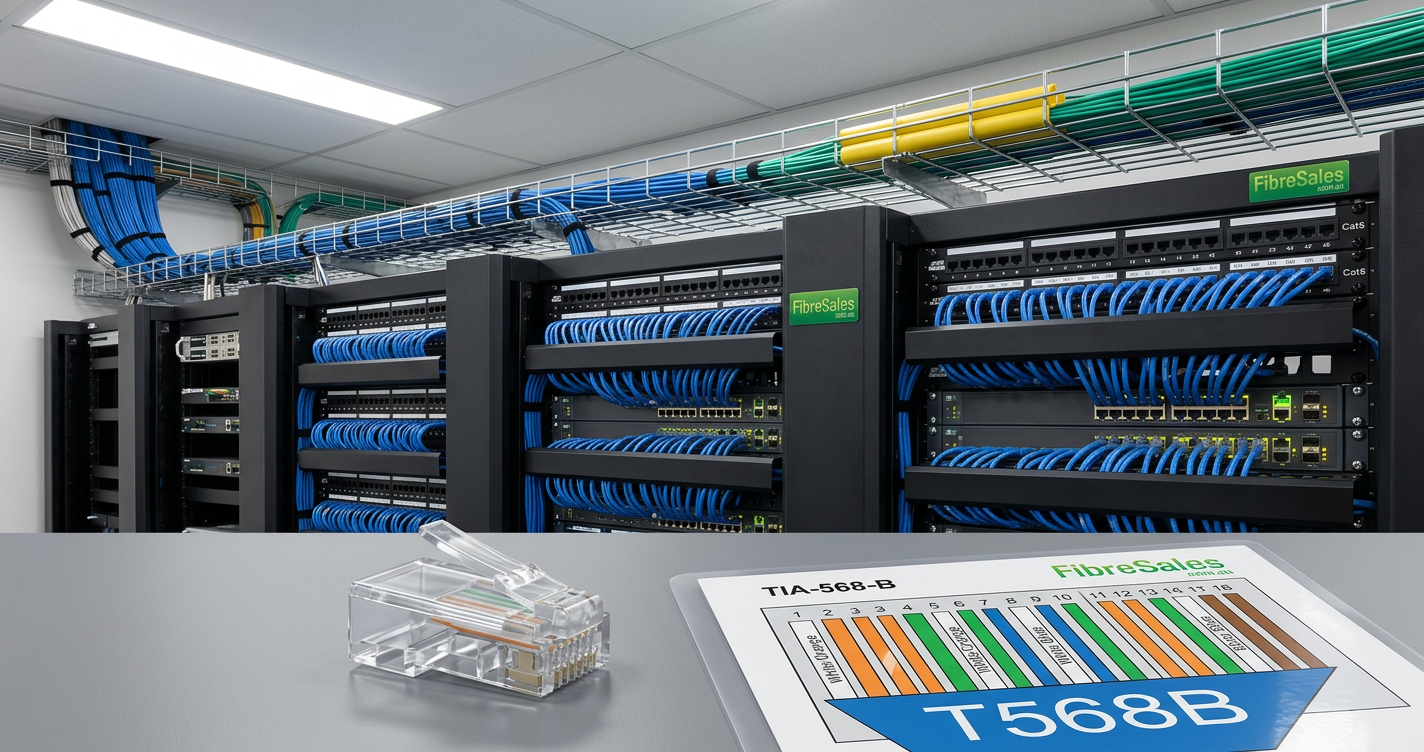
Understanding T568A and T568B Wiring Standards
One of the most common questions asked by installers is whether they should use T568A or T568B wiring.
The simple answer is that both wiring standards perform identically.
The only difference is the position of the green and orange wire pairs inside the RJ45 connector.
Performance, bandwidth and network speed remain exactly the same.
T568A
T568A is commonly specified for:
- Government installations
- Residential cabling
- Some structured cabling projects
T568B
T568B is the most commonly used standard in:
- Commercial offices
- Enterprise networks
- Data centres
- Australian business installations
The important rule is consistency.
Both ends of the Ethernet cable should use the same wiring configuration unless intentionally creating a crossover cable, which is rarely required with modern networking equipment.
These cables are terminated in 8P8C modular connectors, following either the T568A or T568B wiring standards. The only difference between these configurations is that pairs 2 and 3 (orange and green) switch positions. Both ends of the cable must match to maintain consistent performance. Typically, Category 6 cables are configured in a straight-through pin arrangement, ensuring seamless compatibility with network devices.
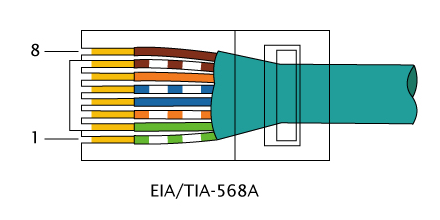
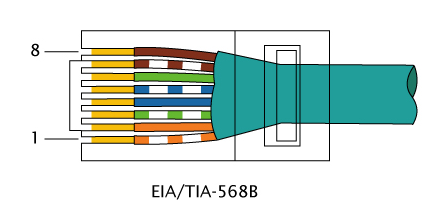
Pictures courtesy of Wikipedia
All FibreSales [Cat6 Patch Cables] are factory terminated and tested, eliminating the risk of wiring inconsistencies while ensuring dependable network performance.
What is an RJ45 Connector?
Every Cat6 Patch Cable uses an RJ45 connector, sometimes referred to as an 8P8C modular connector.
This connector provides the physical interface between the cable and network equipment.
You’ll find RJ45 ports on:
- Computers
- Routers
- Network switches
- Patch panels
- Smart televisions
- Gaming consoles
- Security cameras
- Wireless Access Points
- VoIP phones
Although often called an “RJ45 plug”, the connector itself is only one part of the overall network connection.
The quality of the cable, copper conductors and manufacturing process all contribute to overall performance.
Learn more in our guide to What Does RJ45 Mean?
Can Cat6 Support 10 Gigabit Ethernet?
Cat6 can support 10 Gigabit Ethernet under suitable conditions, but it does not provide the same 100-metre 10 Gigabit capability associated with Cat6A.
A frequently referenced maximum distance for 10 Gigabit Ethernet over Cat6 is approximately 55 metres. However, the achievable distance can be shorter where alien crosstalk, cable bundling, heat, poor installation practices or electrical interference affect performance.
Therefore, installers should not assume that every Cat6 channel will reliably support 10 Gbps at the maximum theoretical distance.
For new installations requiring dependable 10 Gigabit Ethernet across a full 100-metre channel, Cat6A or fibre optic cabling may be more appropriate.
This distinction will be covered in greater detail in:
- Can Cat6 Run 10Gb?
- Cat6 vs Cat6A
- Cat6 vs Fibre
- Cat6 Performance Over Distance
These supporting articles should link back to this cornerstone guide and the Cat6 Patch Cables category.
Maximum Cat6 Cable Distance
Under recognised structured cabling design principles, a balanced copper Ethernet channel is generally limited to 100 metres.
A typical channel consists of:
- Up to 90 metres of permanent horizontal cabling
- Up to 10 metres of combined equipment and patch cabling
The exact arrangement should be designed and installed in accordance with the relevant project requirements and applicable standards, including ANSI/TIA-568 and ISO/IEC 11801.
Keeping the total channel within the permitted length helps control insertion loss, signal degradation and timing issues.
Longer patch leads can also create unnecessary cable congestion inside cabinets and equipment rooms. Therefore, the selected cable should be long enough to allow safe routing without leaving excessive slack.
The supporting guide What Length Patch Cable Should I Buy? will provide practical advice for desks, cabinets, switches, patch panels and network equipment.
How Fast is Cat6?
One of the biggest misconceptions is that Cat6 itself determines network speed.
In reality, network speed depends on several factors, including:
- Network hardware
- Switch capabilities
- Router performance
- Network Interface Cards (NICs)
- Cable length
- Installation quality
When installed correctly, Cat6 supports:
| Ethernet Standard | Maximum Speed |
|---|---|
| Fast Ethernet | 100 Mbps |
| Gigabit Ethernet | 1 Gbps |
| 2.5 Gigabit Ethernet | 2.5 Gbps |
| 5 Gigabit Ethernet | 5 Gbps |
| 10 Gigabit Ethernet | Up to 10 Gbps* |
*Typically up to approximately 55 metres depending on installation conditions and interference.
If your existing network equipment supports Gigabit Ethernet or faster, using quality [Cat6 Patch Cables] helps maximise network performance.
For a deeper dive, read How Fast is Cat6?
Power over Ethernet (PoE)
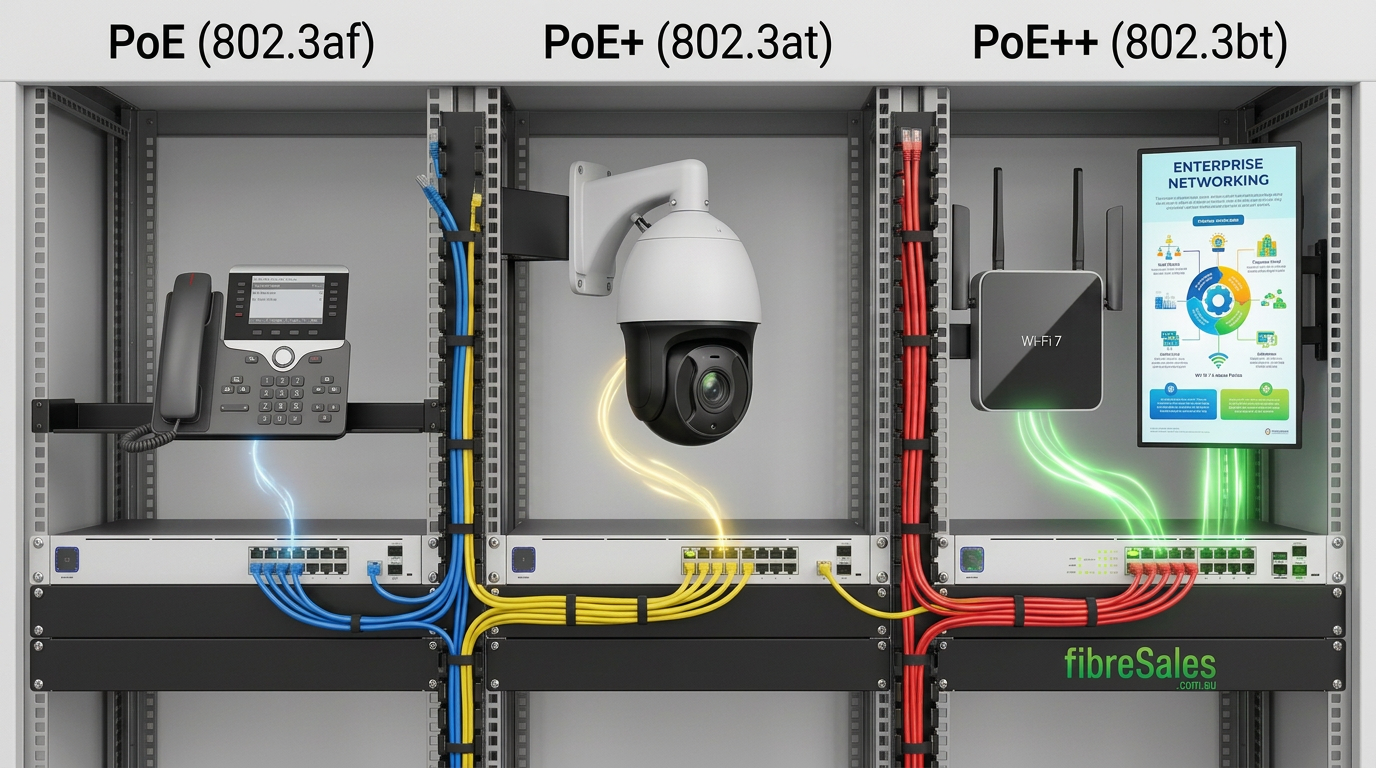
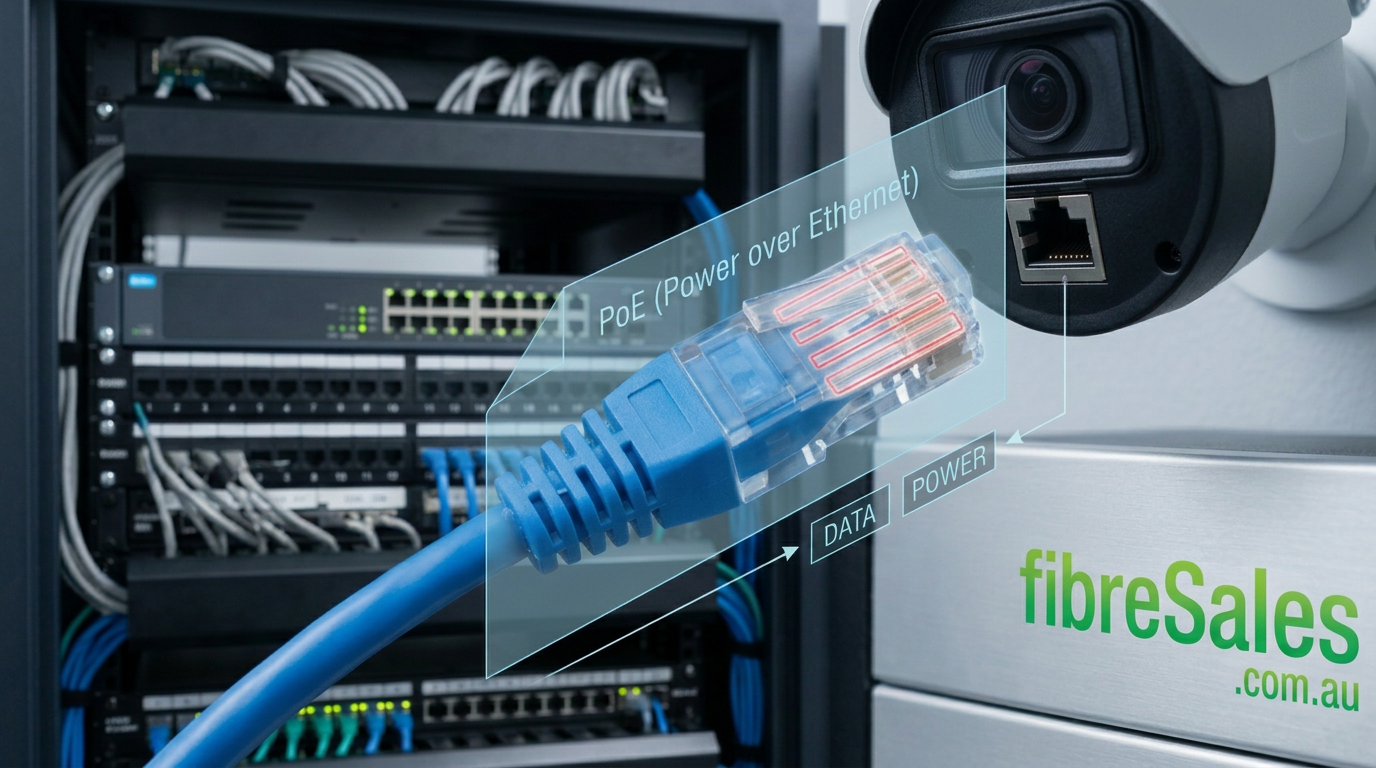
One of the biggest advantages of Cat6 Patch Cables is their compatibility with Power over Ethernet (PoE).
PoE allows both electrical power and network data to travel through the same Ethernet cable.
This removes the need for separate power supplies for many devices.
Common PoE applications include:
- IP security cameras
- Wireless Access Points
- VoIP telephones
- Building automation
- Access control systems
- Digital signage
- Smart lighting
- IoT devices
Using high-quality [Cat6 Patch Cables] helps deliver stable power while reducing voltage drop and maintaining reliable network communications.
For businesses deploying multiple powered devices, Cat6 provides an excellent foundation for scalable network infrastructure.
Cat6 Cable Construction and Signal Integrity
Cat6 achieves improved performance through tighter manufacturing tolerances and better control of interference between conductor pairs.
Important performance considerations include:
- Insertion loss
- Return loss
- Near-End Crosstalk
- Power Sum Near-End Crosstalk
- Equal-Level Far-End Crosstalk
- Alien Crosstalk
- Conductor resistance
- Propagation delay
Most users do not need to calculate these values manually. However, they help explain why two cables that look similar may perform very differently.
Cable geometry, conductor quality, twist rates, connector termination and manufacturing consistency all contribute to the final result.
The BICSI Telecommunications Distribution Methods Manual is an established technical reference used by telecommunications and information and communications technology professionals when designing and installing structured cabling infrastructure.
Cat6 and Australian Cabling Requirements
In Australia, fixed telecommunications cabling work may be subject to regulatory and registration requirements.
The Australian Communications and Media Authority’s cabling standards guidance explains the standards and regulatory framework that apply to customer cabling work.
Depending on the installation, work involving fixed cabling inside walls, ceilings, communications rooms or building pathways may need to be completed by a suitably registered cabler.
Pre-terminated patch cables used to connect equipment are different from permanent building cabling. Nevertheless, the complete installation should still be planned carefully to protect performance, safety and compliance.
Businesses should engage qualified cabling professionals when installing or modifying permanent telecommunications infrastructure.
Cat5e vs Cat6 vs Cat6A
The correct cable category depends on the required speed, transmission distance, installation environment and expected service life.
| Feature | Cat5e | Cat6 | Cat6A |
| Rated frequency | 100 MHz | 250 MHz | 500 MHz |
| Gigabit Ethernet | Yes | Yes | Yes |
| Multi-gigabit Ethernet | Possible | Well suited | Well suited |
| 10 Gigabit Ethernet | Limited use | Shorter suitable channels | Up to 100 metres |
| Crosstalk control | Standard | Improved | More stringent |
| Typical use | Basic existing networks | Homes and businesses | High-performance enterprise networks |
Cat5e may remain suitable for basic Gigabit Ethernet applications. However, Cat6 provides greater bandwidth and improved crosstalk performance.
Cat6A is generally more appropriate where 10 Gigabit Ethernet must operate across the full structured cabling channel.
For detailed selection advice, read:
- CAT6 vs CAT6A vs CAT6AU | Which Ethernet Patch Cable Should You Choose?
- Cat6 vs Fibre: Which Network Cable Should You Choose?
- What Length Patch Cable Should I Buy? | fibresales Buying Guide
Readers who have already selected Cat6 can browse the FibreSales range of Cat6 Patch Cables in different lengths and colours.
Technical Summary
Cat6 provides up to 250 MHz of rated bandwidth and supports Gigabit Ethernet, multi-gigabit Ethernet and, under suitable conditions, 10 Gigabit Ethernet over shorter distances.
Its performance depends on more than the category printed on the cable jacket. Cable construction, termination quality, channel length, connected hardware and installation conditions all affect the final network connection.
Relevant technical and installation guidance can be found through:
- IEEE 802.3 Ethernet standards
- ANSI/TIA-568
- IEEE Power over Ethernet standards
- ISO/IEC 11801
- BICSI Telecommunications Distribution Methods Manual
- Australian cabling standards guidance
Where Are Cat6 Patch Cables Used?
One of the reasons Cat6 has become the preferred Ethernet cable for modern networking is its versatility. Whether you’re connecting a single computer at home or deploying hundreds of network devices across a commercial facility, Cat6 Patch Cables provide fast, reliable and standards-compliant network connectivity.
Because Cat6 supports Gigabit Ethernet, multi-gigabit networking and compatible Power over Ethernet (PoE) applications, it is suitable for a wide range of industries and environments.
Below are some of the most common applications.
Home Networks
Modern homes have more connected devices than ever before.
Desktop computers, gaming consoles, smart televisions, network storage, Wi-Fi mesh systems and streaming devices all benefit from a reliable wired Ethernet connection.
Although Wi-Fi is convenient, a wired connection using Cat6 Patch Cables generally provides:
- Lower latency
- More consistent speeds
- Reduced interference
- Better reliability for gaming
- Improved 4K and 8K streaming
- Faster file transfers
If you’re planning a new home network, our guides to Best Cat6 Patch Cable for Home Networks, Copper Patch Leads Explained | The Complete Guide to Ethernet Patch Cables and What Length Patch Cable Should I Buy? | fibresales Buying Guide? will help you select the right solution.
Business Networks
Businesses rely on stable network infrastructure to keep staff connected and productive.
Cat6 Patch Cables are commonly used to connect:
- Desktop computers
- Docking stations
- Network switches
- Patch panels
- Servers
- VoIP telephones
- Printers
- Conference room equipment
Using professionally manufactured Cat6 Patch Cables helps maintain dependable network performance while supporting future upgrades as bandwidth requirements increase.
Schools and Universities
Educational facilities often support thousands of connected devices every day.
Reliable Ethernet cabling helps deliver consistent connectivity for:
- Student computers
- Interactive learning spaces
- Wireless access points
- Administration offices
- Security systems
- Digital signage
- Library networks
Our guide Network Cabling for Schools explains how structured Ethernet infrastructure supports modern education environments.
Healthcare Facilities
Hospitals, medical centres and healthcare providers depend on reliable networking for both clinical and administrative systems.
Cat6 Patch Cables are frequently used to connect:
- Medical workstations
- Network switches
- Patient administration systems
- Wireless access points
- Security cameras
- VoIP communications
Because healthcare environments often require low-smoke materials, selecting the correct cable jacket is important.
Learn more in Choosing LSZH vs PVC Patch Cables.
Warehouses and Distribution Centres
Modern warehouses rely heavily on network-connected technology.
Typical applications include:
- Barcode scanners
- Wireless access points
- Security cameras
- Automated picking systems
- Inventory management terminals
- Office workstations
Reliable Cat6 Patch Cables help minimise downtime while supporting high-speed communications across warehouse operations.
For more information, read Network Cabling for Warehouses.
Manufacturing Facilities
Industrial facilities require networking infrastructure capable of supporting production systems around the clock.
Cat6 Patch Cables are commonly installed to connect:
- Industrial PCs
- PLCs
- Production equipment
- Machine monitoring systems
- CCTV
- Quality assurance systems
In electrically noisy environments, selecting the correct cable type is essential.
Our guide UTP vs Shielded Cat6 Cables explains when shielding should be considered.
Data Centres
Although fibre optic cabling is widely used for backbone infrastructure, Cat6 Patch Cables continue to play an important role inside data cabinets.
Typical applications include:
- Server connections
- Top-of-rack switching
- Management networks
- KVM equipment
- Patch panels
High-quality Cat6 Patch Cables help maintain organised, reliable rack installations while supporting high-density networking environments.
CCTV and Security Systems
IP security cameras have transformed surveillance systems by using standard Ethernet networks.
Many cameras receive both power and data over the same cable using Power over Ethernet.
Typical installations include:
- Commercial buildings
- Warehouses
- Schools
- Shopping centres
- Residential properties
- Government facilities
Selecting quality Cat6 Patch Cables helps maintain reliable camera performance while supporting compatible PoE systems.
Continue reading:
- Cat6 for IP Cameras
- Best Cat6 Cable for CCTV (coming soon)
- Best Cat6 Cable for PoE
Wireless Access Points
As Wi-Fi standards continue to evolve, access points require faster wired backhaul connections.
Cat6 Patch Cables provide an excellent solution for connecting:
- Ceiling-mounted access points
- Mesh Wi-Fi systems
- Enterprise wireless infrastructure
- Outdoor wireless equipment
For organisations deploying Wi-Fi 6 or Wi-Fi 7 infrastructure, reliable Ethernet cabling remains an essential part of overall network performance.
Choosing the Right Cat6 Patch Cable
Not every installation requires the same patch cable.
Before purchasing, consider:
Cable Length
Selecting the correct cable length improves cable management and airflow while reducing unnecessary clutter.
Read:
What Length Patch Cable Should I Buy? | fibresales Buying Guide
Cable Colour
Different colours can simplify network identification and ongoing maintenance.
Many businesses use colour coding for:
- Data networks
- Voice systems
- Security
- Management networks
- Guest networks
Our guide Do Patch Lead Colours Matter? explains common colour coding practices.
Jacket Material
Depending on the installation environment, you may require:
- PVC
- LSZH
Read:
Choosing LSZH vs PVC Patch Cables
Shielding
Not every installation requires shielded cabling.
Understanding when shielding provides genuine benefits can reduce unnecessary costs.
Read:
UTP vs Shielded Cat6 Cables
Factory Testing
Professionally manufactured Cat6 Patch Cables are tested to help ensure consistent electrical performance before leaving the factory.
Read:
Factory Tested Patch Leads
Common Mistakes When Buying Category 6 Patch Cables
Purchasing Ethernet cables may seem straightforward, but a few common mistakes can affect network performance and long-term reliability.
Buying on Price Alone
Low-cost patch leads may use lower-quality conductors, inconsistent manufacturing processes or inferior connectors.
Choosing quality Cat6 Patch Cables can reduce future maintenance costs and improve network reliability.
Choosing the Wrong Length
Patch leads that are too short place unnecessary strain on connectors.
Patch leads that are too long create excess cable clutter and can restrict airflow within network cabinets.
Selecting the correct length helps produce a cleaner, more organised installation.
Ignoring Future Growth
Although a current installation may only require Gigabit Ethernet today, network demands continue to increase.
Installing Category 6 provides greater flexibility for future upgrades than older cable categories.
Using the Wrong Cable Type
Some environments require specialised cable jackets or shielding.
Choosing the appropriate cable for the installation environment helps improve safety, durability and performance.
Mixing Poor Quality Components
Even high-performance switches and servers cannot compensate for poor-quality patch leads.
A network performs only as well as its weakest connection.
Using professionally manufactured Cat6 Patch Cables helps maintain consistent network performance throughout the entire Ethernet channel.
Best Practice Installation Tips
The performance of a Cat6 installation depends on more than simply purchasing quality cable.
Industry best practice recommends:
- Avoid excessive cable tension during installation.
- Do not sharply bend Ethernet cables.
- Keep data cables separated from electrical power where practical.
- Use appropriate cable management.
- Select the correct cable length.
- Protect connectors from unnecessary stress.
- Label patch leads for easier maintenance.
- Follow recognised structured cabling practices described in ANSI/TIA-568, ISO/IEC 11801 and the BICSI Telecommunications Distribution Methods Manual.
Where fixed telecommunications cabling is being installed in Australia, work should also comply with the Australian cabling standards administered by the ACMA.
Frequently Asked Questions
What is a Category 6 Patch Cable used for?
A Cat6 Patch Cable is used to connect network-enabled devices such as computers, routers, switches, patch panels, wireless access points, IP cameras, servers and printers. It provides a reliable Ethernet connection for transmitting data across a local area network (LAN).
If you’re looking for high-quality Ethernet leads for your next installation, browse our range of Cat6 Patch Cables.
What is the difference between Cat6 and Cat5e?
Cat6 supports higher bandwidth (250 MHz compared to 100 MHz for Cat5e), offers improved resistance to crosstalk and can support 10 Gigabit Ethernet over suitable shorter distances.
Read our complete guide to Cat6 vs Cat5e.
Is Category 6 faster than Cat5e?
Cat6 itself doesn’t automatically make your network faster. However, its improved electrical performance allows it to support higher-speed Ethernet standards when used with compatible networking equipment.
Can Category 6 run 10 Gigabit Ethernet?
Yes. Cat6 can support 10 Gigabit Ethernet over shorter cable runs where installation conditions meet recognised performance requirements.
For larger installations requiring 10 Gbps across the full 100-metre channel, Cat6A or fibre optic cabling may be a better option.
Learn more in Can Cat6 Run 10Gb?
What is the maximum length of a Cat6 cable?
Industry standards generally specify a maximum structured cabling channel length of 100 metres, consisting of up to 90 metres of permanent cabling and up to 10 metres of patch leads.
The requirements are defined within ANSI/TIA-568 and ISO/IEC 11801.
Can Category 6 Patch Cables be used outdoors?
Standard indoor Cat6 Patch Cables are not designed for prolonged outdoor exposure.
Outdoor installations typically require cables specifically manufactured to withstand moisture, UV exposure and changing environmental conditions.
Are Category 6 Patch Cables backwards compatible?
Yes.
Cat6 Patch Cables are compatible with older Ethernet equipment using Cat5e and Cat5 standards.
Although the cable is backwards compatible, overall network performance will always depend on the capabilities of the connected equipment.
What devices use Category 6 Patch Cables?
Cat6 Patch Cables are commonly used with:
- Desktop computers
- Network switches
- Routers
- Patch panels
- Servers
- Wireless access points
- VoIP phones
- Network printers
- Smart TVs
- Gaming consoles
- IP security cameras
- Network attached storage (NAS)
| If you need… | Choose… |
|---|---|
| Home networking | Cat6 |
| Office networking | Cat6 |
| 10 Gbps over 100 m | Cat6A |
| High EMI environment | Shielded Cat6 |
| Long-distance links | Fibre Optic |
Learn more in What Devices Use Cat6?
What does RJ45 mean?
RJ45 is the common name used to describe the modular connector fitted to most Ethernet cables.
These connectors allow Cat6 Patch Cables to connect directly to Ethernet-enabled devices.
Read What Does RJ45 Mean? for a detailed explanation.
Can Category 6 Patch Cables carry power?
Yes.
Cat6 Patch Cables support compatible Power over Ethernet (PoE) technologies, allowing both data and electrical power to travel through the same cable.
PoE technologies are defined within the IEEE Power over Ethernet standards.
Should I choose PVC or LSZH cables?
The correct choice depends on the installation environment.
PVC jackets are suitable for many general indoor applications, while LSZH (Low Smoke Zero Halogen) cables are often preferred where reduced smoke and halogen emissions are required.
See Choosing LSZH vs PVC Patch Cables.
Do Category 6 cable colours matter?
Cable colour does not affect network performance.
Many organisations use different colours to simplify cable identification and improve cable management.
Learn more in Do Patch Lead Colours Matter?
Should I buy shielded or unshielded Cat6?
Most office and residential installations use UTP (Unshielded Twisted Pair) cabling.
Shielded cables may be beneficial in environments with high levels of electromagnetic interference.
Read UTP vs Shielded Cat6 Cables.
Are factory-tested patch leads worth it?
Yes.
Factory-tested patch leads help ensure consistent electrical performance and reduce the risk of wiring faults compared with poorly manufactured alternatives.
Learn more in Factory Tested Patch Leads. (coming soon)
Why Choose FibreSales?
Choosing the right Ethernet cable is only part of building a reliable network. Selecting quality networking products from a trusted Australian supplier helps ensure long-term performance and reliability.
FibreSales supplies a comprehensive range of Cat6 Patch Cables for residential, commercial and industrial applications, available in multiple lengths and colours to suit everything from home offices to enterprise networks.
Whether you’re connecting a single workstation or fitting out an entire communications room, FibreSales offers networking products designed to meet modern Ethernet requirements.
Conclusion
Cat6 Patch Cables continue to be one of the most versatile and widely used Ethernet connectivity solutions available today. Their combination of Gigabit performance, support for modern Power over Ethernet applications, improved resistance to interference and compatibility with existing networking equipment makes them an excellent choice for homes, businesses and enterprise environments.
By understanding how Cat6 Patch Cables work, where they are best used and how they compare with other Ethernet cable categories, you’ll be better equipped to select the right networking solution for your project.
Whether you’re upgrading a home office, fitting out a school, expanding a warehouse or building a new data network, FibreSales offers a comprehensive range of Cat6 Patch Cables to help you build reliable, high-performance network infrastructure.
For more fibre optic solutions, networking products, technical resources and installation equipment, visit www.fibresales.com.au.
Continue Learning
- Copper Networking Explained | The Complete Guide to Ethernet Networks
- Copper Patch Leads Explained | The Complete Guide to Ethernet Patch Cables
- What is a Cat6 Patch Cable?
- CAT6 vs CAT6A vs CAT6AU | Which Ethernet Patch Cable Should You Choose?
- Slimline vs Standard Patch Leads | Which Ethernet Cable Should You Choose?
- Cat6 for IP Cameras
- Best Cat6 Cable for PoE
- What Length Patch Cable Should I Buy? | fibresales Buying Guide
- RJ45 Connectors Explained