Fibre Cable Pulling Techniques: Best Practices for Safe Fibre Installation
Installing fibre optic cable correctly is just as important as selecting the right cable or performing accurate testing. Even the highest quality fibre optic cable can suffer permanent performance degradation if incorrect installation techniques are used.
Understanding fibre cable pulling techniques helps installers minimise cable stress, prevent hidden damage and ensure long-term network reliability. Whether you’re installing fibre through conduits, cable trays, pits or underground ducts, following recognised installation practices protects both the cable and the investment it represents.
Before beginning any installation, it’s worth reading our Fibre Installation Best Practices article, which provides an overview of professional installation principles. Once installation is complete, our Fibre Optic Testing Performance Guide explains how to verify that the installed cable meets performance requirements.
FibreSales supplies a wide range of Fibre Cable , Enclosures, Pigtails, Patch Leads and professional testing equipment to support complete fibre optic installations.
Why Fibre Cable Pulling Techniques Matter
Professional fibre cable pulling techniques are designed to protect the delicate glass fibres housed within the cable structure.
Although modern fibre optic cables are remarkably robust, excessive pulling force, sharp bends or twisting can damage the cable without leaving obvious signs on the outer jacket.
Poor installation practices commonly result in:
- Increased attenuation.
- Microbending losses.
- Macrobending losses.
- Damaged strength members.
- Broken fibres.
- Higher long-term maintenance costs.
- Premature cable replacement.
Engineering Decision
The objective during installation is not simply to get the cable into position. It is to install the cable without introducing stresses that reduce its optical performance or service life.
Planning Fibre Cable Pulling Techniques Before Installation
Successful installations begin well before the cable enters the conduit.
Every installation should include:
- Route inspection.
- Conduit verification.
- Pull length calculations.
- Bend radius assessment.
- Pulling equipment selection.
- Cable drum positioning.
- Communication between installation personnel.
Careful planning reduces installation time while minimising unnecessary cable handling.
Understanding Maximum Pulling Tension
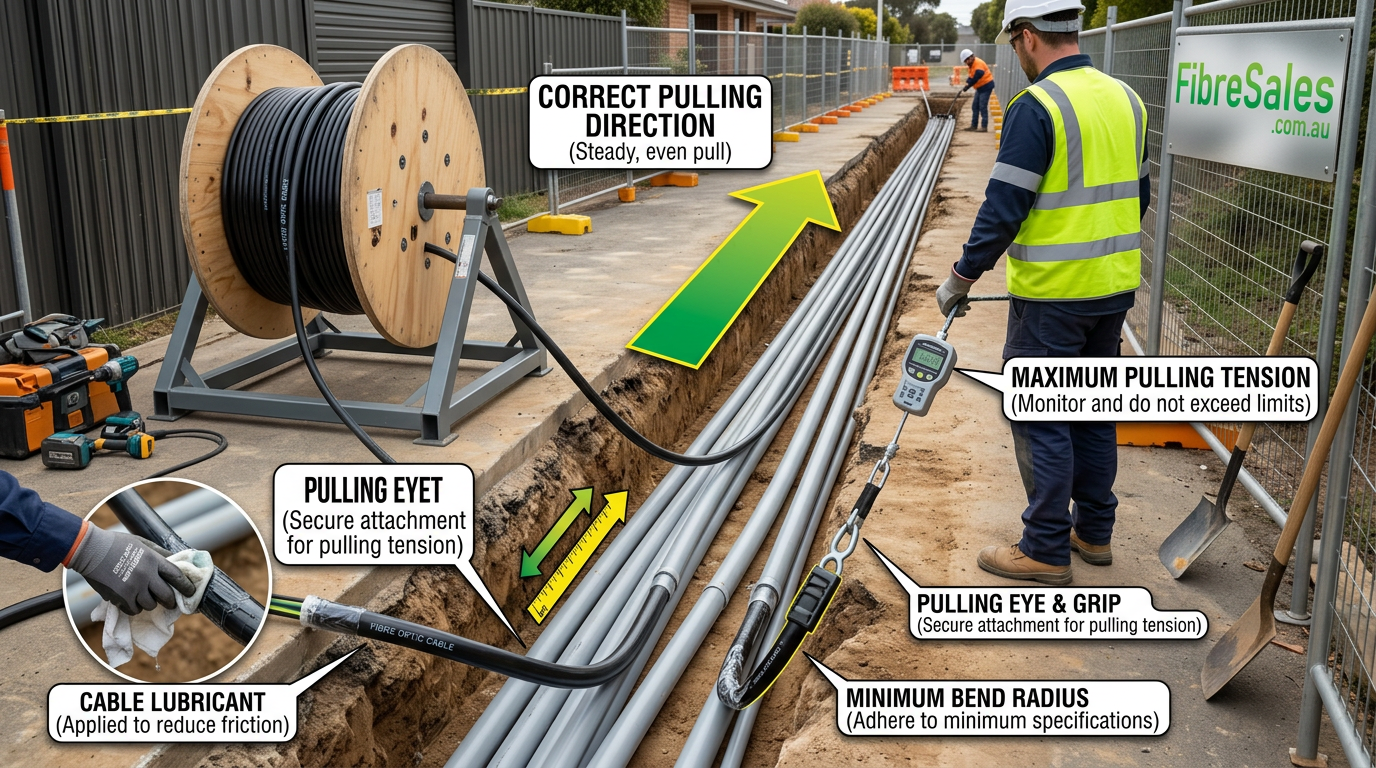
One of the most important aspects of fibre cable pulling techniques is controlling pulling tension.
Every cable manufacturer specifies a maximum pulling tension that should never be exceeded.
Excessive pulling force may:
- Stretch strength members.
- Damage optical fibres.
- Increase attenuation.
- Create latent faults that appear months later.
Always pull on the cable’s strength member or designated pulling eye where provided. Never apply pulling force directly to the fibre elements.
Engineering Tip
If the cable becomes difficult to pull, stop immediately and identify the cause rather than applying additional force.
Fibre Cable Pulling Techniques and Bend Radius
Maintaining the correct bend radius is equally important.
Sharp bends create localised stress within the optical fibres, increasing attenuation and potentially causing permanent damage.
As a general guide:
- Never exceed the manufacturer’s minimum bend radius during installation.
- Use large-radius sweeping bends rather than sharp directional changes.
- Protect cables where they pass around corners or through duct entries.
For a detailed explanation, see our Fibre Bend Radius Guide.
Choosing the Right Pulling Method
Different installation environments require different fibre cable pulling techniques.
Common methods include:
Fibre Cable Pulling Techniques – Manual Pulling
Suitable for:
- Short indoor runs.
- Communications rooms.
- Patch panel installations.
Fibre Cable Pulling Techniques – Mechanical Winch Pulling
Suitable for:
- Long conduit installations.
- Underground duct systems.
- Campus networks.
Always use tension monitoring equipment where practical.
Fibre Cable Pulling Techniques – Air-Blown Fibre
Suitable for:
- Long-distance duct installations.
- High-density fibre infrastructure.
- Future network expansion.
Air-blown systems minimise mechanical stress by using compressed air rather than pulling force.
Using Cable Lubricant Correctly
Cable lubricant reduces friction during conduit installation and can significantly lower pulling tension.
When using lubricant:
- Use products approved by the cable manufacturer.
- Apply lubricant evenly.
- Avoid excessive quantities that attract contaminants.
- Never use petroleum-based products unless specifically approved.
Lubrication is particularly beneficial for long conduit runs with multiple bends.
Protecting Fibre Cable During Installation
Professional fibre cable pulling techniques focus on protecting the cable throughout the installation process.
Avoid:
- Dragging cable across rough surfaces.
- Twisting the cable.
- Dropping heavy objects onto installed cable.
- Exceeding sidewall pressure limits.
- Allowing cable drums to free-spin.
Support the cable evenly throughout the pull to minimise stress concentrations.
Fibre Cable Pulling Techniques – Common Mistakes
Even experienced installers can encounter problems if good practices are not followed.
Common mistakes include:
- Exceeding pulling tension.
- Ignoring bend radius requirements.
- Pulling around sharp conduit edges.
- Allowing the cable to twist.
- Pulling from the wrong end of the cable drum.
- Failing to communicate during long pulls.
- Not protecting cable ends from contamination.
Common Mistake
If a cable jams in the conduit, never continue pulling with additional force. Release the tension, locate the obstruction and resolve the issue before proceeding.
Fibre Cable Pulling Techniques for Underground Installations
Underground installations introduce additional challenges.
Before pulling cable:
- Verify duct integrity.
- Confirm ducts are free from debris.
- Check for standing water.
- Install draw ropes where required.
- Confirm pit access.
- Plan cable storage for future maintenance.
Good preparation significantly reduces installation risks.
Testing After Cable Installation
Once installation is complete, the work should always be verified through testing.
Professional commissioning typically includes:
- Connector inspection.
- Insertion loss testing.
- OTDR testing.
- Documentation.
Our Optical Power Meter Guide , OTDR Event Table Explained and Fibre Test Report Explained articles explain these processes in detail.
Testing confirms that the installation has not introduced unacceptable attenuation or connector faults.
Real-World Field Scenario
During the installation of a 24-core singlemode backbone across an industrial facility, technicians encountered increasing resistance while pulling cable through a 90-metre conduit containing several bends.
Rather than increasing winch tension, the installation team paused the pull and inspected the conduit. A partially collapsed duct section was discovered approximately halfway along the route.
After repairing the damaged conduit and applying an approved cable lubricant, the cable was installed within the manufacturer’s recommended pulling tension. Post-installation testing using an OTDR and Power Meter confirmed the fibre met the specified performance requirements.
This methodical approach avoided hidden cable damage and eliminated the need for costly replacement.
Fibre Cable Pulling Techniques – Best Practices
For consistent installation quality:
- Plan every cable route.
- Follow manufacturer specifications.
- Monitor pulling tension.
- Maintain minimum bend radius.
- Protect cable ends.
- Use approved lubricants.
- Test every installed cable.
- Document installation results.
These practices improve long-term reliability and reduce maintenance costs.
Engineering Decision Insight
Professional fibre cable pulling techniques are fundamental to the long-term performance of every fibre optic network. While modern cables are designed to withstand demanding installation environments, incorrect pulling methods can introduce damage that may not become apparent until months or even years later.
By planning the installation carefully, respecting pulling tension and bend radius limits, using the correct equipment and verifying the completed installation through comprehensive testing, installers can maximise network reliability and protect the customer’s investment.
References
For further technical guidance, consult:
- Fibre Optic Association (FOA) – Fibre optic installation best practices.
- TIA-568 – Optical fibre cabling standards.
- ISO/IEC 14763-3 – Installation and testing of optical fibre cabling.
- Manufacturer installation manuals for the specific cable being installed.
Conclusion
Correct fibre cable pulling techniques are essential for protecting fibre optic infrastructure during installation. Careful planning, controlled pulling tension, maintaining the minimum bend radius and following manufacturer recommendations all contribute to reliable network performance and reduced maintenance over the life of the installation.
For professional Fibre Cable, Enclosures, Pigtails , Patch Leads , OTDRs , Power Meters, Light Sources, Cleaning Products and Inspection Microscopes, visit www.fibresales.com.au to explore Australia’s growing resource centre for fibre optic products, technical guides and professional testing solutions.