Understanding PoE and Ethernet Cables
PoE Ethernet technology allows a single Ethernet cable to carry both electrical power and network data, eliminating the need for separate power supplies for many connected devices. This simple but powerful technology has transformed modern network installations by reducing cabling costs, simplifying deployments and improving flexibility. When combined with professionally manufactured Cat6 Patch Cables, PoE provides a reliable solution for powering devices while maintaining high-speed Ethernet performance.
Today, businesses use Power over Ethernet to connect a wide range of equipment, including IP cameras, wireless access points, VoIP phones, access control systems and other network-connected devices. Rather than installing a power outlet beside every device, installers can deliver both power and data through a single Cat6 cable, making installations faster, cleaner and more cost-effective.
In this guide, you’ll learn how PoE works, the different IEEE PoE standards, which Ethernet cables are best suited to PoE applications and why high-quality Cat6 Patch Cables are essential for dependable network performance. If you’re installing equipment in a high-density communications cabinet, Cat6AU Ultra Thin Patch Cables also provide an excellent solution by improving cable management and airflow while delivering the same reliable PoE and Ethernet performance.
What Is Power over Ethernet (PoE)?
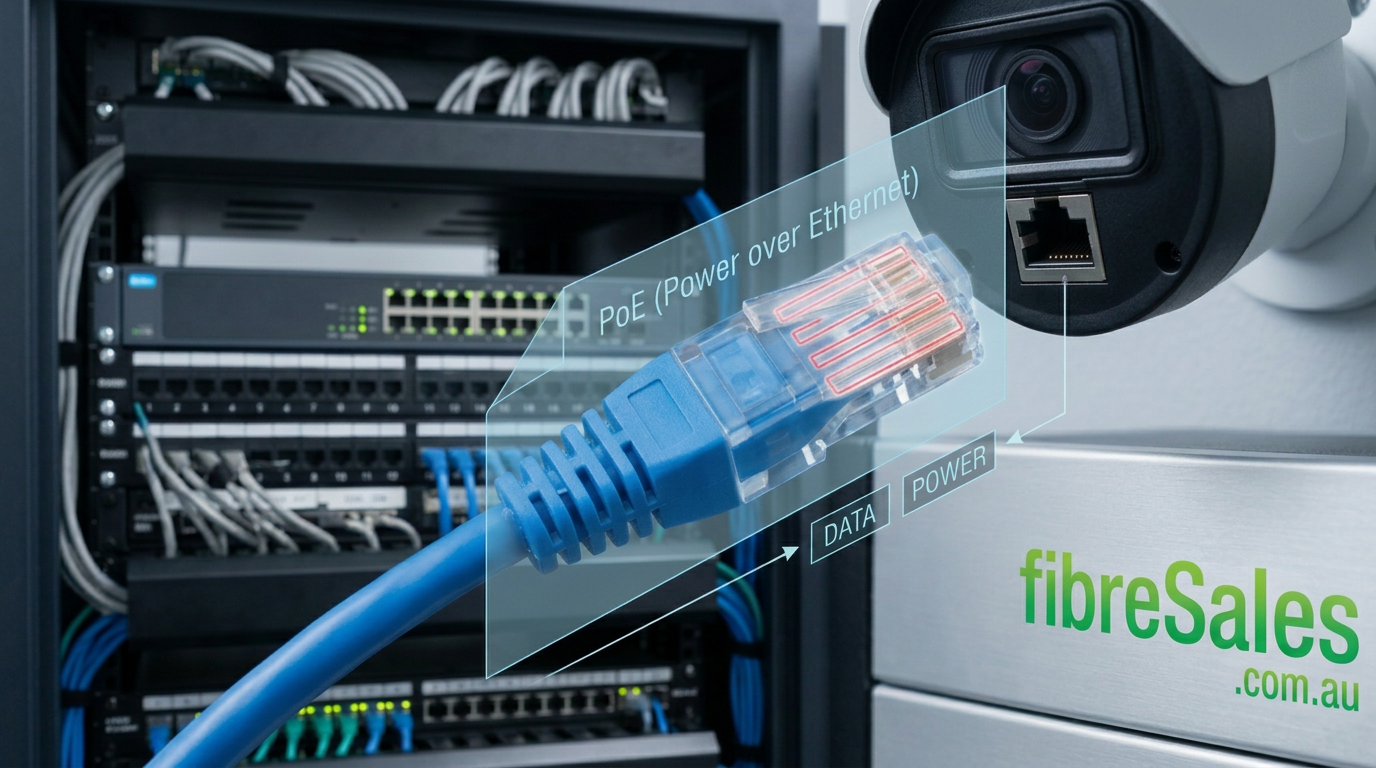
Power over Ethernet (PoE) is a networking technology that allows both electrical power and Ethernet data to travel through a single twisted-pair Ethernet cable. Instead of installing separate electrical wiring for each device, a PoE-enabled switch or injector supplies power directly over the network cable.
This approach simplifies installation while reducing labour, infrastructure costs and ongoing maintenance. As a result, PoE has become the preferred method for deploying many network-connected devices in commercial buildings, schools, hospitals, warehouses and industrial facilities.
Because PoE combines power and data into one cable, selecting a high-quality Cat6 Patch Cable is essential for maintaining reliable network performance.
How Does PoE Work?
A PoE system consists of three main components:
| Component | Purpose |
|---|---|
| Power Sourcing Equipment (PSE) | Supplies power to the Ethernet cable. Usually a PoE network switch or PoE injector. |
| Ethernet Cable | Carries both network data and electrical power. |
| Powered Device (PD) | Receives power and data from the cable. Examples include IP cameras, VoIP phones and wireless access points. |
Before power is delivered, the PSE checks whether the connected device supports PoE. If a compatible device is detected, the switch negotiates the required power level and begins supplying electricity. If the connected equipment does not support PoE, no power is applied, protecting non-PoE devices from damage.
IEEE standards define the detection process and ensures safe operation across compliant equipment.
Common Devices Powered by PoE
Power over Ethernet supports a wide variety of network devices, including:
- IP security cameras
- Wireless access points
- VoIP telephones
- Video conferencing equipment
- Access control systems
- Building automation controllers
- Digital signage
- Network sensors
- Industrial monitoring equipment
- Smart lighting controllers
Because only one cable is required, installers can position equipment wherever network connectivity is available without needing a nearby electrical outlet.
IEEE Power over Ethernet Standards
Several IEEE standards define the amount of power that can be delivered over Ethernet.
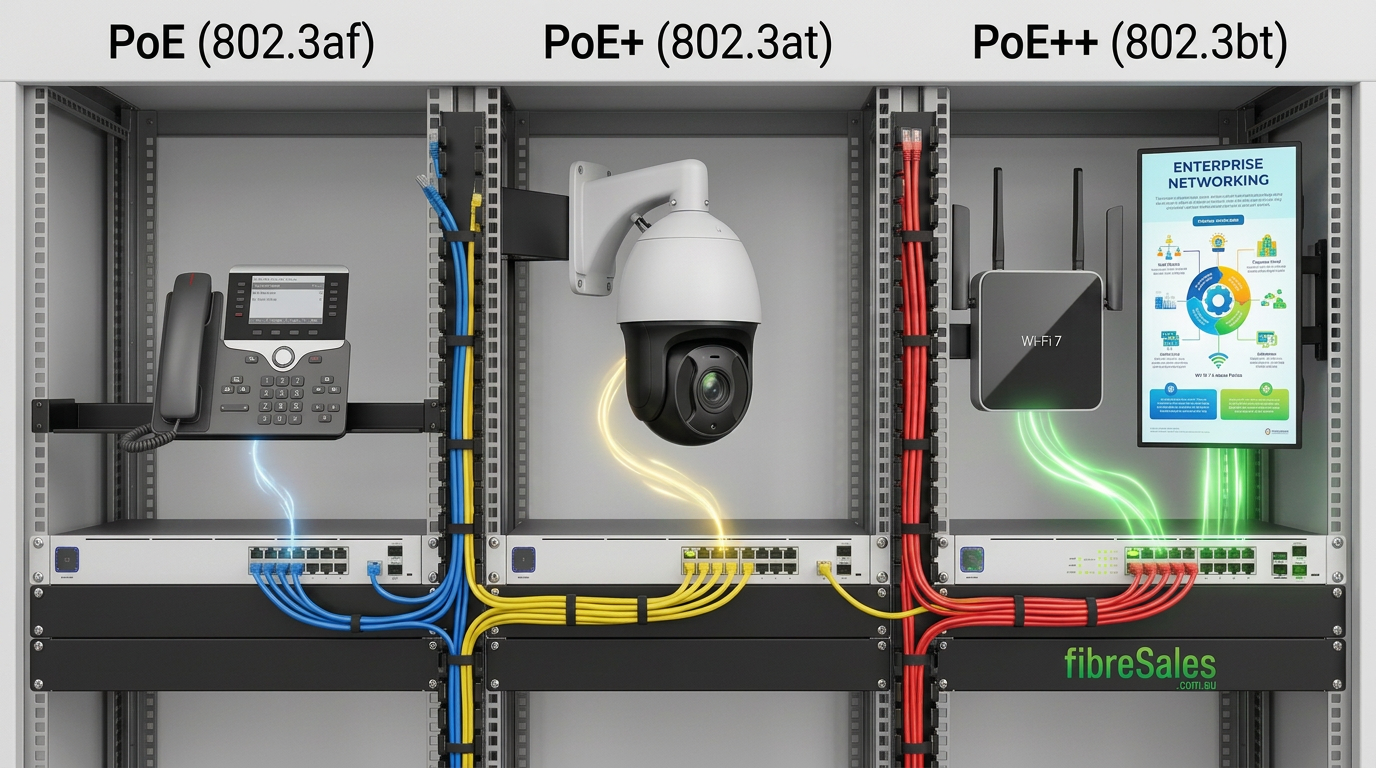
| Standard | Common Name | Maximum Power (PSE) | Typical Applications |
|---|---|---|---|
| IEEE 802.3af | PoE | 15.4 W | VoIP phones, IP cameras |
| IEEE 802.3at | PoE+ | 30 W | Wireless access points, PTZ cameras |
| IEEE 802.3bt Type 3 | PoE++ | 60 W | Digital signage, advanced security devices |
| IEEE 802.3bt Type 4 | High-Power PoE | 90–100 W | Thin clients, lighting, industrial equipment |
As power requirements continue to increase, newer PoE standards support increasingly sophisticated network devices while maintaining compatibility with existing Ethernet infrastructure.
Choosing the Right Ethernet Cable for PoE
Although Power over Ethernet can operate across several Ethernet cable categories, cable quality has a direct impact on performance, reliability and long-term durability.
Professionally manufactured Cat6 Patch Cables offer several advantages for PoE installations:
- Lower insertion loss
- Improved signal integrity
- Better heat management
- Reliable Gigabit and 10 Gigabit Ethernet support
- Consistent conductor quality
- Factory-tested performance
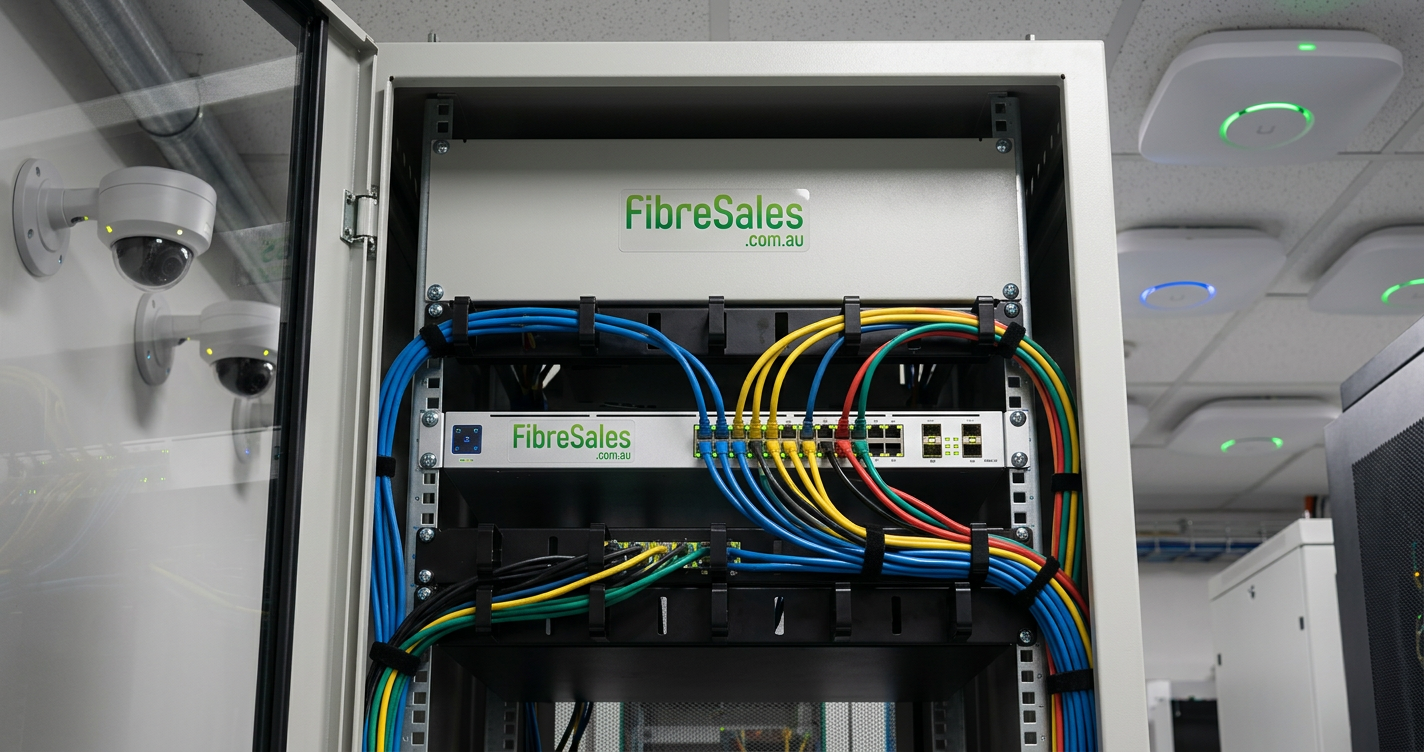
For installations with crowded communications cabinets, Cat6AU Ultra Thin Patch Cables help improve airflow and cable management while still supporting PoE applications when used within their intended installation guidelines.
Why Cable Quality Matters for PoE
Unlike standard Ethernet connections that only carry data, PoE cables continuously carry electrical current. As power levels increase, poor-quality cables can experience greater voltage drop, excess heat build-up and reduced overall efficiency.
High-quality patch leads manufactured with consistent conductors and reliable terminations minimise these issues while helping networks operate more reliably over time.
For this reason, network professionals generally recommend using certified, factory-tested patch leads rather than low-cost alternatives of unknown quality, particularly in business-critical environments where network uptime is essential.