Business Cat6 cable selection affects far more than whether an Ethernet connection works. In a commercial network, the right patch lead also supports organised cabinets, dependable data transmission, easier maintenance and future network changes.
Businesses rarely need one universal cable configuration. A patch lead connecting equipment inside a crowded communications cabinet has different requirements from one connecting a workstation, IP phone, printer or wireless access point. Therefore, choosing the best cable means matching its construction, length, jacket and shielding to the actual installation.
For most standard business Ethernet connections, a quality Cat6 patch cable provides a practical balance of performance, compatibility and cost. However, cable length, installation density and environmental conditions should influence the final choice.
This guide focuses specifically on choosing Cat6 patch cables for business networks. For the broader technical differences between Ethernet cable categories, see CAT6 vs CAT6A vs CAT6AU.
What Is the Best Cat6 Patch Cable for Business?
For most offices and commercial networks, the best Cat6 patch cable is a factory-terminated cable of the correct length, jacket type and shielding configuration for the installation environment.
The decision becomes easier when the network manager or installer considers four questions:
- Where will the patch lead be installed?
- How long does the connection actually need to be?
- Does the environment require LSZH or another specific jacket?
- Does the installation genuinely require shielding?
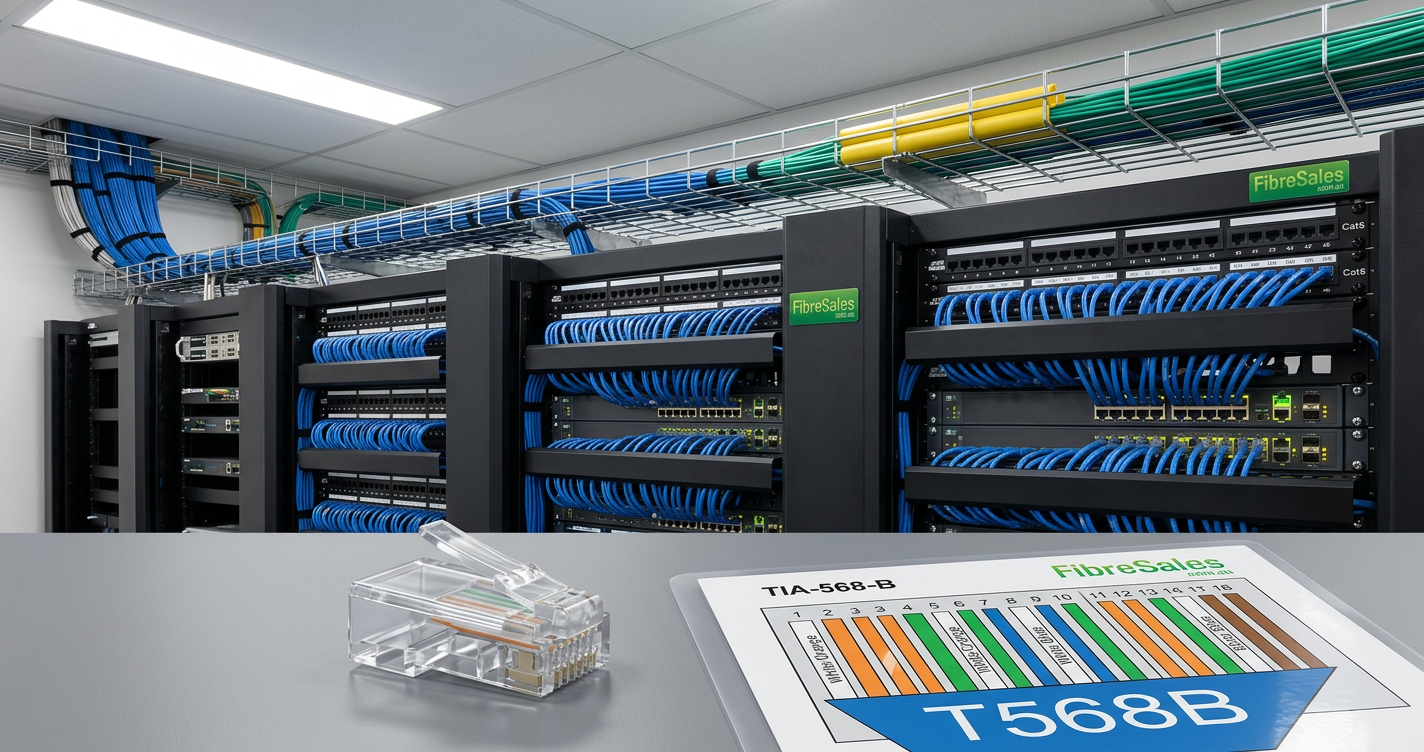
For example, a standard office cabinet may only require appropriately sized unshielded Cat6 patch leads. By contrast, a high-density cabinet may benefit from a different cable construction that reduces congestion and improves access.
Likewise, a building specification may require LSZH cabling, while another installation may permit PVC. Rather than treating either jacket as universally better, match it to the project requirements. The dedicated LSZH vs PVC Cat6 Patch Cables guide explains that decision in detail.
Business Cat6 Cable Selection at a Glance
| Business requirement | What to prioritise | Why it matters |
|---|---|---|
| Standard office network | Quality Cat6 patch leads | Reliable everyday Ethernet connectivity |
| Communications cabinet | Correct cable length | Reduces excess cable and improves management |
| High-density cabinet | Space-efficient patching | Improves airflow and port accessibility |
| Specified LSZH environment | Correct jacket material | Helps meet project and site requirements |
| Electrically noisy environment | Appropriate shielding | Helps manage interference where shielding is justified |
| PoE-connected equipment | Suitable cable construction | Supports reliable data and power delivery |
| Moves, adds and changes | Clear organisation and practical lengths | Makes future maintenance easier |
The important principle is simple: buy for the installation rather than buying one cable configuration for every connection.
Why Cable Length Matters in Business Networks
Cable length is one of the easiest purchasing decisions to overlook.
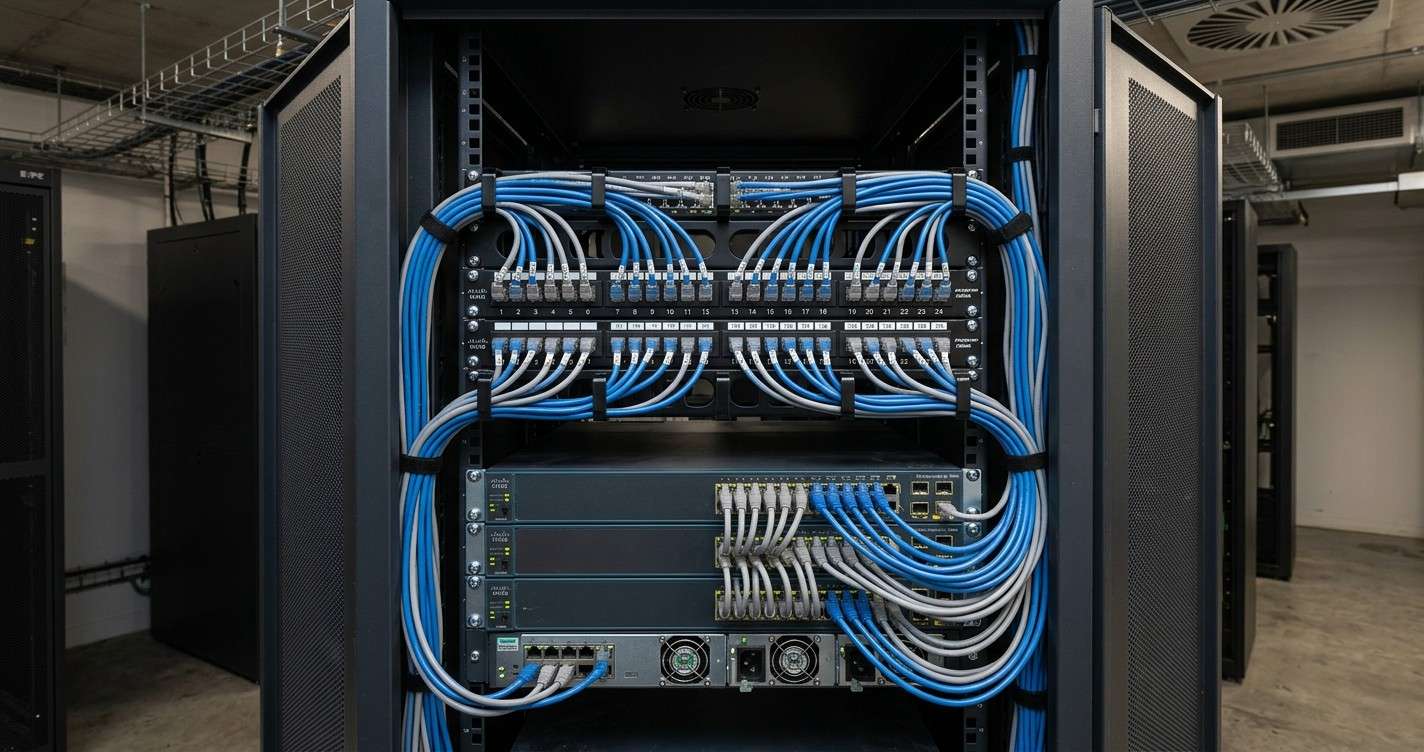
Inside a network cabinet, excessively long patch leads create loops and bundles that obstruct ports and make tracing connections harder. They can also consume valuable cable-management space.
Conversely, a patch lead that is too short can place unnecessary tension on connectors and create poor routing around switches and patch panels.
Therefore, business networks should use the shortest practical patch lead that still allows clean routing and sufficient serviceability.
A cabinet may use short leads between adjacent patch panels and switches, while desks, printers or other endpoints may require longer cables. Standardising a small selection of useful lengths can also simplify purchasing and spare-stock management.
For a detailed length-selection method, use the What Length Patch Cable Should I Buy? guide rather than estimating cable length solely from straight-line distance.
Engineering Decision: Don’t Standardise One Length Everywhere
Buying hundreds of identical patch leads may simplify an order, but it does not necessarily simplify the finished network.
Instead, group connections by application:
- cabinet patching
- nearby equipment
- workstation connections
- longer equipment runs
Then select practical lengths for each group.
This approach reduces unnecessary cable accumulation while still allowing enough slack for safe routing and future maintenance.
Should a Business Choose UTP or Shielded Cat6?
Most ordinary commercial environments do not automatically require shielded patch leads.
Unshielded twisted pair (UTP) Cat6 is widely suited to conventional office Ethernet installations. However, environments with significant electromagnetic interference or a properly designed shielded cabling system may require shielded components.
Importantly, adding a shielded patch lead to an otherwise unshielded system does not automatically improve network performance. Shielding should form part of the overall cabling design rather than being treated as a premium feature that every business needs.
The full decision belongs to the dedicated UTP vs Shielded Cat6 Patch Cables guide.
For purchasing purposes:
Choose UTP when: the structured cabling system and operating environment do not require shielding.
Choose shielded Cat6 when: the network design, site conditions or project specification calls for a properly implemented shielded system.
That distinction prevents businesses from paying for features that provide no practical benefit in their particular installation.
Where Business Cat6 Cables Are Commonly Used
Commercial Cat6 patch leads support connections throughout business networks, including:
- switches and patch panels
- desktop computers and docking stations
- printers and multifunction devices
- IP phones
- wireless network equipment
- security and monitoring equipment
- network appliances
- server and communications cabinets
However, the cable requirement can change significantly between these applications. A patch lead selected for an open office desk does not necessarily represent the best configuration for a densely populated rack.
Consequently, businesses should purchase patch leads according to connection type and installation environment, rather than simply ordering Cat6 by length and assuming every cable is interchangeable.

Should Business Cat6 Cable Support PoE?
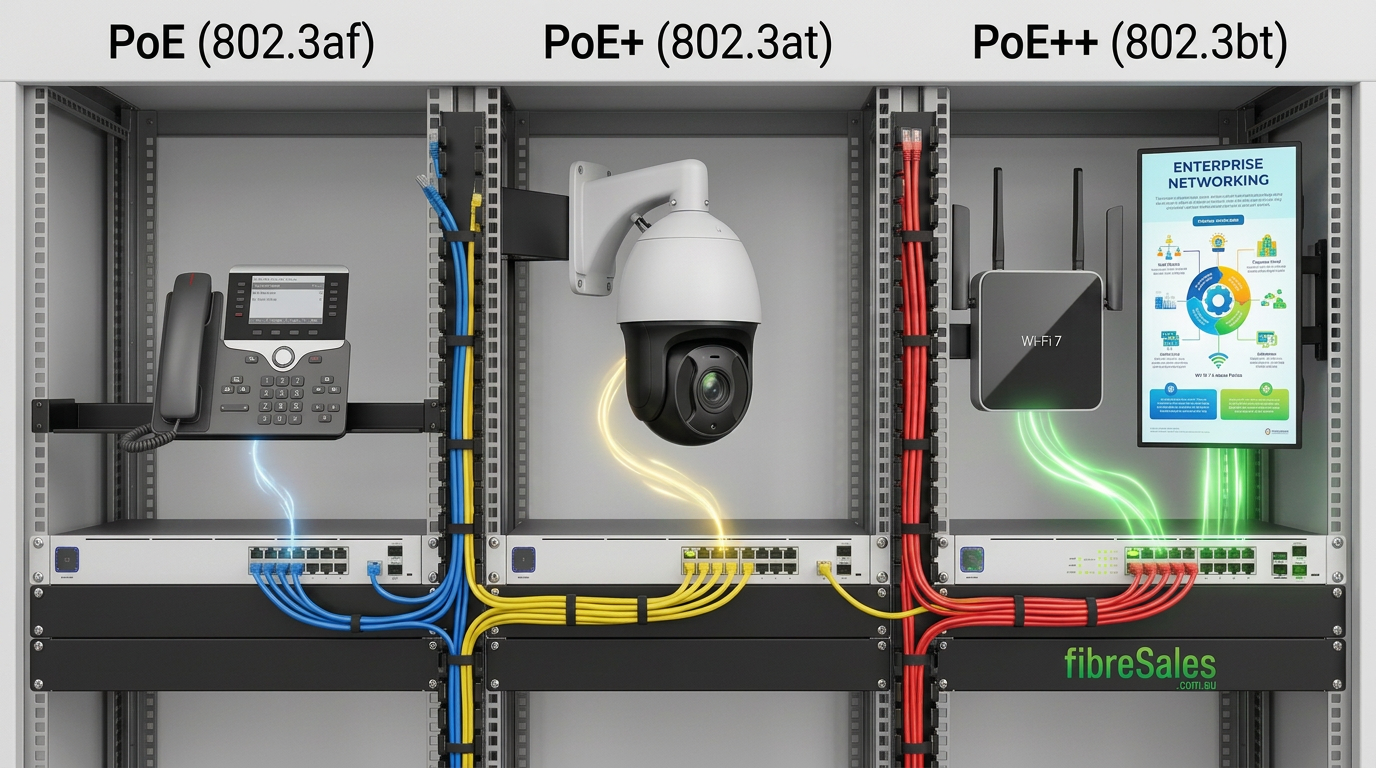
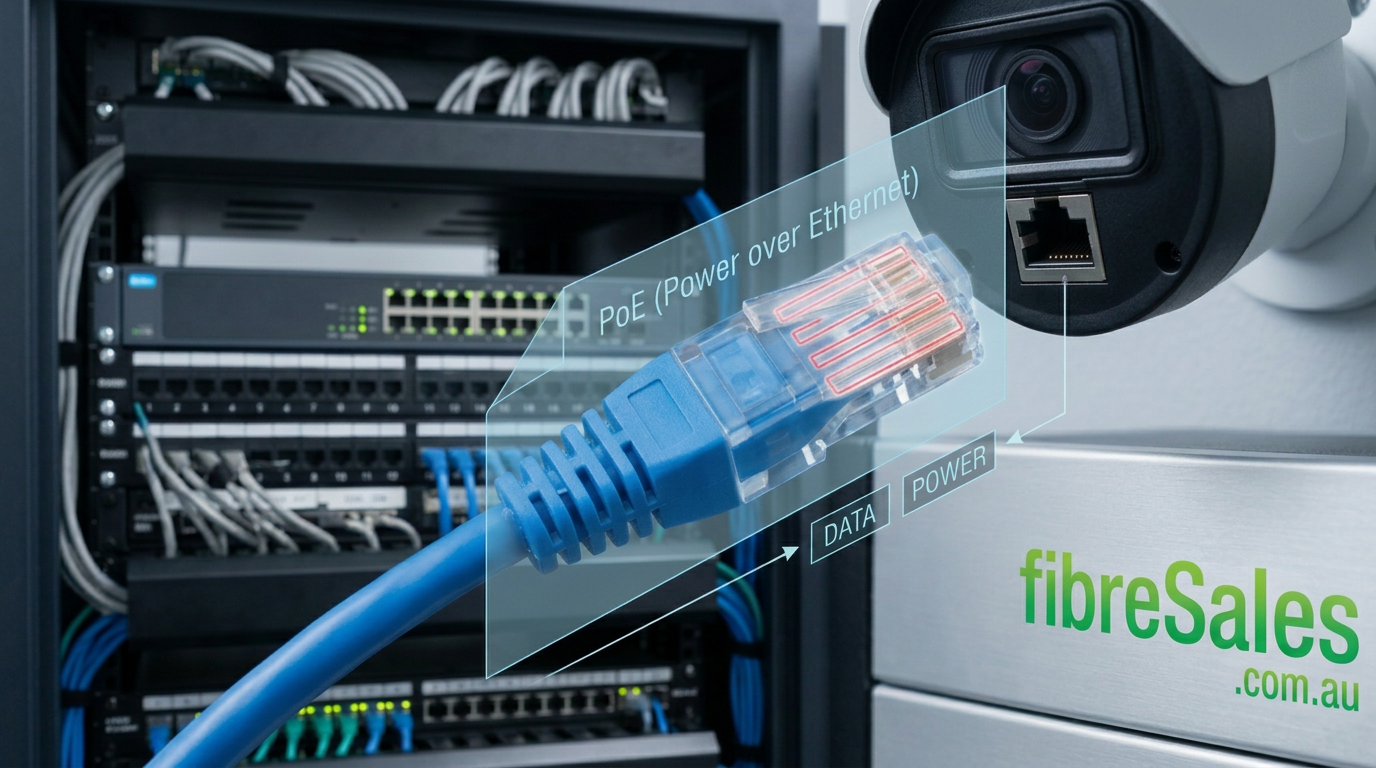
Many commercial networks now use Ethernet cabling for both data and electrical power. IP phones, wireless access points, security cameras and other network devices may receive power through Power over Ethernet.
Therefore, businesses should consider PoE requirements when selecting patch leads, particularly where powered devices operate continuously or where many PoE connections are concentrated within the same cabinet.
The cable is only one part of the complete PoE channel. Conductor construction, connection quality, bundle size, ambient temperature and the applicable PoE standard can all affect system performance.
For the full technical explanation, see Understanding PoE and Ethernet Cables. Businesses comparing power levels can also use PoE vs PoE+ vs PoE++ rather than duplicating those standards here.
Business Buying Decision
If the network will support PoE equipment:
- identify the PoE requirements before ordering patch leads
- use quality cables suitable for the intended application
- avoid unnecessary cable bundling where heat may accumulate
- maintain reliable terminations and connections
- consider future powered-device requirements, not only today’s installation
For installations specifically centred on powered devices, the Best Cat6 Cable for PoE guide provides the dedicated selection advice.
Standard Cat6 or Ultra-Thin Cat6 for Business Cabinets?
Cable density becomes increasingly important as businesses add switches, patch panels and connected devices.
Standard Cat6 patch leads remain an excellent choice for general commercial networking. However, densely populated cabinets can become difficult to manage when large numbers of conventional patch leads occupy the available routing space.
In those situations, a slimmer patch lead can provide practical installation benefits.
The fibreSales CAT6AU Ultra Thin Patch Cable range uses a reduced cable diameter that can help improve cable organisation and access in space-constrained installations.
When Standard Cat6 Makes Sense
Standard Cat6 patch leads are generally suitable when:
- cabinet density is moderate
- cable-management space is adequate
- conventional patching is easy to access
- the project does not specifically benefit from reduced cable diameter
When Ultra-Thin Cat6 May Be Useful
Ultra-thin patch leads become particularly attractive when:
- switch port density is high
- large cable bundles restrict access
- rack space is limited
- technicians frequently perform moves, adds and changes
- improved cable organisation is a priority
However, businesses should not select a thinner cable simply because it occupies less space. Current carrying requirements, cable length, PoE loading and project specifications still need consideration.
The correct choice therefore depends on the installation rather than appearance alone.
Why Patch Cable Construction Matters
Two Cat6 patch leads may carry the same category designation while differing in physical construction and suitability for a particular application.
Businesses should consider characteristics such as:
- conductor construction
- wire gauge
- connector quality
- strain relief
- jacket material
- shielding configuration
- overall cable diameter
- manufacturing consistency
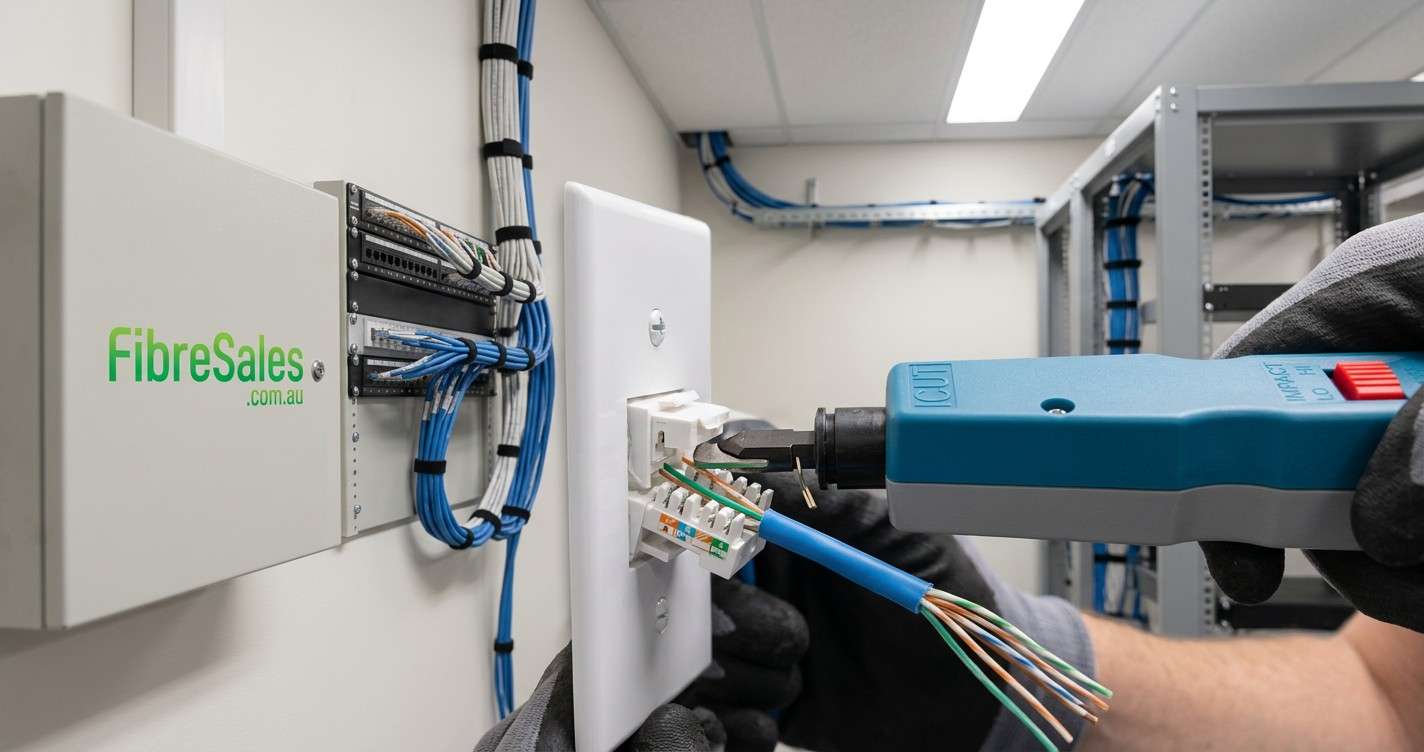
For permanent structured cabling, installation cable and patch leads perform different roles. A flexible factory-terminated patch lead is designed for equipment connections and patching, whereas permanent horizontal cabling forms part of the fixed cabling infrastructure.
Consequently, procurement teams should avoid treating every product labelled “Cat6” as interchangeable.
Business Cat6 Cable and RJ45 Connector Quality
Reliable patching also depends on the connection at each end of the cable.
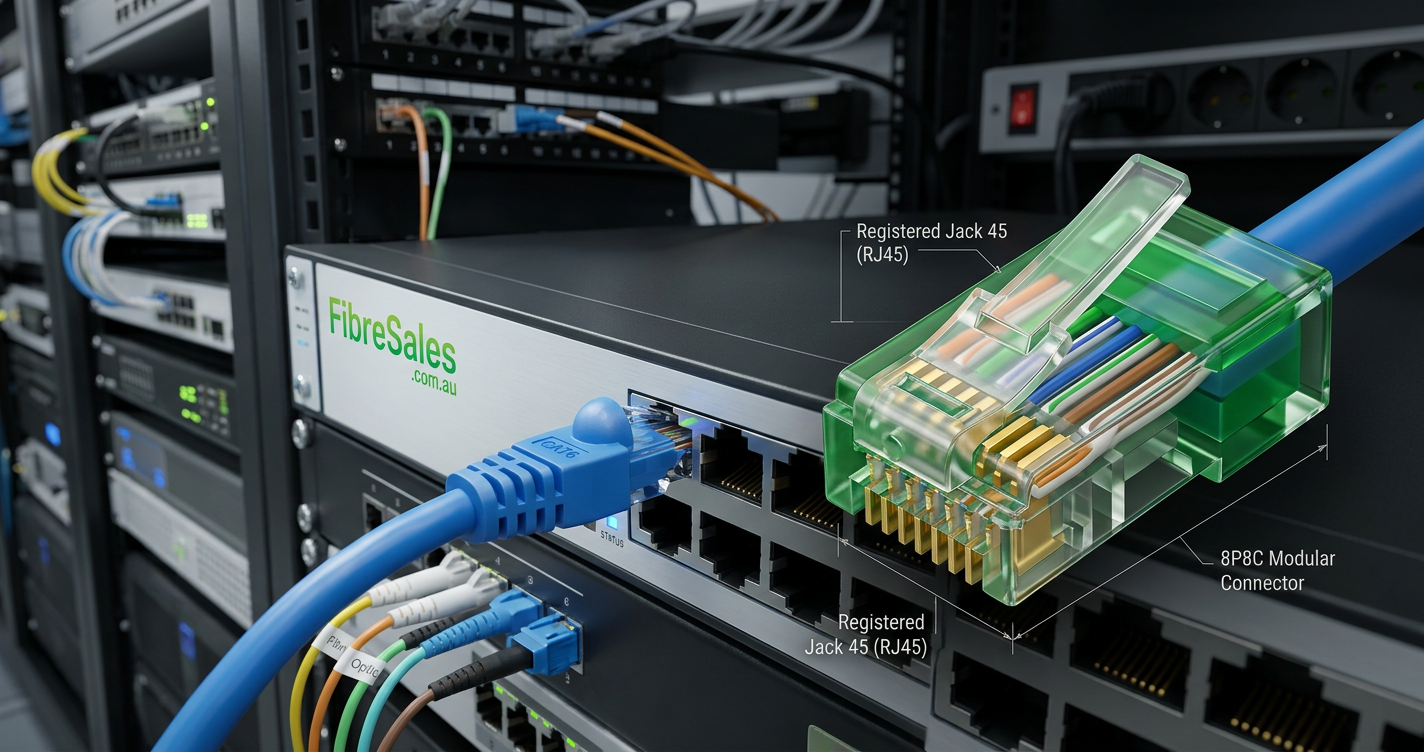
An RJ45 plug must maintain consistent electrical contact while tolerating normal insertion, removal and cable movement. Poorly manufactured or damaged connectors can create intermittent faults that are difficult to diagnose.
Nevertheless, this buying guide does not need to re-explain RJ45 construction. Businesses that need the connector fundamentals can use RJ45 Connectors Explained.
For routine procurement, check that finished patch leads provide:
- securely terminated connectors
- appropriate strain relief
- undamaged locking tabs
- consistent moulding and construction
- compatibility with the intended network equipment
Factory-terminated patch leads also remove the variability associated with manually terminating every short equipment connection onsite.
Colour Coding Cat6 Patch Leads in Business Networks
Cable colour does not increase Ethernet speed. However, colour can become a useful operational tool in a commercial network.
A business might assign colours according to:
- network function
- department
- switch or VLAN grouping
- voice connections
- wireless infrastructure
- security systems
- critical equipment
The objective is not to create as many colours as possible. Instead, use a simple documented scheme that helps technicians identify connections quickly.
For example, one organisation might reserve one colour for general data, another for voice and a third for wireless infrastructure. Another business may achieve better results using uniform cables and detailed port labels.
Both approaches can work.
The dedicated Do Cat6 Patch Lead Colours Matter? article explains colour selection and network identification in more detail.
Engineering Decision: Consistency Beats Complexity
A colour system only adds value when technicians understand it.
Therefore, document the scheme and apply it consistently across cabinets and sites. Avoid introducing additional colours without a defined operational purpose.
Good labelling should still accompany colour coding because technicians should never have to rely on cable colour alone to identify a critical connection.
What Should Businesses Standardise?
Standardisation can reduce purchasing complexity without forcing every connection to use an identical cable.
A practical business standard might define:
| Attribute | Business standardisation approach |
|---|---|
| Category | Cat6 for designated Cat6 connections |
| Lengths | Small range of approved practical lengths |
| Jacket | Selected according to building/project requirements |
| Shielding | Match the installed cabling system |
| Colours | Defined functional scheme if operationally useful |
| Connectors | Consistent quality and construction |
| High-density use | Approved slim option where appropriate |
| PoE | Confirm suitability for powered applications |
This creates a controlled purchasing framework while leaving enough flexibility for different installation environments.
Common Business Cat6 Purchasing Mistakes
One common mistake is buying solely on price. Patch leads are relatively inexpensive compared with switches, servers and technician labour, yet a poor connection can consume substantial troubleshooting time.
Another is ordering one length for the entire organisation. Although bulk purchasing appears convenient, excess cable can quickly create congested cabinets and untidy workstation installations.
Businesses also sometimes specify shielding without considering the complete cabling system. In that situation, the additional feature may provide little practical benefit.
Similarly, choosing a jacket without checking the project specification can result in the wrong product being ordered for the installation environment.
Finally, businesses should avoid assuming that all Cat6-labelled products are equivalent. Construction, conductor size, connector quality and intended application still matter.
Real-World Business Network Example
Consider an office upgrading its communications cabinet while retaining existing Cat6 structured cabling.
The business needs patch leads for 48 switch connections, several wireless access points, IP phones and network appliances. Ordering a single long patch-lead length would technically connect the equipment, but it would also create unnecessary cable volume inside the cabinet.
A better approach is to map the connections first.
Shorter patch leads can handle nearby switch-to-patch-panel connections, while longer cables can be reserved for equipment that genuinely requires additional reach. If cabinet density is high, suitable ultra-thin patch leads may further improve access and cable management.
Meanwhile, the business can define a small colour and length standard for future replacements.
As a result, subsequent moves and maintenance become easier because technicians encounter a predictable patching system rather than an assortment of randomly selected cables.
Choosing Business Cat6 Cable by Environment
| Environment | Primary consideration | Typical approach |
|---|---|---|
| Small office | Reliability and simplicity | Quality standard Cat6 |
| Large office | Consistency and management | Standardised lengths and identification |
| High-density cabinet | Space and accessibility | Consider suitable ultra-thin patch leads |
| PoE-heavy network | Power delivery and thermal considerations | Match cable choice to PoE requirements |
| Specified commercial building | Jacket compliance | Follow project requirements |
| Electrically noisy site | Cabling-system design | Assess whether shielding is required |
| Frequently changed network | Serviceability | Practical lengths, labelling and organisation |
No single row should be treated as an automatic specification. Instead, use the table as a starting point and then confirm the requirements of the actual network.
Best Cat6 Patch Cable for Business
How to Choose the Right Business Cat6 Cable
The best purchasing decision starts with the application rather than the cable itself.
Before ordering, identify where each patch lead will operate, how much distance it must cover and whether the network has any specific environmental or power requirements. This prevents businesses from paying for unnecessary features while also reducing the risk of underspecifying critical connections.
A practical selection process is:
- Confirm the network requirement. Determine whether Cat6 provides the required Ethernet performance for the connection.
- Measure the required patching distance. Choose the shortest practical length that allows proper routing without tension.
- Check the installation environment. Determine whether the project specifies PVC, LSZH or another jacket requirement.
- Confirm shielding requirements. Match the patch lead to the overall structured cabling design.
- Identify PoE requirements. Consider powered devices and the intended PoE application.
- Assess cabinet density. Decide whether conventional or suitable ultra-thin patch leads provide the better installation outcome.
- Standardise where practical. Establish approved lengths, constructions and identification methods for future purchasing.
This process shifts procurement away from simply asking, “Which Cat6 cable is best?” Instead, the better question becomes, “Which Cat6 patch lead best matches this business connection?”
Cat6 Performance in Commercial Networks
Cat6 supports Gigabit Ethernet applications and can also support 10 Gigabit Ethernet over appropriate channel lengths and installation conditions.
However, businesses should not select Cat6 solely because a particular speed appears on a product description. Overall channel performance depends on the complete cabling system, including permanent cabling, patch leads, connectors and installation quality.
For networks specifically evaluating higher-speed operation, Can Cat6 Run 10G? owns that technical question.
Likewise, organisations deciding whether copper remains appropriate for a particular network segment can use Cat6 vs Fibre for the broader media comparison.
Relevant Cabling Standards
Commercial network design should follow the applicable project specifications and structured cabling requirements.
Relevant references include ANSI/TIA-568 structured cabling standards, ISO/IEC 11801 generic customer-premises cabling and IEEE 802.3 Ethernet standards.
Australian installations must also consider applicable cabling requirements and regulations. The Australian Communications and Media Authority provides information relating to Australian cabling standards and registered cabling work.
Project documentation, manufacturer requirements and the applicable edition of each standard should always take precedence over a general buying guide.
Business Cat6 Cable Buying Checklist
Before placing a commercial order, confirm:
- required quantity
- appropriate Cat6 construction
- required cable lengths
- jacket requirements
- UTP or shielded system requirements
- PoE application where relevant
- cabinet-density considerations
- colour and identification strategy
- spare-stock requirements
- compatibility with the intended installation
- applicable project specifications
For larger deployments, preparing this information before purchasing can prevent repeated orders and inconsistent cable selection across the site.
Engineering Decision: Buy for Lifecycle Cost, Not Cable Price Alone
The cheapest patch lead does not necessarily create the lowest-cost network.
Consider the cost of technician time, fault finding, replacement, cabinet rework and network interruption. A small saving on each cable can become insignificant if poor selection makes the installation difficult to maintain.
Conversely, buying the most expensive cable available does not automatically improve performance.
The better commercial decision is to specify the appropriate cable for the application, purchase consistent products and maintain sensible spare stock.
Testing and Maintaining Business Ethernet Connections
A well-selected patch lead still needs correct installation and ongoing maintenance.
When an Ethernet connection fails, technicians should avoid replacing cables randomly. A structured troubleshooting process can distinguish patch-lead faults from termination, equipment or configuration problems.
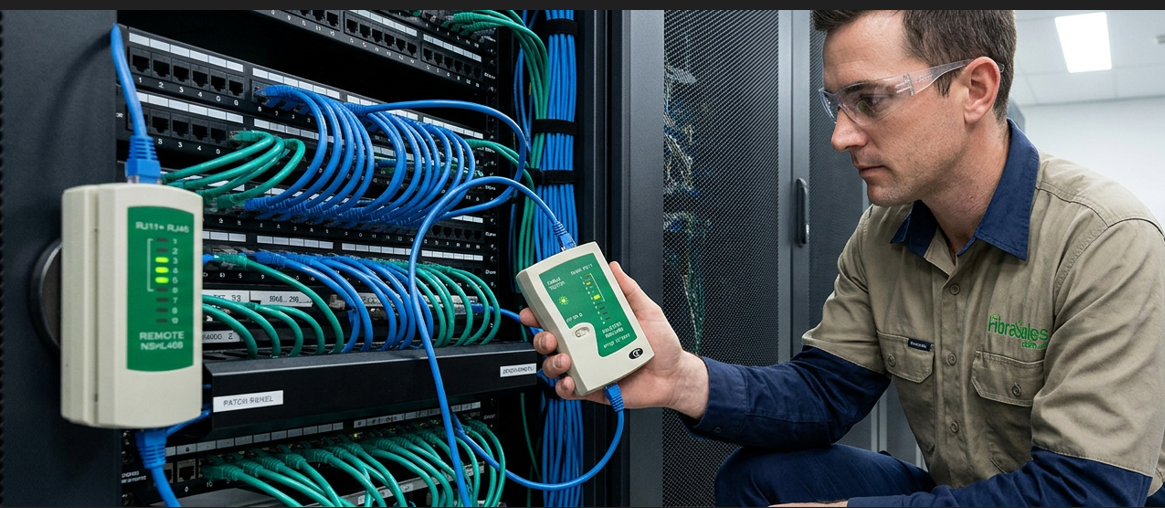
The Ethernet Cable Testing Guide explains how to test network cabling correctly. fibreSales also supplies cable testers for relevant copper-network testing applications.
Businesses can further reduce faults by keeping cabinets organised, protecting connector locking tabs and replacing visibly damaged patch leads rather than repeatedly returning questionable cables to service.
When Should a Business Consider Cat6A Instead?
Cat6 remains a practical choice for many commercial patching applications. Nevertheless, some projects may specify Cat6A because of their performance requirements, channel design or future network plans.
Businesses should consider the complete structured cabling system rather than substituting one patch-lead category in isolation.
For organisations comparing their options, CAT6 vs CAT6A vs CAT6AU provides the dedicated category comparison.
The important purchasing rule is to match patching components to the network design and project specification instead of assuming that a higher category number automatically makes every connection better.
Frequently Asked Questions About Business Cat6 Cable
What is the best Cat6 patch cable for a business?
The best option depends on the installation. For many standard office networks, a quality factory-terminated Cat6 patch lead with the correct length and construction provides a practical solution. High-density, shielded, LSZH or PoE applications may require additional consideration.
Is Cat6 suitable for office networks?
Yes. Cat6 is widely used for commercial Ethernet connections. However, businesses should confirm the required network speed, channel design and project specifications before standardising a cabling system.
Should businesses buy Cat6 or Cat6A?
That depends on the network design and performance requirements. Cat6 can meet many everyday business applications, while some projects specify Cat6A. Avoid selecting solely on category name.
Should I use short Cat6 patch leads in a network cabinet?
Use the shortest practical length that permits clean routing without placing tension on connectors. Correctly sized patch leads generally make cabinets easier to organise and maintain.
Are ultra-thin Cat6 patch cables suitable for business networks?
They can be useful in high-density environments where reducing cable bulk improves accessibility and management. However, the cable must still suit the electrical, PoE and installation requirements of the application.
Does Cat6 cable colour affect network performance?
No. Colour does not increase Ethernet speed or bandwidth. Businesses can instead use colour as an identification and cable-management system.
Does a business need shielded Cat6?
Not automatically. Shielding should match the overall cabling system and installation environment. Standard office networks commonly use UTP, while some environments or project specifications require shielding.
Should businesses use LSZH Cat6 patch cables?
Use LSZH where the project, building environment or specification requires it. LSZH and PVC jackets serve different installation requirements, so neither should be selected purely because it sounds more advanced.
Can Cat6 patch cables carry PoE?
Cat6 cabling can support PoE applications when the complete channel and components are suitable for the intended system. Businesses should consider conductor construction, bundling, temperature and the required PoE standard.
Can a Cat6 patch cable run 10 Gigabit Ethernet?
Cat6 can support 10 Gigabit Ethernet under specified distance and channel conditions. Businesses planning 10G links should assess the complete channel rather than assuming every Cat6 installation will support the same distance.
Should businesses make their own Cat6 patch leads?
Factory-terminated patch leads provide consistent, convenient equipment connections. Field termination remains useful in appropriate applications, but businesses should consider installation quality, testing and labour before deciding to manufacture large numbers of patch leads onsite.
For installations that require field termination, fibreSales supplies RJ45 crimping tools and other copper installation equipment.
How many spare Cat6 patch cables should a business keep?
There is no universal quantity. Spare stock should reflect the size of the network, number of standardised lengths, failure risk and how quickly replacement products can be obtained. Keeping a controlled quantity of commonly used configurations generally works better than storing many miscellaneous cables.
Why Choose fibreSales for Business Cat6 Patch Cables?
Business networks need more than a cable that simply establishes a link.
fibreSales supplies networking products for Australian commercial, industrial and technical applications, allowing businesses, contractors and network professionals to select products according to the actual installation requirement.
Customers can browse the Cat6 Patch Cable range for standard business patching applications. Where cabinet density becomes a concern, the CAT6AU Ultra Thin Patch Cable range provides another option to assess against the project’s requirements.
Related installation products, including cable testers, RJ45 crimping tools and keystone jacks, can also support commercial copper-network installation and maintenance.
Conclusion: Choosing the Best Cat6 Patch Cable for Business
The best business Cat6 cable is not necessarily the longest, thickest or most expensive option. It is the patch lead that correctly matches the network, installation environment and operational requirement.
Start by determining the application. Then select an appropriate length, confirm jacket and shielding requirements, account for PoE where necessary and consider cabinet density. Finally, standardise sensible configurations so future purchasing and maintenance remain straightforward.
For most conventional commercial networks, quality Cat6 patch leads provide a practical combination of performance, compatibility and value. Meanwhile, specialised environments may justify different jackets, shielding or space-saving cable construction.
Browse fibreSales Cat6 Patch Cables for commercial Ethernet patching, or visit www.fibresales.com.au for fibre optic solutions, technical resources and installation products.
Continue Learning
- Best Cat6 Patch Cable for Home Networks
- What Length Patch Cable Should I Buy?
- LSZH vs PVC Cat6 Patch Cables
- UTP vs Shielded Cat6 Patch Cables
- CAT6 vs CAT6A vs CAT6AU
- Understanding PoE and Ethernet Cables
- Ethernet Cable Testing Guide